Hochul Pushes Mamdani to Slow Spending in Exchange for Aid

The governor has asked for cost-cutting plans on pricey housing vouchers and public school programs, sources say.

Nick Garber   ·   April 16, 2026
Governor Kathy Hochul’s administration has pushed the city to find savings in three pricey programs as Mayor Zohran Mamdani asks Albany for some $2 billion in aid to help close the city’s budget gap. | Susan Watts/Office of Governor Kathy Hochul

Sign up for Staying Focused, our newsletter keeping readers up to speed on New York politics.

New York City Mayor Zohran Mamdani’s administration has been in talks with Governor Kathy Hochul’s office about trimming the costs of three expensive programs as part of a potential deal to send more state aid to the city, according to several people familiar with the ongoing negotiations.

The discussions have focused on the housing voucher program CityFHEPS; the state law requiring the city to cap public school class sizes; and the “Carter case” system, through which the city reimburses private-school tuition costs for some students with disabilities. Hochul’s administration has pushed the city to find savings in all three programs as Mamdani asks Albany for some $2 billion in aid to help close the city’s budget gap.

“There’s just a general sentiment of, ‘I don’t want to give the city more money if it’s just going into a black hole,” said one source, who was granted anonymity to describe the private talks.

Hochul has been open about wanting the city to find savings within its $127 billion budget, but has not publicly specified which programs should be scrutinized. Although several sources said Hochul’s office has been pushing the city to cut costs on those three programs, a person close to the governor’s office said city officials were the first to raise them as potential places to reduce spending.

Hochul said at a Wednesday press conference that she is asking the city to find programs “where costs can be managed in a different way.”

“It is the responsibility of the mayor and the City Council to find more savings,” she said.

Mamdani’s office declined to comment. The New York Times previously reported that Mamdani had privately found $1.3 billion in savings by scaling back CityFHEPS and delaying the class-size mandate, but did not mention the state’s involvement.

It looks increasingly likely that Mamdani will need to cut more spending than the $1.7 billion in savings he has publicly directed city agencies to find. The city is staring down an estimated $5.4 billion gap through next year, and Hochul has so far stood firm against income and corporate tax hikes that would bring in billions in additional revenue. The “pied-à-terre” tax on second homes she announced this week will bring in “at least” $500 million, she said — not enough to make the city whole.

In his quest for more state aid, Mamdani has listed about a dozen “cuts and cost shifts” that, if reversed, would restore $2.3 billion a year to the five boroughs, New York Focus first reported.

The scope of potential changes to each program is unclear, but all three have been highlighted by budget watchdogs for their ballooning costs. CityFHEPS, which gives rental aid to people who are homeless or at risk of eviction, has more than tripled in three years to a total of $1.7 billion this year, and is slated to cost nearly $13 billion over the next five years — without accounting for a recently adopted law that would expand it by billions of dollars more.

Mamdani’s administration is fighting in court not to expand the vouchers, a major reversal from his campaign platform that has drawn criticism from homelessness advocates and City Council Speaker Julie Menin. One source familiar with negotiations said the cuts could apply to the existing program, rather than the potential expansion being debated in court.

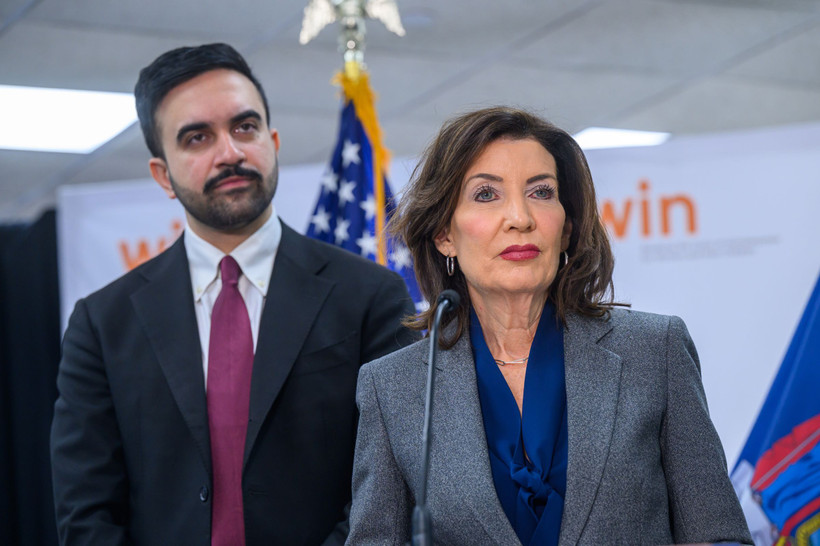
Advocates may be open to a compromise. Christine Quinn, who leads the shelter provider Win and supports expanding CityFHEPS, said Hochul’s demands are reasonable.

“The city has asked for tremendous financial relief from the state,” said Quinn, who is a vocal ally of Hochul’s. “I understand why the governor would feel the need to put guardrails around that funding. That’s not unfair.”

Carter cases, which stem from a 1990s Supreme Court ruling, are projected to cost the city $1.6 billion next year, up dramatically from $427 million a decade ago. The policy allows families to demand reimbursement for private school tuition if they can show through a legal proceeding that public school cannot meet their children’s needs. Carter cases have been concentrated disproportionately in wealthy neighborhoods like the Upper East Side and Park Slope, where parents have the resources to pursue the legal challenges.

Sherif Soliman, Mamdani’s budget director, said in February that the city is making investments in special education “that would obviate the need to have the Carter cases in the first place.”

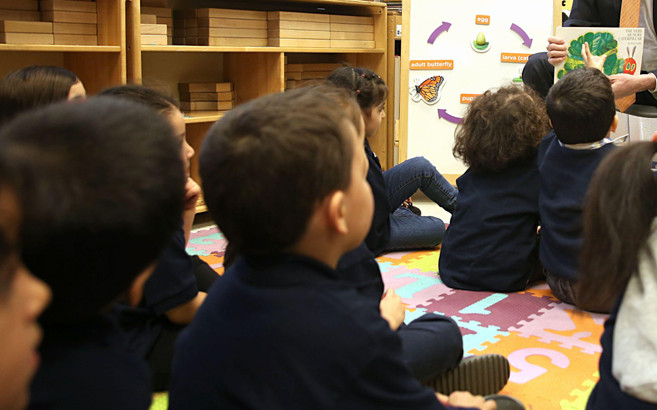
Meanwhile, the Mamdani administration has been public about its inability to meet the class size mandate — a 2022 state law that requires the city to cap classes at 20 to 25 students by 2028. Schools Chancellor Kamar Samuels briefed state lawmakers on a plan to push back that deadline to 2030.

The city has already spent $640 million on class-size reductions, and it could cost billions more to fully implement the law. Much of the city’s spending would likely go to schools serving wealthier students, since schools in lower-income areas are more likely to already fall under the caps, a March report by the Urban Institute found.

Leonie Haimson, executive director of the advocacy group Class Size Matters, has criticized multiple recent mayors for failing to ready the city to meet the mandate. She said the state should not give the city more money unless Mamdani presents a plan for complying with the law.

“None of them can be trusted without a real, detailed plan and oversight by the state,” Haimson said.

At New York Focus, our central mission is to help readers better understand how New York really works. If you think this article succeeded, please consider supporting our mission and making more stories like this one possible.

New York is an incongruous state. We’re home to fabulous wealth — if the state were a country, it would have the tenth largest economy in the world — but also the highest rate of wealth inequality. We’re among the most diverse – but also the most segregated. We passed the nation’s most ambitious climate law — but haven’t been meeting its deadlines and continue to subsidize industries hastening the climate crisis.

As New York’s only statewide nonprofit news publication, our journalism exists to help you make sense of these contradictions. Our work scrutinizes how power works in the state, unpacks who’s really calling the shots, and reveals how obscure decisions shape ordinary New Yorkers’ lives.

In the last two decades, the number of local news outlets in New York has been nearly slashed in half, allowing elected officials and powerful individuals to increasingly operate in the dark — with the average New Yorker none the wiser.

We’re on a mission to change that. Our work has already shown what can happen when those with power know that someone is watching, with stories that have prompted policy changes and spurred legislation. We have ambitious plans for the rest of the year and beyond, including tackling new beats and more hard-hitting stories — but we need your help to make them a reality.

If you’re able, please consider supporting our journalism with a one-time gift or a monthly gift. We can't do this work without you.

Thank you,

Akash Mehta
Editor-in-Chief
A photo of Akash Mehta.
A photo of Nick Garber.
Nick Garber covers politics for New York Focus. He previously worked for Crain’s New York Business, where he covered city and state government, housing and real estate, and money in politics. He also covered neighborhood news in Manhattan and Queens for Patch, and got… more
Also filed in Budget

In May, state lawmakers passed a $269 billion budget after haggling for months over thousands of line items and policies affecting New Yorkers.

State leaders are expected to pass a bill that avoids resolving how much Resorts World New York City needs to pay.

Resorts World is floating legislation to avert more than $500 million in payments to the horseracing industry.

Also filed in New York City

We’ve compiled information for the 450,000 New Yorkers who will lose health care coverage on July 1.

The citizens assembly model, used for public decision-making around the world, is gaining traction in New York.

Some of the city’s new aid will be canceled out by pension boosts.

Also filed in Education

Advocates welcomed the additional funding but said it falls short of need and doesn’t do enough to support workers.

The Hochul administration now has a chance to relax New York’s child care staffing ratios — among the country’s strictest — after 26 years. But will it?

Two years after Gov. Hochul unveiled her signature literacy policy, advocates say the findings underscore an urgent need for sweeping literacy reform.