New York Lawmakers Want to Put Pipeline Spending on the Map

New York utilities spend $1 billion a year replacing old gas pipes. New legislation would force them to reveal where that money is being spent.

Colin Kinniburgh   ·   February 4, 2026
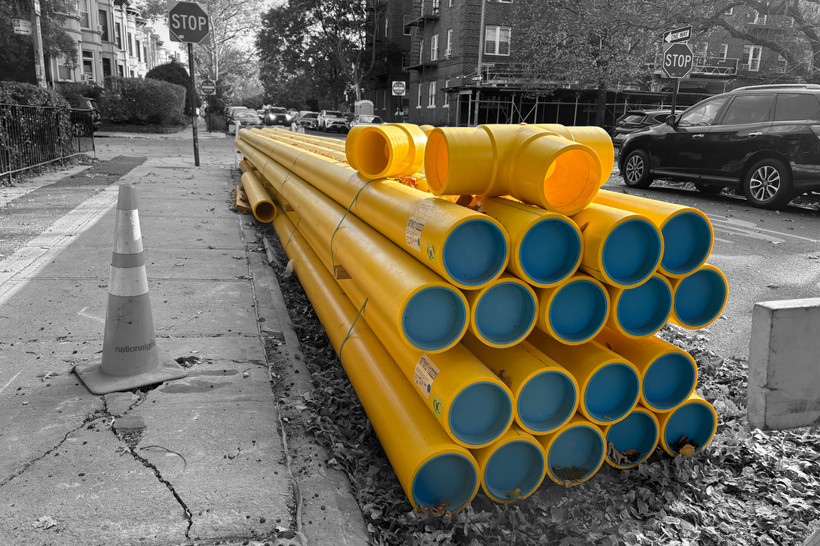
Replacing old, leaky gas pipes has become the largest driver of rising gas bills in New York. | Photo: Colin Kinniburgh

Sign up for Staying Focused, our newsletter keeping readers up to speed on New York politics.

State lawmakers want gas companies to give New Yorkers more notice when they’re planning to dig up a gas line — and a chance to consider cheaper or cleaner alternatives.

New York’s eight largest gas utilities together spend close to $1 billion a year replacing old pipes, and charge the expense to New Yorkers’ monthly bills. It’s become the largest driver of rising gas bills in New York. The state’s largest gas utility, National Grid, alone plans to spend roughly $500 million on the work just this year in New York City and Long Island — its single biggest construction expense. The work is laborious, often involving months of jackhammering and repaving streets and going building by building to swap out gas connections. And it’s often done with little warning.

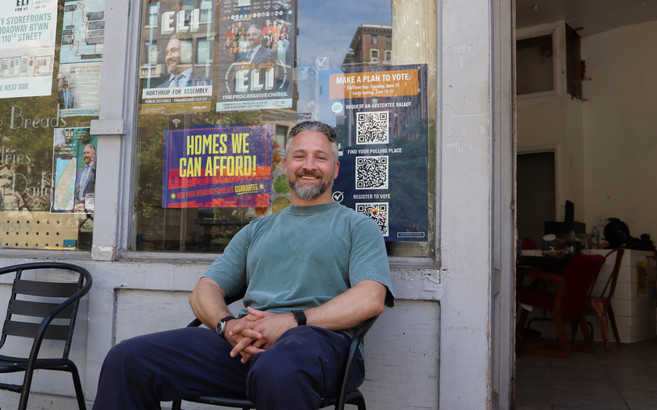
“My experience in my district is, all of a sudden, they’re digging up the road and you don’t know why it’s happening,” said Assemblymember Emily Gallagher. “There’s not really been any communication, even with us as elected officials, that they’re doing that.”

Now, lawmakers want to make the process more transparent. Gallagher and Senator Kristen Gonzalez are introducing a new bill that would require gas utilities to file annually updated maps of which old pipes they’re planning to replace and when.

State energy regulators would be tasked with publishing the maps and scrutinizing them to identify areas where it might make sense to retire the gas lines in favor of electric alternatives.

Gonzalez said the legislation aims to set “a clear, new tone for how utility companies should be reporting out the work that they’re doing.”

“We just want transparency,” said Kim Fraczek, director of the climate group Sane Energy Project, which is leading the push for the new legislation. “We should have the right to be able to see what they’re spending our money on.”

Recent research has highlighted the growing weight of pipe replacements on New Yorkers’ energy bills. A January white paper by the Future of Heat Initiative, a clean energy–oriented think tank, shows that “delivery” charges now make up three-quarters of New York gas bills. That’s a big change from a few decades ago, when bills were dominated by the cost of the gas itself.

Construction costs — including the profits utilities are allowed to earn on their investments — account for nearly half of delivery charges, the group found, overshadowing other expenses like customer service and taxes.

“We want to make sure that when infrastructure is replaced, it’s actually necessary, and that we’re doing it in the most community-minded manner,” Gallagher said. “This bill is a way to really hold [utilities] accountable and also help us plan for electrification.”

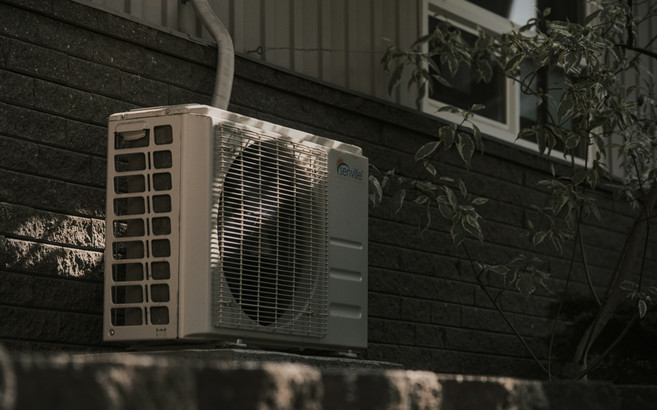
A study published last year by the climate think tank Switchbox found that in some cases, it would cost utilities less to equip all customers in an area with new electric appliances, like heat pumps and stoves, than to replace their gas lines. There are also more modest alternatives to replacing potentially leaky pipes: Larger pipes can be fitted with sleeves, for example, which prevent leaks at a lower cost.

But customers typically aren’t given the choice. As of now, New York utilities aren’t required to disclose much about their planned pipe replacement work in advance. As a result, residents don’t get a real chance to consider the alternatives, said Fraczek. Some utilities offer incentives for ditching gas, but efforts to promote them have been lackluster, she said. With the right information at their fingertips, local activists could pick up the slack.

The bill would be a tool “for us to basically be partners to the utility,” said Fraczek.

Similar legislation passed a decade ago in Massachusetts has helped spur a grassroots push toward cleaner heating in the state. The effort originally targeted highly polluting gas leaks, but has rippled into a wider campaign. A neighborhood in the city of Framingham now gets its heating from an all-electric “thermal energy network,” the first of its kind in the country, as the result of a collaboration between advocates and the utility Eversource.

Audrey Schulman, a self-trained climate researcher and advocate in the Boston area, says the disclosure requirement has “been invaluable, because it allows people to understand what they’re paying for … and just decide if that’s what they want.”

The New York bill’s sponsors are hoping that an election-year focus on energy affordability could speed the bill forward and allow it to pass before the state legislature adjourns in June. Gonzalez said that the Senate’s passage of a utility reform package last year showed the chamber’s interest in the issue.

But the bill’s proponents expect opposition from utilities.

“They’re going to push back … because they basically have a really good deal right now,” Gallagher said. She described current oversight from the state’s Public Service Commission as insufficient.

“It’s not that difficult to get things past the goalie,” she said.

Public Service Commission spokesperson Jim Denn disputed the characterization. “Costs related to replacing leak prone pipe are thoroughly examined by expert staff as part of the transparent rate case process,” he wrote in an emailed statement, adding that agency staff meet quarterly with utilities to make sure they are spending what they said they would.

Currently, the commission requires utilities to replace a certain amount of “leak-prone” pipe every year or face penalties. That doesn’t leave the companies much room to weigh other options.

Growing pipeline spending will likely face more scrutiny later this spring, when National Grid is expected to seek fresh rate hikes for New York City and Long Island residents. Climate activists are already targeting the company with protests demanding a faster transition off gas.

“National Grid’s investments in our infrastructure are approved by our regulator and are necessary to maintain the gas system,” a spokesperson for the company said, when asked about the spending. “Every day, we work closely with contractors and local stakeholders to ensure all work is performed safely, efficiently, and with minimal impact on the communities we serve.”

I hope this article helped you better answer the question that guides all of our journalism: Who runs New York? Before you click away, please consider supporting our work and making more stories like this one possible.

New York state is standing at a crossroads for climate action. After passing one of the nation’s most ambitious climate laws in 2019, the state is lagging far behind on its targets, struggling to meet deadlines to build renewable energy and clean up its buildings and roads. Other states are closely watching our progress, making decisions about their own climate plans based on New York’s ability to implement this legislation.

As New York’s only statewide nonprofit news publication, we’ve been scrutinizing the state’s climate progress. Our journalism exists to unpack how power works in New York, analyze who’s really calling the shots, and reveal how obscure decisions shape ordinary New Yorkers’ lives.

But we can't do this work without your help. We rely on reader donations to help sustain our outlet, and every gift directly allows us to publish more pieces like this.

Our work has already shown what can happen when those with power know that someone is watching, with my reporting prompting a state investigation and fine for a major corporation. I have more story ideas than I can count, but only limited resources to pursue all the leads that come across my desk.

If you’re able, please consider supporting our journalism with a one-time or monthly gift. Even small donations make a big difference.

Thank you for reading.


A photo of Colin Kinniburgh.
Colin Kinniburgh is a reporter at New York Focus, covering the state’s climate and environmental politics. He has worked in media for more than a decade, across print, television, audio, and online news, and participated in fellowship programs at CUNY’s Graduate School of Journalism… more
Also filed in New York State

Millions in outside spending was a boon to Gov. Kathy Hochul’s 2022 opponent, Lee Zeldin, and influenced down-ballot races.

The legislation would make it easier for currently and formerly incarcerated people and child victims to sue the state over allegations of past abuse.

State leaders are expected to pass a bill that avoids resolving how much Resorts World New York City needs to pay.

Also filed in Climate and Environment

Governor Kathy Hochul was successful in her bid to upend the Climate Leadership and Community Protection Act after legislators caved to finalize an overall budget deal.

The leader of Reinvent Albany discusses a data center subsidy in Rockland County that flew under the radar for years.

No other project in the country has gotten such a large subsidy to create so few jobs, according to watchdogs.

Also filed in Affordability

We’ve compiled information for SNAP recipients in New York on the changing work requirements.

Despite last-ditch efforts by a coalition of lawmakers, the state failed to avert a health coverage cliff coming this summer.

The Hochul administration now has a chance to relax New York’s child care staffing ratios — among the country’s strictest — after 26 years. But will it?