How a Fee To Fight Insurance Fraud Became a Cash Cow for Police

Critics say the $10 annual fees state drivers pay to fight car insurance theft and fraud aren’t being used as intended.

Chris Bragg   ·   March 11, 2026
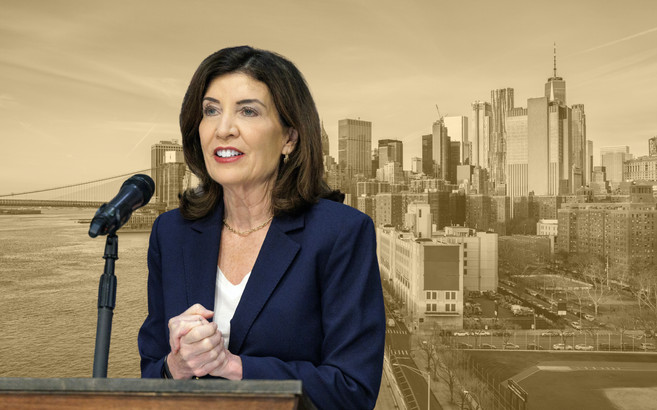
Revenue from the fee has exceeded $125 million annually in recent years, but most of it goes toward general police spending. | Photo: Camelia Ciocirlan/Canva | Illustration: New York Focus

Sign up for Staying Focused, our newsletter keeping readers up to speed on New York politics.

More than three decades ago, New York passed a law aimed at bringing down New Yorkers’ auto insurance bills — by raising them.

It tacked an extra fee onto auto insurance bills to help the state combat auto theft and insurance fraud. Drivers would pay a little more up front, the thinking went, but reap savings in the long run as the government took aim at the causes of higher premiums.

Since then, the annual fee has multiplied tenfold — from $1 to $10 — and the total collected in recent years has exceeded $125 million annually. 

But a smaller and smaller proportion of those fees has gone specifically toward addressing fraud and theft, New York Focus found. Instead, the vast majority of the money is routed into the state’s general fund and spent to cover State Police “operation expenses,” paying the salaries of uniformed officers, whose duties might include reducing fraud and auto theft but are generally broader in scope, with most focused on patrolling New York’s highways and enforcing traffic safety laws.

In her budget proposal this year, Governor Kathy Hochul has vowed to rein in drivers’ car insurance costs, which are among the highest in the country. Hochul is seeking to lower premiums by narrowing insurance companies’ liability for accidents and by fighting fraud. 

According to the New York branch of the American Automobile Association, fraud inflates New York drivers’ bills up to $300 annually, driven by insurance fraud rings that allegedly stage crashes and exploit the state’s no-fault insurance law. 

“Rampant fraud and runaway litigation costs are jacking up prices,” Hochul said during her State of the State address in January. “When the system allows out-of-control payouts, those costs get passed on to you in the form of higher monthly bills.”

But critics say the governor’s eagerness to fight fraud doesn’t jibe with her budget’s use of the revenue raised by the $10 Motor Vehicle Law Enforcement Fee. Hochul’s budget proposal would continue to allocate about 90 percent of that money toward overall budget expenses for the State Police.

While Hochul’s budget proposes an additional $2 million from the general fund for the State Police to pursue auto insurance fraud investigations, that figure pales in comparison to the amount of the fee — roughly $115 million — going toward general police spending. 

Continuing a practice of recent budgets, Hochul’s proposal also diverts $1.1 million in fee revenue intended for anti-fraud and theft efforts by local law enforcement agencies into the general fund for unspecified purposes.

Meanwhile, an oversight board that oversees such spending has struggled for years. At least seven people must be present to hold a meeting, but the board’s website lists only three members. The board had no expenses between 2023 and 2025, and has not had a quorum since March 2023. 

Brooklyn Assemblymember Latrice Walker says there needs to be a full accounting for how past fee revenue has been spent.

“New Yorkers have already paid hundreds of millions of dollars into a fund meant to fight insurance fraud,” Walker told New York Focus. 

“Before anyone talks about expanding fraud enforcement, drivers deserve answers about where all that money went,” she said.

In response to questions, a Hochul spokesperson said the money was being used properly because personnel paid through these dollars assist with fraud and theft investigations.

“Every dollar collected through this fee funds efforts that crack down on fraud and enhance public safety,” said Hochul spokesperson Jess D’Amelia. “Governor Hochul’s plan would build on the progress made and strengthen these efforts, driving down auto insurance rates and improving safety on our roadways.”

The funding goes towards the salaries of uniformed members, according to the State Police, who have a wide range of duties that go well beyond auto fraud and theft. “Our uniform members do handle cases involving stolen vehicle cases,” said State Police spokesperson Beau Duffy, “among all the other incidents they respond to.”

When the Motor Vehicle Law Enforcement fee was enacted in the early 1990s, the fee was $1 annually for each insured vehicle.

A 1994 law required $4.7 million of the revenue raised to be set aside for grants to law enforcement entities, such as district attorneys and local police, to combat theft and fraud. The law created a 12-member board, housed within the Division of Criminal Justice Services, to oversee this funding.

All remaining revenue was to go to the State Police, with the first $9.1 million set aside for purposes including, but not limited to, preventing automobile theft. Any additional amounts available could be used for State Police general operating expenses.

The program almost immediately faced criticism. A 1998 state comptroller audit found that much of the State Police spending of this revenue appeared unrelated to auto theft, and that because the 12-member board had not been fully appointed, it never had a quorum to hold meetings — and had failed to spend any of the millions directed its own way.

A 2003 audit found that State Police and DCJS could demonstrate “only limited success” in reducing crimes affecting insurance rates. Even so, the legislature and governor continued to hike the fee. It grew to $5 In 2003, then $10 in 2009.

As the revenue grew tenfold, Albany lawmakers never increased the amount — $13.8 million total — directed toward anti-fraud and theft activities. As a result, more than $116 million is now made available each year for more general budget expenses.

New York drivers “should feel misled and upset” about where the fees added to their premiums are going, said Rebecca Garrard, co-executive director of the liberal advocacy group Citizen Action of New York.

“It feels a little bit unconscionable that we have this money being funneled to the general fund which could be used to address issues that are being flagged as a problem,” Garrard said.

Garrard said the governor is “jumping straight towards curbing insurance companies’ liability instead of really spending on anti-fraud initiatives.”

Between 2011 and 2024, the state government collected a total of more than $1.7 billion in fees — an average of more than $123 million per year — according to annual reports issued by the Department of Financial Services.

Even the portion directed towards anti-theft and fraud activities may have been used for other purposes. A 2013 state comptroller audit found the State Police’s auto theft unit had not been fully staffed for five years nor purchased new equipment, while spending $1.2 million towards an IT consultant and $150,000 towards expenses of the governor’s security detail.

Of the $9.1 million directed toward State Police anti-theft activities last year, $7.1 million went to the agency’s Auto Theft Unit, according to Duffy. The other $2 million went to cover more general costs associated with State Police operations. Duffy noted that agency personnel across the state — not just in the Auto Theft Unit — take complaints and launch investigations concerning both auto theft and fraud.

Hochul’s office emphasized that the governor has dedicated other general fund money towards anti-theft efforts.

In 2023, for instance, Hochul announced $50 million for law enforcement technology and equipment that can help reduce crime, including vehicle theft, and $5 million to enhance justice alternatives and diversion programming for teenagers and young adults.

The oversight board that governs the grants to law enforcement continues to struggle. 

In 2024, a state comptroller audit found that because the board could not meet to amend prior grant distribution policies, the Department of Criminal Justice Services was forced to make allocations based on years-old crime data. 

In this year’s budget, Hochul is proposing substantial changes to the board’s structure, including eliminating the requirement that a certain number of members be present for the board to meet. Hochul’s plan would also shift power away from the board and towards the DCJS commissioner, Rossana Rosado, allowing the agency to execute contracts without board recommendations and to independently develop agency plans to curtail theft and fraud.

The Hochul administration did not respond to a question about why there had been such difficulty filling the board positions. A DCJS spokesperson said board vacancies had “not affected” the agency’s administration of the local law enforcement grants. According to the board’s most recent annual report, covering 2024, motor vehicle theft had declined 27 percent statewide.

Hochul’s budget proposals focus on limiting the liability of auto insurance companies, including allowing drivers to recover non-economic damages only if the injured driver is not at fault for an accident and narrowing the definition of a “serious injury.” The proposals are staunchly opposed by the state Trial Lawyers Association, one of Albany’s most influential interest groups. 

Proponents of Hochul’s proposals, including the insurance industry and ride-sharing giant Uber, note that auto insurance premiums have dropped in Florida and Michigan, where lawmakers adopted similar measures.

Russ Haven, legislative counsel at the New York Public Interest Research Group, believes such action is premature. He said the revenue from the $10 fee should be more narrowly targeted towards anti-fraud efforts, but also suggested a portion be used for an independent audit examining the drivers of rising premiums, including whether the industry’s own efforts to combat fraud are sufficient.

Insurance companies have filed numerous lawsuits against alleged fraud rings. But Haven says they may need to do more. Criminals are “always one step ahead of the insurance companies and law enforcement,” he said. “At some point, you would expect they would make headway.”

One-house budget resolutions released by the Senate and Assembly this week both differ substantially from the governor’s.

Among other changes, the Senate proposes cutting half of the $2 million in new money Hochul wants to spend combating insurance fraud. And both chambers rejected Hochul’s planned reorganization of the 12-person board, with the Senate saying that the issue was best addressed outside the budget process. The Senate said the same about Hochul’s proposal to increase penalties for crimes involving insurance fraud, and the Assembly also omitted that proposal.

At New York Focus, our central mission is to help readers better understand how New York really works. If you think this article succeeded, please consider supporting our mission and making more stories like this one possible.

New York is an incongruous state. We’re home to fabulous wealth — if the state were a country, it would have the tenth largest economy in the world — but also the highest rate of wealth inequality. We’re among the most diverse – but also the most segregated. We passed the nation’s most ambitious climate law — but haven’t been meeting its deadlines and continue to subsidize industries hastening the climate crisis.

As New York’s only statewide nonprofit news publication, our journalism exists to help you make sense of these contradictions. Our work scrutinizes how power works in the state, unpacks who’s really calling the shots, and reveals how obscure decisions shape ordinary New Yorkers’ lives.

In the last two decades, the number of local news outlets in New York has been nearly slashed in half, allowing elected officials and powerful individuals to increasingly operate in the dark — with the average New Yorker none the wiser.

We’re on a mission to change that. Our work has already shown what can happen when those with power know that someone is watching, with stories that have prompted policy changes and spurred legislation. We have ambitious plans for the rest of the year and beyond, including tackling new beats and more hard-hitting stories — but we need your help to make them a reality.

If you’re able, please consider supporting our journalism with a one-time gift or a monthly gift. We can't do this work without you.

Thank you,

Akash Mehta
Editor-in-Chief

A photo of Akash Mehta.
A photo of Chris Bragg.
Chris Bragg is the Albany bureau chief at New York Focus. He has done investigative reporting on New York government and politics since 2009, most recently at The Buffalo News and Albany Times Union.
Also filed in New York State

The DSA made gains in New York despite super PACs spending $9.6 million in state legislative races — nearly five times the total from 2024.

At a Board of Regents meeting Monday, state officials proposed eliminating credit-based diploma requirements.

The last-minute influx, the biggest ever for a legislative primary, is boosting her opponent, Jessica González-Rojas.

Also filed in Transit

Some of the city’s new aid will be canceled out by pension boosts.

Oswego County sheriff’s deputies held drivers for up to 45 minutes as they waited for immigration agents, potentially breaking the law.

Vornado Realty Trust has a stake in Halmar’s proposal to rebuild the Manhattan rail hub.

Also filed in Affordability

We’ve compiled information for the 450,000 New Yorkers who will lose health care coverage on July 1.

In May, state lawmakers passed a $269 billion budget after haggling for months over thousands of line items and policies affecting New Yorkers.

We’ve compiled information for SNAP recipients in New York on the changing work requirements.