Lawmakers Scrutinize Secretive Process Behind Energy Bill Hikes

In a state Senate hearing on spiraling energy bills, consumer advocates lamented the closed-door negotiations at the heart of New York’s ratemaking process.

Colin Kinniburgh   ·   October 2, 2025
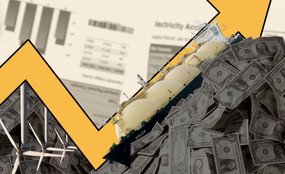
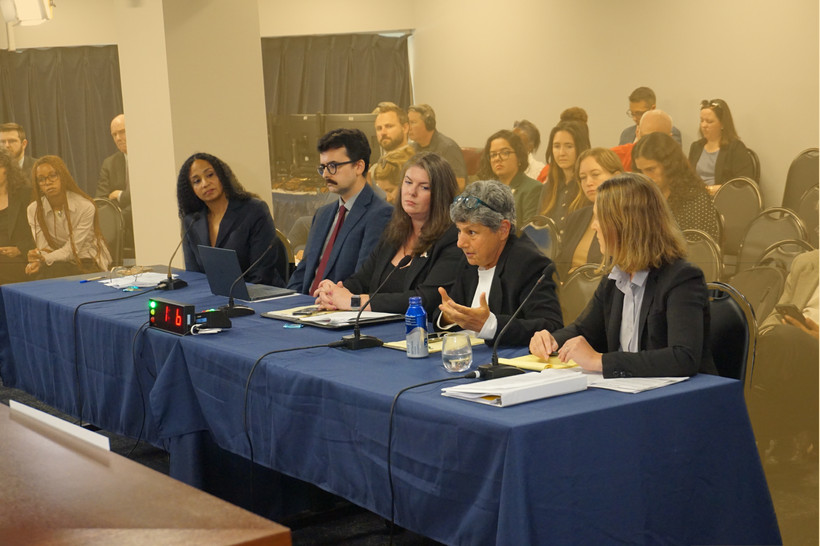
Irene Weiser, of Fossil Free Tompkins, and other advocates at a state Senate hearing about rising energy bills on September 30. | Photo: Colin Kinniburgh | Illustration: New York Focus

Sign up for Staying Focused, our newsletter keeping readers up to speed on New York politics.

In theory, the process that determines your energy bills plays out in public, through innumerable documents and comments posted online and hearings that are open to all. 

In practice, watchdogs say, the key decisions are made behind closed doors, in confidential settlement proceedings where utilities set the agenda and bring legal firepower that is impossible for most other participants to match. 

That secretive settlement process was a flashpoint at a state Senate hearing Tuesday on spiraling energy bills. Over the course of the day, senators questioned state and city officials, advocates, and utility representatives about the state’s energy policies and reforms that could rein in price hikes.

“The utility often controls the agenda, the schedule, the meeting, the order, the documents, which entities are at the table,” testified Laurie Wheelock, executive director of the consumer advocacy group Public Utility Law Project, or PULP. “That power struggle can be very difficult even for PULP to deal with, let alone a new organization or a small community-based organization.”

National Grid’s assistant general counsel Kris Kiefer acknowledged later in the hearing that the utility coordinates settlement talks, but said his company goes to “really painstaking efforts to make sure that all parties have an opportunity to discuss certain issues.”

“If we have an agenda item and we don’t happen to get to it because we spend a significant amount of time on something else, we’ll add it to the next standing committee meeting agenda and make sure that other parties see it and they can comment on it,” he said.

Utility settlement negotiations take place as part of what’s known as a rate case, which operates much like a court case. Regulators have taken 15 months on average to decide rate cases in the last few years; six or more of those months have often been tied up in the closed-door proceedings, a New York Focus review found. (The rest of the time is filled with back-and-forth filings and hearings that are largely public, if challenging for non-experts to navigate.)

Rate cases commonly used to be “litigated,” meaning parties hash out their disagreements in public before an administrative law judge. The judge then weighs the evidence and drafts a final compromise. Only one major gas and electric rate case has followed that process in recent years: the 2023–24 case brought by the embattled Central Hudson.

How a Rate Case Unfolds

Rate cases are supposed to be decided in 11 months, but it often takes well over a year. Here’s a typical timeline.


Utility Files Proposal

Initial filings are often thousands of pages long, touching on all aspects of a utility’s planned spending and finances.

Months 1–3: Initial Review, Hearings

Parties begin reviewing the proposal and request more information from the utility; the state assigns a judge to oversee the proceedings and hosts a first set of public hearings.

Months 3–4: Counter-Arguments

Regulators and other parties submit their responses to the utility’s proposal; the utility issues its rebuttals, and files for settlement.*

*In theory, the case could go before a judge to be litigated rather than settled, but in practice this is rare today.

Months 5–12: Closed Negotiations

The utility, DPS staff, and registered intervenors negotiate a settlement behind closed doors.

Months 12–? Settlement and Decision

The utility and DPS staff issue a deal known as a “joint proposal” to settle the rate case. Other parties respond. After another set of hearings, the PSC issues a verdict on the settlement and new rates take effect.

Sources: Public Service Commission website and filings.

Instead, settlement negotiations have come to dominate. The utility can move to settlement after the main public portion of the process wraps up. There, parties in a rate case negotiate in private over all aspects of the utility’s spending plan and its impact on customers. The utility, state agency staff, and others who register to participate hammer out a deal that satisfies as many parties as possible. To be in the room, negotiators have to keep their mouths shut about what happens inside.

Critics testified at the hearing that this slants the table sharply in the direction of the utilities — and allows them to get away with practices that wouldn’t withstand public scrutiny.

“Because of confidentiality, I can’t disclose if, hypothetically speaking … utilities inflated their initial revenue requests to create the illusion of compromise,” said Irene Weiser, coordinator of the climate group Fossil Free Tompkins.

New York’s top utility regulator, Rory Christian, defended the state’s process in his remarks at the start of the hearing.

“This entire rate case process depends on robust and transparent public engagement,” said Christian, who leads the seven-member Public Service Commission and the parallel, 500-person agency that together oversee the state’s utilities. The outcome in each case reflects a “detailed, evidentiary record” that the commission evaluates against state laws, he said.

Utility representatives defended the settlement process as an effective means of compromise. Kiefer, of National Grid, said confidentiality allows parties to speak freely and broker “positive outcomes” that could not be achieved through one-year litigated rate cases.

But he recognized a “power imbalance between the utility and some others” at the table, and said there was room to open up the process more.

Senators on Tuesday prodded witnesses to propose specific reforms, with an eye to the new legislative session that begins in January.

Wheelock suggested legislation that would return judges to the heart of the process while preserving one of the benefits of settlements: the ability to establish three-year rate plans, instead of fighting them out year after year. (Currently, litigated rate cases expire after one year.)

Weiser said it might be worth keeping the current settlement process largely intact — if it were stripped of its confidentiality. She proposed the legislature convene a commission to study the question and make recommendations.

Senator Leroy Comrie of Queens, who chaired the hearing, said more studies would only delay the kinds of changes needed.

“I think we need to support funding things immediately and not go down another road where we have to wait six months for a panel to be constructed,” he said. “We need to deal with these issues sooner than later.”

I hope this article helped you better answer the question that guides all of our journalism: Who runs New York? Before you click away, please consider supporting our work and making more stories like this one possible.

New York state is standing at a crossroads for climate action. After passing one of the nation’s most ambitious climate laws in 2019, the state is lagging far behind on its targets, struggling to meet deadlines to build renewable energy and clean up its buildings and roads. Other states are closely watching our progress, making decisions about their own climate plans based on New York’s ability to implement this legislation.

As New York’s only statewide nonprofit news publication, we’ve been scrutinizing the state’s climate progress. Our journalism exists to unpack how power works in New York, analyze who’s really calling the shots, and reveal how obscure decisions shape ordinary New Yorkers’ lives.

But we can't do this work without your help. We rely on reader donations to help sustain our outlet, and every gift directly allows us to publish more pieces like this.

Our work has already shown what can happen when those with power know that someone is watching, with my reporting prompting a state investigation and fine for a major corporation. I have more story ideas than I can count, but only limited resources to pursue all the leads that come across my desk.

If you’re able, please consider supporting our journalism with a one-time or monthly gift. Even small donations make a big difference.

Thank you for reading.

Colin Kinniburgh
Climate and Environmental Politics Reporter
A photo of Colin Kinniburgh.
Colin Kinniburgh is a reporter at New York Focus, covering the state’s climate and environmental politics. He has worked in media for more than a decade, across print, television, audio, and online news, and participated in fellowship programs at CUNY’s Graduate School of Journalism… more
Also filed in New York State

At a Board of Regents meeting Monday, state officials proposed eliminating credit-based diploma requirements.

The last-minute influx, the biggest ever for a legislative primary, is boosting her opponent, Jessica González-Rojas.

City budget gaps and an ambitious affordability agenda may require pressing Albany again for taxes and aid.

Also filed in Climate and Environment

The citizens assembly model, used for public decision-making around the world, is gaining traction in New York.

A lobbyist who has been romantically linked to Assembly Speaker Carl Heastie led a rally opposing the legislation a week before the speaker declined to bring it to a vote.

In May, state lawmakers passed a $269 billion budget after haggling for months over thousands of line items and policies affecting New Yorkers.

Also filed in Affordability

We’ve compiled information for the 450,000 New Yorkers who will lose health care coverage on July 1.

We’ve compiled information for SNAP recipients in New York on the changing work requirements.

Despite last-ditch efforts by a coalition of lawmakers, the state failed to avert a health coverage cliff coming this summer.