Hochul Proposed Banning ICE Collaboration Contracts. Here’s What You Need to Know.

The bill would dissolve contracts that allow federal immigration authorities to use county jails, but would leave more informal collaboration with local law enforcement untouched.

Liv Veazey   ·   January 31, 2026
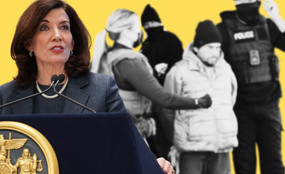
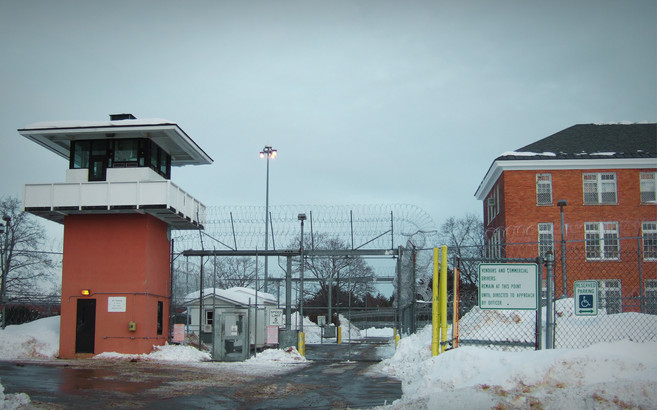
Asked how the bill would change his collaboration with ICE, the Village of Allegany's police chief told New York Focus: “It wouldn’t." | Photos: Office of Governor Kathy Hochul; Bill Badzo/Flickr; John Ramspott/Flickr | Illustration: New York Focus

Sign up for Staying Focused, our newsletter keeping readers up to speed on New York politics.

In a surprise move Friday, Governor Kathy Hochul proposed legislation that would ban New York cities and counties from entering into certain contracts with federal immigration authorities.

“They’re doing ICE’s job instead of focusing on their own job,” Hochul said, referring to local police who perform immigration enforcement on behalf of Immigration and Customs Enforcement.

The announcement marked a significant shift in the governor’s stance on protections for immigrants. Last week, she declined to support comprehensive sanctuary legislation, saying that New York’s current patchwork of policies are “working.”

The governor’s proposed Local Cops, Local Crimes Act would ban local governments from renting out jail space to immigration authorities until July 2029, significantly shrinking ICE’s New York detention network.

The bill would also prohibit localities from entering into or maintaining 287(g) contracts, which deputize local officers to identify, investigate, and sometimes arrest people on behalf of ICE. Local police agencies across the state have signed 14 such agreements, and more are in the works.

But Hochul’s proposal would not prohibit the many informal means by which local agencies work with federal immigration authorities, like by sharing intelligence or calling them when they arrest immigrants.

The Village of Allegany, in western New York, signed a 287(g) agreement with ICE earlier this month. New York Focus asked Police Chief Paul Griffith how Hochul’s proposal, which would void the agreement, would change his department’s practices.

“It wouldn’t,” he said. “All the 287(g) is doing is really just getting us reimbursed.”

“We already work with federal officers a lot,” Griffith said. That collaboration, he explained, has included transporting people to ICE’s detention center in Batavia and providing an “outer perimeter” when ICE conducts an arrest at someone’s house.

The village’s 287(g) agreement “is just getting us recouping some money,” he said.

What would Hochul’s proposal change, and how does it differ from other proposed legislation? Here’s what you need to know.

What are New York’s current rules around collaborating with ICE?

New York state limits state and local cooperation with immigration authorities through a piecemeal collection of executive orders, court rulings, and laws.

The most important anti-collaboration policy, an eight-year-old executive order signed by then-Governor Andrew Cuomo, restricts state agencies, including law enforcement, from asking about someone’s immigration status and from sharing information with federal authorities for the purpose of civil immigration enforcement.

That policy doesn’t apply to local governments, which retain broad discretion. A court ruling bars local officials from holding someone solely on behalf of immigration authorities, but most forms of collaboration — like alerting federal agents when someone is being released from jail, or disclosing an individual’s personal information — remain legal unless a locality has passed its own sanctuary policy.

Counties and municipalities can also sign 287(g) contracts, which allow local officers to work on behalf of ICE, and agreements allowing ICE to rent out jail cells. ICE paid New York local law enforcement millions of dollars to use their jail space in 2025.

In Nassau County on Long Island, County Executive Bruce Blakeman has trumpeted his collaboration with ICE. Under the county’s 287(g) and detention contracts, county law enforcement conducted immigration raids and detained some 3,000 people for ICE last year.

Blakeman has launched a campaign to challenge Hochul in this year’s gubernatorial election. The same day Hochul announced the Local Cops, Local Crimes bill, her campaign unveiled an attack ad against Blakeman accusing him of being “all in on ICE.”

“All the 287(g) is doing is really just getting us reimbursed.”

—Village of Allegany Police Chief Paul Griffith

For state agencies, Cuomo’s executive order doesn’t fully ban participating in immigration enforcement: They can investigate a person’s immigration status when that person’s status is “relevant” to alleged illegal activity.

It’s not clear how state agencies implement the caveat in practice. In early 2025, shortly after Trump’s second inauguration, Hochul released a list of ways in which state law enforcement could work with federal immigration agents. The categories were broad: Law enforcement could participate in immigration enforcement if an individual had been convicted of a state-level crime or if they were suspected of an immigration crime, rather than a civil violation.

How would Hochul’s proposal change the status quo?

Hochul’s bill would ban localities from entering into 287(g) and detention agreements until July 1, 2029, meaning that ICE wouldn’t be allowed to formally deputize local police or use New York county jails for holding detainees for that period. The provisions on detention are similar to those of the proposed Dignity Not Detention Act, a top priority of immigrant rights advocates.

During her press conference Friday, the governor also touted two immigration bills she had announced earlier this year. One would allow New Yorkers to sue federal agents for violating their constitutional rights. The other would enshrine “sensitive locations,” including schools, houses of worship, hospitals, and homes, as places federal immigration enforcement cannot enter to perform an arrest without a judicial warrant.

The governor has also proposed adding a stipulation to public safety grants from the state that would prohibit counties and cities from using grant money for civil immigration enforcement. Localities could still use their own resources to cooperate with ICE.

How does Hochul’s proposal differ from comprehensive sanctuary legislation?

Hochul’s bill takes a more limited approach than the New York immigrant rights movement’s preferred legislation: the New York for All Act. That bill would ban the contracts targeted by Local Cops, Local Crimes, while also prohibiting the many informal ways that local law enforcement can collaborate with federal immigration authorities.

New York for All would ban a long list of law enforcement practices, like inquiring about somebody’s immigration status, entering it into a database, and communicating with ICE about when somebody will be released from custody.

“They’re doing ICE’s job instead of focusing on their own.”

—Governor Kathy Hochul

In a joint statement, New York for All’s primary sponsors, state Senator Andrew Gounardes and Assemblymember Karines Reyes, wrote that, although the governor’s proposal “may eliminate the most formal arrangement of coordination between local law enforcement and ICE, it allows other pervasive forms of collusion to continue that erode public trust and safety.”

In an interview with Spectrum News last week, Hochul expressed concern that New York For All would hamper law enforcement investigations.

“I have to be able to assist when there’s a court order. … If we know where someone is who could be hurting New Yorkers, members of the immigrant community — like someone’s committing domestic violence against a partner, someone who is assaulting others, someone who’s committing retail theft — how do I turn my eye to that and only enforce the law against New Yorkers?” she said. “I can’t do that.”

Hochul’s statement seemed to imply that sanctuary legislation would prevent local law enforcement from pursuing criminal investigations and honoring warrants. Legal experts say that’s false.

“A court order by a judge has to be followed regardless of if any of the parties want to or not,” said Lauren DesRosiers, director of the Albany Law School’s Immigration Law Clinic. “There is nothing in New York for All that prevents our legal system from working in the normal ways.”

During her press conference on Friday, Hochul seemed to have softened on the more comprehensive legislation. “There are elements that are certainly important,” she said, referring to New York for All. “I want to have conversations with the legislature.”

State Senate Majority Leader Andrea Stewart-Cousins said on Friday that Hochul’s proposals “sound like meaningful steps forward,” but reiterated her support for “the goals and principles of New York for All.” Assembly Speaker Carl Heastie, who has not taken a position on New York for All, said his chamber would discuss both Hochul’s proposals and other bills to protect immigrants.

Sam Mellins contributed reporting.

BEFORE YOU GO, consider: If not for the article you just read, would the information in it be public?

Or would it remain hidden — buried within the confines of New York’s sprawling criminal-legal apparatus?

I started working at New York Focus in 2022, not long after the outlet launched. Since that time, our reporters and editors have been vigorously scrutinizing every facet of the Empire State’s criminal justice institutions, investigating power players and the impact of policy on state prisons, county jails, and local police and courts — always with an eye toward what it means for people involved in the system.

That system works hard to make those people invisible, and it shields those at the top from scrutiny. And without rigorous, resource-intensive journalism, it would all operate with significantly more impunity.

Only a handful of journalists do this type of work in New York. In the last decades, the number of local news outlets in the state has nearly halved, making our coverage all the more critical. Our criminal justice reporting has been cited in lawsuits, spurred legislation, and led to the rescission of statewide policies. With your help, we can continue to do this work, and go even deeper: We have endless ideas for more ambitious projects and harder hitting investigations. But we need your help.

As a small, nonprofit outlet, we rely on our readers to support our journalism. If you’re able, please consider supporting us with a one-time or monthly gift. We so appreciate your help.

Here’s to a more just, more transparent New York.

Chris Gelardi
Justice Bureau Chief

A photo of Chris Gelardi
Liv covers immigration for New York Focus. She previously reported for Hell Gate, where she wrote about ICE arrests in immigration court, city culture, and the 2025 mayoral election. Before becoming a journalist, she practiced and taught oral history in New York City… more
Also filed in Criminal Justice

It’s unclear whether the Correctional Association of New York will have to scale back its nascent reform initiatives.

The legislation comes after months of haggling over how best to protect New Yorkers from President Trump’s immigration crackdown.

Footage published by New York Focus sparked a debate over deputies’ practice of calling Border Patrol on Spanish-speaking drivers.

Also filed in New York State

State leaders are expected to pass a bill that avoids resolving how much Resorts World New York City needs to pay.

New York state has pumped millions of taxpayer dollars into an online portal that vowed to make life easier for Rochester’s neediest, but critics say it’s fallen short.

Resorts World is floating legislation to avert more than $500 million in payments to the horseracing industry.

Also filed in Immigration

The Department of Justice has terminated more than 100 immigration judges since last year as it has pressured courts to order more deportations.

Shelter providers have had to lay off staff, while the children’s already uncertain futures have become even murkier.

After a New York Focus investigation, a Bronx charity distributed nearly $400,000 to survivors of a deadly 2022 fire.

Also filed in Explainers

We’ve compiled information for SNAP recipients in New York on the changing work requirements.

We answer your questions on the state’s notoriously opaque budget process.

Amid abortion bans and rising digital surveillance, Albany lawmakers are revisiting an effort to stop companies from selling sensitive health information.