‘I’m a Human Rights Violator’: Staff at Youth Prison Recount Lockdowns, Turmoil, 24-Hour Shifts

A yearslong staffing crisis at state-run facilities has taken its toll on incarcerated kids and the workers who watch over them.

Chris Gelardi   ·   February 4, 2026
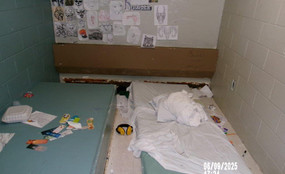
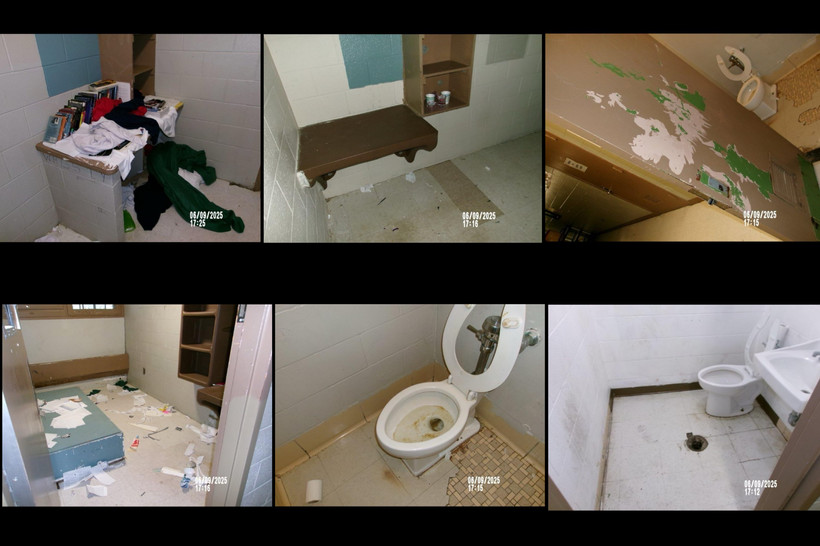
In response to a callout from New York Focus, workers shared photos and documents about conditions at Industry Residential Center, a youth prison near Rochester. | Photos courtesy of an Industry Residential Center employee
  • State-run youth prisons are severely understaffed. A Rochester-area facility has regularly operated with only a tenth of the staff it’s supposed to have available to supervise youth.

  • Incarcerated youth at state-run facilities are often locked in small cells for upwards of 23 hours a day, according to staff and a recent lawsuit. They’ve missed out on school and programs.

  • Administrators have frequently ordered staff to work long overtime hours, including shifts that last 24 hours or more, workers allege.

  • Understaffing has contributed to employee injuries, according to a union that represents some of the staff.

  • State legislators will have an opportunity to interrogate agency leadership during a hearing on Thursday.

Sign up for Staying Focused, our newsletter keeping readers up to speed on New York politics.

Understaffed units. Apathetic leadership. Anguished kids locked alone in rooms for hours at a time. For some workers at Industry Residential Center, a youth prison complex near Rochester, a job they thought would offer a way to help troubled kids has turned into a nightmare.

Under state regulations, boys incarcerated at the 130-bed complex are supposed to spend their days in class, participate in vocational programs, and socialize with peers in their housing unit. Instead, they’ve been locked in cells, sometimes for upwards of 23 hours a day, for days or weeks on end, according to a lawsuit filed last month against the state agency that runs the facility. Most of the cells lack bathrooms, leaving the youth to urinate into bottles when they can’t hold it, and some lack air conditioning, staff said. Kids in one building spend summer days sleeping on the floor without clothes.

Crisis is the status quo at Industry, as it has been across much of New York’s youth prison system. For years, pervasive dysfunction has flown under the radar. Staff and advocates for youth hope to change that.

In response to a callout from New York Focus, four workers shared anecdotes and documents outlining harrowing conditions at Industry. Two currently work at the complex; two are on leave but worked shifts last year. They spoke on the condition of anonymity, noting that they could face discipline for sharing information with the press. New York Focus confirmed their employment histories using public state payroll data.

The workers described a grave staffing shortage in the state’s youth prisons that has hindered operations since at least 2022. The documents they shared show widespread understaffing, with Industry’s two facilities among the hardest hit, especially when it comes to low-level staffers responsible for supervising incarcerated youth. Over the past year and a half, one of the facilities regularly operated with 90 percent fewer of those workers available than it’s supposed to.

When there aren’t enough support staff, those on duty are left with few options other than locking kids in cells. Meanwhile, staff rush from one area to another to address emergencies. Workers have been injured confronting frustrated detainees. Some staff have been forced to work shifts that last 24 hours or longer — then report back the next day.

Do you work at an OCFS secure or limited secure facility? Do you have a loved one incarcerated in one of the facilties? Were you incarcerated yourself?

New York Focus wants to hear from you. Email reporter Chris Gelardi at chris@nysfocus.com or message him on the Signal messaging app at @cgelardi.42.

In response to a detailed list of questions, the state Office of Children and Family Services, or OCFS, which runs the youth prisons, said in a statement that it has “clear protocols that are designed to ensure the safety of youth, and staff, while incorporating trauma-informed and mental health-responsive practices.”

“We have, and will continue to, undertake significant efforts to strengthen staff recruitment and retention while reinforcing operations, oversight, and accountability to ensure every young person in our facilities is protected and treated with dignity and respect,” the agency said.

From the workers’ perspective, agency leadership has accepted the status quo, and left them to suffer the consequences.

The workers spoke to New York Focus out of frustration and guilt, hoping publicity will spur decision-makers to investigate conditions at the facilities and take action. State legislators will have an opportunity to probe the issue on Thursday, when OCFS leadership testifies at an annual budget hearing.

“Why are we here? We are part of the problem,” a staffer said, breaking into tears.

“I’m a human rights violator,” said another.

Industry Residential Center contains two of New York’s 11 state-run youth prisons. OCFS facilities hold nearly 600 adolescents, ages 12 to 21, who are convicted of crimes in family or youth criminal court. Nearly two-thirds of the residents are Black.

Last month’s lawsuit, filed by the Legal Aid Society and the firm Jenner & Block, argued that dysfunction in the facilities is harming the young people in custody. A 16-year-old at Industry’s highest security facility was locked in his cell between 22 and 24 hours a day for a month last spring, then for another month starting in August, the lawsuit alleged. The isolation caused him to deteriorate mentally; he’s depressed and acts out to mitigate the loneliness, according to the suit.

Workers said inadequate staffing makes it difficult to run programs or let kids out of their cells. The Covid-19 pandemic saw an exodus of facility workers, while a reform law known as Raise the Age diverted more convicted youth from adult prisons to OCFS facilities.

The number of full-time staff at the youth facilities declined by 13 percent between January 2019 and December 2022, limited publicly available data shows. Their incarcerated populations grew by 65 percent over the same period — and continued growing, with no comparable increase in staff, workers said. OCFS’s incarcerated population is now double what it was when Raise the Age was passed in 2017. The agency did not respond to a request for updated staffing data.

“It’s essentially solitary confinement.”

—Staff member, Industry Residential Center

Last year, Industry was budgeted to employ 223 full-time youth support workers, who supervise youth during programs and recreation, according to data compiled by the Public Employees Federation, a union that represents some of the facility’s workers. The facilities employed 32 percent of that number as of last summer, and only half of those were available to work, with the rest out on workers’ compensation or other types of leave. The higher-security facility had only 11 percent of its target number of youth support staff available.

Chronic understaffing leads to tension within the facilities, workers said. OCFS requires units to have an appropriate ratio of staff to youth — generally between four and six kids for every trained staffer, depending on the unit — to facilitate programming and recreation, staff said.

When there aren’t enough staff to achieve that ratio, workers are forced to “restructure” the programming, staffers explained. At times, that means letting half of a unit’s kids out of their cells at a time, or letting some units out of their cells while the rest of the facility is locked down, staff said. Experienced workers who have good rapport with the youth sometimes let them out of their rooms when they’re out of ratio, risking getting written up by their managers so kids can socialize or use the phone.

“I would rather take the risk of getting paperwork than leaving kids in the room for 24 or 48 or 72 hours,” said a youth support coordinator at Industry.

Other times, understaffing leads to extended lock-ins, during which the kids are secluded with no way to call home or interact with staff or peers. “It’s essentially solitary confinement,” the worker said. There’s often no schooling during lock-ins, though education staff will sometimes give kids worksheets in lieu of classroom time, staff said.

“They’re depriving these kids of an education,” another worker said of OCFS.

Prolonged solitary confinement can lead to psychosis, depression, and self-harm, particularly in young people, research has shown. A state comptroller report found that documented incidents of self-harm that included “an expression or gesture of suicide” in OCFS secure facilities rose 667 percent between 2019 and the end of 2022.

Industry staff describe youth having breakdowns while they’re in isolation.

“We’ve had kids that would wipe feces on the wall,” one staffer said. Others bang on their cell doors or urinate into the hallway.

“I mean, what would you do if you’re locked in a room and your base fundamental needs aren’t being met?” the staffer said.

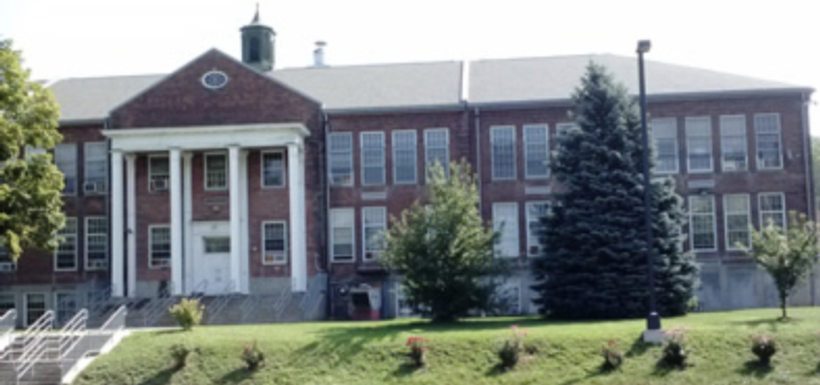
Industry Residential Center near Rochester, NY. | Photo: New York state Office of Children and Family Services


To make up for low staffing levels, Industry relies heavily on overtime.

OCFS orders youth support staff to work 16- or 24-plus-hour shifts, workers said. In a letter to state lawmakers in June, the Public Employees Federation wrote that some staff have worked 40-plus-hour shifts.

An internal OCFS spreadsheet from the first nine months of 2024 shows that some youth support staff were ordered to work overtime several times a week for weeks on end.

Administrators use seniority to determine who’s mandated to work overtime. One employee who had less than a year of OCFS service was ordered to work overtime at least 106 times over a 240-day period, according to the spreadsheet.

There are no built-in sleep breaks for long shifts, staff said. “I’m working from the time I get in to the time I’m relieved,” a worker said. And staff aren’t guaranteed extra rest after extended overtime. In May 2025, the director of Industry’s secure facility, Steven Lefave, sent a memo to staff about 24-hour shifts. Workers were entitled to eight hours of rest time after a full-day shift, Lefave clarified — but that’s it.

“No staff member is permitted to be given the next day off due to working a 24-hour shift,” he wrote. Lefave directed New York Focus’s questions to OCFS, which did not answer questions about 24-hour shifts.

“A human being can’t operate like that,” a staffer said.

Staff who refuse to work overtime or to return to work after a long shift are subject to discipline, workers said. The lengthy and frequent overtime shifts make working conditions even more dangerous, they argued. Exhausted workers are left to juggle their own safety with the wellbeing of frustrated, cooped up boys. It’s a difficult task that becomes nearly impossible when emergencies arise, explained a youth support coordinator.

For each shift, OCFS facilities designate on-duty administrators, who are responsible for coordinating the movement of staff and residents and attending to any crises. There’s supposed to be an administrator on duty for each of Industry’s two facilities, but staff said they’re regularly tasked with overseeing both campuses simultaneously.

“I mean, what would you do if you’re locked in a room and your base fundamental needs aren’t being met?”

—Staff member, Industry Residential Center

“We run from one campus to the next, crisis after crisis,” the youth support coordinator said. As the on-duty administrator, they’d sometimes have to lock down one facility to send support staff to the other — which could lead to further problems.

“Once we shut down one campus, the kids on that campus are upset, so we have to run back down,” they said. They recalled instances in which staff have restrained multiple kids in both facilities simultaneously.

“It’s just controlled chaos,” they said.

Randi DiAntonio, vice president of the Public Employees Federation, which represents teachers, psychiatrists, and other specialized OCFS workers, recounted an instance in late 2023 during which an education worker at Industry was left alone with a group of boys. A resident hit her in the face, causing a “disfiguring” injury, DiAntonio said. (She declined to provide further details, citing medical privacy.) 

The union has documented other instances of staff getting injured. Last year, a worker “sustained life-altering injuries” when a resident used a vent cover torn off his housing unit to hit them, the union wrote in its June letter.

The problems that plague Industry create a feedback loop, workers said: The facilities desperately need staff, but few want to work at them.

Conditions are a central driver of retention problems, staff said. State government jobs are often seen as stable, long-haul careers; employees stay for years or decades. The spreadsheet obtained by New York Focus shows that, as of September 2024, the median youth support worker listed to work at Industry had just over two years of state service.

“Once they get there and see what they’re up against, they’re like, ‘Screw that,’” said a staffer.

Some Industry workers have expressed their concerns to OCFS. Testimonials from staff, included in a draft Public Employees Federation report from October, described administrators responding with apathy or hostility. (A federation spokesperson said the union plans to publish a final version of the report later this year.)

“They listen, but they don’t change how they operate the facility,” read one testimonial. “I have heard facility managers say, ‘you know what you signed up for’ and ‘you can find another job.’”

“They don’t care about whether we stay at the job or not. We are just bodies filling holes.”

The draft report and June letter are part of a union campaign to get OCFS to take conditions at Industry more seriously.

The campaign is one of the only things that has spurred administrators to take action, according to staff. It’s had limited success. The workers and DiAntonio said that while the facility is still severely understaffed, conditions have improved in recent months. An overhaul to the facilities’ scheduling practices has reduced instances of excessive overtime, one staffer said, and so far this year, lock-ins have rarely led to canceled schooling.

OCFS told New York Focus that it has launched statewide staffing initiatives, which include creating a recruitment and retention unit, hosting more hiring events, and making the onboarding process less burdensome.

Still, fundamental issues remain, and workers said the state can do more to fix them.

On Thursday, OCFS leadership will testify at an annual budget hearing — one of the few opportunities lawmakers get to publicly grill agency heads. Commissioner DaMia Harris-Madden faced no questions about conditions in OCFS’s facilities at last year’s budget hearing, despite lock-ins and mandatory overtime reaching crisis levels in 2024, according to staff.

“They’ve become more committed to hiding these problems than addressing them,” a worker said.

BEFORE YOU GO, consider: If not for the article you just read, would the information in it be public?

Or would it remain hidden — buried within the confines of New York’s sprawling criminal-legal apparatus?

I started working at New York Focus in 2022, not long after the outlet launched. Since that time, our reporters and editors have been vigorously scrutinizing every facet of the Empire State’s criminal justice institutions, investigating power players and the impact of policy on state prisons, county jails, and local police and courts — always with an eye toward what it means for people involved in the system.

That system works hard to make those people invisible, and it shields those at the top from scrutiny. And without rigorous, resource-intensive journalism, it would all operate with significantly more impunity.

Only a handful of journalists do this type of work in New York. In the last decades, the number of local news outlets in the state has nearly halved, making our coverage all the more critical. Our criminal justice reporting has been cited in lawsuits, spurred legislation, and led to the rescission of statewide policies. With your help, we can continue to do this work, and go even deeper: We have endless ideas for more ambitious projects and harder hitting investigations. But we need your help.

As a small, nonprofit outlet, we rely on our readers to support our journalism. If you’re able, please consider supporting us with a one-time or monthly gift. We so appreciate your help.

Here’s to a more just, more transparent New York.

Chris Gelardi
Justice Bureau Chief
A photo of Chris Gelardi
As New York Focus’s justice bureau chief, Chris Gelardi reports and edits work on the state’s criminal-legal and immigration systems. His writing on cops, jails, ICE, and the US military has appeared in more than a dozen other outlets, most frequently The Intercept… more
Also filed in Criminal Justice

The legislation would make it easier for currently and formerly incarcerated people and child victims to sue the state over allegations of past abuse.

It’s unclear whether the Correctional Association of New York will have to scale back its nascent reform initiatives.

The legislation comes after months of haggling over how best to protect New Yorkers from President Trump’s immigration crackdown.

Also filed in New York State

Millions in outside spending was a boon to Gov. Kathy Hochul’s 2022 opponent, Lee Zeldin, and influenced down-ballot races.

State leaders are expected to pass a bill that avoids resolving how much Resorts World New York City needs to pay.

New York state has pumped millions of taxpayer dollars into an online portal that vowed to make life easier for Rochester’s neediest, but critics say it’s fallen short.