ICE Detainees in New York Jails Can’t Talk to Their Lawyers

Some immigrants held in county jails are struggling to access legal advice, phone calls, and even their own court hearings.

Julia Rock and Isabelle Taft   ·   October 6, 2025
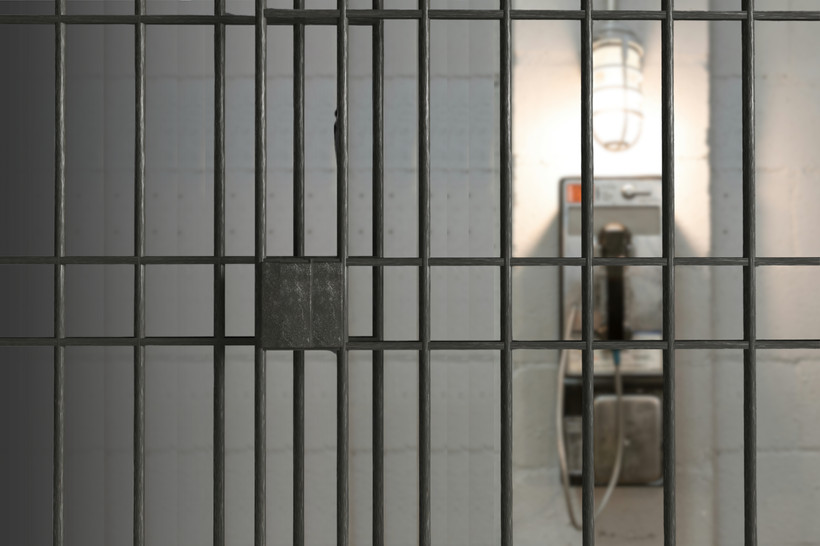
An unreachable phone seen from inside a jail cell.
New York County jails that have rented beds to ICE sometimes don’t give people facing immigration proceedings access to phone calls. | Photos: doomu/Getty Images; RDNE Stock Project | Illustration: Leor Stylar

Sign up for Staying Focused, our newsletter keeping readers up to speed on New York politics.

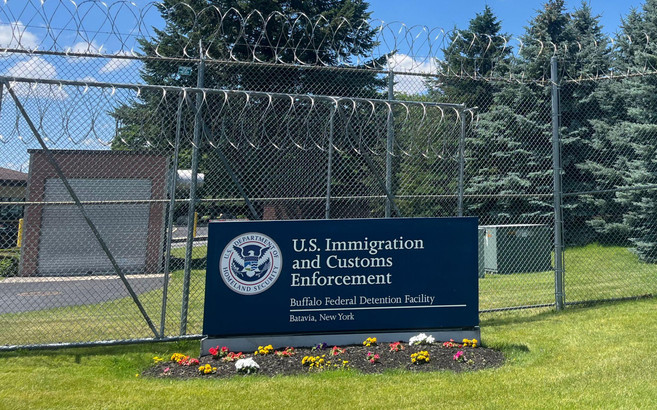
While Ramon Eduardo Contreras-Hernandez was detained at the US Immigration and Customs Enforcement detention center in Batavia earlier this year, he regularly saw attorneys visiting their clients, giving him some sense of connection to the outside world. At the Broome County jail, where he was transferred with no explanation about seven weeks ago, it’s a different story.

“I haven’t seen lawyers come to visit anyone,” he said in Spanish. “We’re more abandoned.”

As far as Contreras-Hernandez knows, he has no upcoming court dates, but he’s struggled to get information about his case. He’s asked ICE agents for information when they come to pick up or drop off people at the jail, but they tell him they don’t have any. In a bunk room with dozens of other ICE detainees, he spends his days praying and watching the news, “to see if there’s any hope” for himself and the others.

The number of ICE detainees in county jails across the state has exploded, as New York Focus reported last month. Seven jails now rent bed space to the federal agency, and jails held nearly six times as many ICE detainees in the first half of this year as they did all of last year.

Some of the facilities, including Broome, are holding immigration detainees for the first time in years. They’re poorly equipped to do so, according to current and former detainees and immigration lawyers.

Attorneys say it’s often difficult to locate and communicate with ICE detainees at some jails, in part because they have inconsistent access to phones. The jail in Nassau County, on Long Island, does not allow phone access at all. Orange County jail, in the Hudson Valley, limits visiting hours and technological issues there have complicated legal calls. And at Broome, detainees say they have missed court dates because jail staff didn’t help them log on to their virtual hearings.

These and other issues have left some detainees eager to leave, even if it means transferring to federal facilities that are farther away.

ICE’s detention standards require jails holding its detainees to allow phone calls and communication with attorneys. ICE did not respond to questions about how it is enforcing those rules or whether New York’s jails are meeting them. None of the jails mentioned in this story responded when asked about the requirements.

Detainees at the Broome County jail sometimes struggle to get basic information about their cases and what it might take to get out, said Luna Azcurrain, who regularly visits the jail with the advocacy group Justice and Unity for the Southern Tier.

“Unless someone is coming to visit you, you’re probably not going to get any help,” Azcurrain said. Broome County jail “just is not designed” to help immigration detainees, she said.

Broome County Sheriff Fred Akshar did not respond to a request for comment.

Unlike criminal detainees, who are assigned a public defender if they can’t afford a lawyer, most immigration detainees have to find an attorney themselves if they want help fighting deportation or at least understanding their options. They may have to do so from inside detention, and county jails don’t make it easy.

Some county jails don’t appear in ICE’s online detainee locator database, so it can be difficult for attorneys and advocates to find someone who’s been taken to one. 

Matthew Geiling, an immigration attorney who mostly represents clients upstate, said that when he’s looking for someone who has been taken to a county jail, the locator tells him to contact the local ICE office, adding another step.

Getting in touch is the next hurdle. Jennifer Connor, executive director of the Buffalo-based organization Justice for Migrant Families, said she knew of one woman taken by ICE to the Niagara County jail who was not able to make phone calls longer than 60 seconds until close to the end of her 10-day detention there. Then she was transferred to a detention center in Colorado.

Immigration attorneys have had to learn each jail’s idiosyncratic rules around communication and visitation. 

ICE detainees held at the Nassau County jail have not been allowed to place phone calls, said Delaney Rohan, an attorney with the Legal Aid Society’s Immigration Law Unit, and other attorneys. His organization and a couple of others provide free legal assistance through a New York City–funded program that guarantees representation in immigration cases in the city.

Many of Rohan’s clients are taken to Nassau or to Orange County jail, which has long held ICE detainees. “I used to think [Orange County jail] was the worst in terms of access to counsel,” said Rohan. “Now it’s like, at Orange, at least in theory I’ll be able to talk to them.”

“We’ve had to do hearing prep using whiteboards because the sound wasn’t working.”

—Rosa Cohen-Cruz, Bronx Defenders

Even then, the rules sometimes change. Early one week in September, officials at the Orange County jail told Rosa Cohen-Cruz, an immigration attorney at the Bronx Defenders, that the jail would not be scheduling any more legal calls for the remainder of the week.

When calls do get through, the jail’s technology has posed issues. “We’ve had to do hearing prep using whiteboards because the sound wasn’t working, where you’re writing messages back and forth to your client using a dry erase board. That’s an impossible way to prepare someone for a hearing,” said Cohen-Cruz. Those hearings may be the one, brief chance a person has to bring their defense against being deported.

Some attorneys and advocates said people have reported missing court dates while detained at county jails, where staff are often unfamiliar with the immigration court system. Azcurrain said one man detained in Broome County told her he missed multiple court dates before jail staff finally helped him attend a virtual hearing. There, a month after his original court date, he agreed to leave the US — and started the process of returning to his home country.

The isolation and despair people face in ICE detention, compounded by challenges accessing legal help, have led people to accept leaving the country, even if they have a strong case to stay.

“We’ve seen people accept their deportation even when they were basically next in line for a green card,” said Jaclyn Kelley-Widmer, a professor at Cornell Law School who also runs an immigration clinic. “People are getting pressured and they don’t have a way to contact their attorney.”

Even though there have been reports of solitary confinement, abuse from guards, and lack of medical staff at the federal facility in Batavia, some people detained in the county jails have told New York Focus that the isolation and conditions make federal detention centers seem more appealing.

G., an ICE detainee who has been held at the Broome County jail for more than two months, told New York Focus he is looking forward to getting to Batavia en route to his voluntary departure flight because there, he’ll be able to make international phone calls. He has not been able to communicate directly with his wife back in his home country since he was arrested more than two months ago. (He asked New York Focus not to publish identifying details for fear of retaliation.)

Miriam Mars, a staff attorney at the Legal Aid Society, has a client who was held at the Nassau County jail for a couple of days before being transferred to Fort Bliss, one of ICE’s largest detention facilities, in Texas. Federal inspectors have found numerous violations of ICE’s standards at Fort Bliss, including that people detained there could not contact their lawyers, access information about their cases, or get necessary medical care.

“I haven’t seen lawyers come to visit anyone. We’re more abandoned.”

—Ramon Eduardo Contreras-Hernandez, currently detained at Broome County jail

“After a week of being there, he said the Nassau County jail was worse,” Mars told New York Focus. Mars’s client reported that at Nassau, the drinking water and showers had a bad smell, and detainees were not fed three times a day, the client told Mars.

Last month, a man died in ICE custody at the Nassau County jail, the state’s first reported death in ICE custody this year. The death is under state investigation, according to Newsday. The Nassau County Sheriff did not respond to a request for comment.

Broome County Sheriff Akshar has said ICE detainees are treated like any other person detained in his jail. 

Immigration detainees have reported being worn down by the conditions that all people in county jails face, such as poor food quality, overcrowding, and limited access to medical care. Unlike those being held in jail on criminal charges, however, people in immigration detention usually don’t know when they’re going to be transferred or released.

There typically aren’t bilingual services, either, said Kate Johnson-Powers, the post-release manager at the Envision Freedom Fund, which runs a hotline for people in immigration detention in New York and nearby. “You’re just wasting away and you don’t know how long it will be.”

In April, Akshar wrote in a public statement that most ICE detainees left Broome County within a week. But some people are spending months there. Using the Broome County jail docket and the ICE detainee locator, New York Focus identified 12 ICE detainees who had been at the jail for at least two months as of late September. The detainees are from countries including China, Eritrea, India, Haiti, and Guatemala.

Contreras-Hernandez desperately hopes to avoid joining Broome County’s population of long-term immigration detainees. The Venezuelan native has no sense of what might come next. 

With his asylum application, Temporary Protected Status, and a well-maintained car to his name, he didn’t expect any problems when he and his wife decided to drive to New York from Texas with their newborn daughter this winter.

“I wanted to see the snow,” he said.

Instead, in February, he was pulled over and then detained.

Correction: October 8, 2025 — A previous version of this story said that 20 detainees were held in one room at the Nassau County jail, according to one detainee held there. That description was of a different facility in New York, the person's lawyer clarified after publication, and has been removed.

BEFORE YOU GO, consider: If not for the article you just read, would the information in it be public?

Or would it remain hidden — buried within the confines of New York’s sprawling criminal-legal apparatus?

I started working at New York Focus in 2022, not long after the outlet launched. Since that time, our reporters and editors have been vigorously scrutinizing every facet of the Empire State’s criminal justice institutions, investigating power players and the impact of policy on state prisons, county jails, and local police and courts — always with an eye toward what it means for people involved in the system.

That system works hard to make those people invisible, and it shields those at the top from scrutiny. And without rigorous, resource-intensive journalism, it would all operate with significantly more impunity.

Only a handful of journalists do this type of work in New York. In the last decades, the number of local news outlets in the state has nearly halved, making our coverage all the more critical. Our criminal justice reporting has been cited in lawsuits, spurred legislation, and led to the rescission of statewide policies. With your help, we can continue to do this work, and go even deeper: We have endless ideas for more ambitious projects and harder hitting investigations. But we need your help.

As a small, nonprofit outlet, we rely on our readers to support our journalism. If you’re able, please consider supporting us with a one-time or monthly gift. We so appreciate your help.

Here’s to a more just, more transparent New York.

Chris Gelardi
Justice Bureau Chief
A photo of Chris Gelardi
Julia Rock is a reporter for the Financial Times. She was previously an investigative reporter at New York Focus and The Lever.
A photo of Isabelle Taft.
Isabelle Taft covers immigration for New York Focus. She’s also a corps member with Report for America, a national program that places reporters in local newsrooms. She previously covered national news as a fellow at the New York Times, worked on the health… more
Also filed in Criminal Justice

In May, state lawmakers passed a $269 billion budget after haggling for months over thousands of line items and policies affecting New Yorkers.

The legislation would make it easier for currently and formerly incarcerated people and child victims to sue the state over allegations of past abuse.

It’s unclear whether the Correctional Association of New York will have to scale back its nascent reform initiatives.

Also filed in New York State

We’ve compiled information for the 450,000 New Yorkers who will lose health care coverage on July 1.

A lobbyist who has been romantically linked to Assembly Speaker Carl Heastie led a rally opposing the legislation a week before the speaker declined to bring it to a vote.

Millions in outside spending was a boon to Gov. Kathy Hochul’s 2022 opponent, Lee Zeldin, and influenced down-ballot races.

Also filed in Immigration

The Department of Justice has terminated more than 100 immigration judges since last year as it has pressured courts to order more deportations.

The legislation comes after months of haggling over how best to protect New Yorkers from President Trump’s immigration crackdown.

Footage published by New York Focus sparked a debate over deputies’ practice of calling Border Patrol on Spanish-speaking drivers.