


For Sale: Brooklyn Five-Bedroom. Price: $100

New York Focus identified more than a thousand cases where a disputed interest formula increased a home’s bidding price at auction, allowing a bank to obtain it for a pittance.

Chris Bragg   ·   February 5, 2026
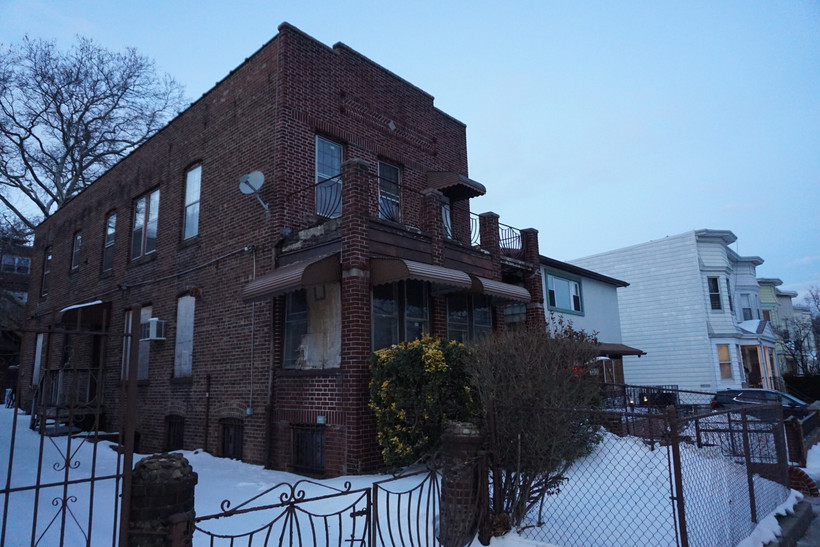
A five-bedroom home in Windsor Terrace, Brooklyn, is the subject of a court battle over whether Emigrant Bank illegally inflated a foreclosure auction bidding price. | Colin Kinniburgh/New York Focus

Sign up for Staying Focused, our newsletter keeping readers up to speed on New York politics.

It was a Thursday in Brooklyn, the day when investors descend on the borough’s Supreme Courthouse, angling for deals borne of others’ financial ruin.

Next on the day’s docket of foreclosed properties: a five-bedroom home on a tree-lined street in Brooklyn’s Windsor Terrace neighborhood, featuring a balcony, yard, and two-car garage. The minimum bidding price was set at $1.737 million.

The court-appointed referee in charge of the bidding waited for someone to make an offer. “Going once, twice…”

No one stepped forward. That triggered a special provision allowing Emigrant Bank, which had foreclosed on the property, to purchase the home for a mere $100. Soon after, the bank put it on the open market for $2.1 million.

Ravi Batra, the attorney for the foreclosed homeowner, thought the minimum bid price — which is meant to reflect the amount the homeowner owes to the bank — looked off. He did the math himself and determined it should have been at least $156,000 lower.

If the bidding had been conducted properly, Batra wrote in a court filing last year, his client could have received a substantial cash payment stemming from the sale. Instead, he alleged, the bank “chilled” potential buyers’ interest by inflating the bidding price.

The dispute centers on two dueling methods of calculating interest in foreclosure cases. In December, New York Focus and Gothamist reported that 14 law firms that frequently represent banks have used a calculation method — based on a figure in foreclosure cases called the “judgment amount” — that has increased the debt of foreclosed homeowners in nearly 7,200 cases since 2013.

Yet this method contradicts court system guidance, which directs court officials to use a lower figure to calculate interest — a loan’s “principal balance.” That interpretation was upheld by a panel of appellate judges in 2015.

New York Focus and Gothamist’s reporting led lawmakers to introduce a bill to curb the use of the method that increases homeowner debt, which will be considered this legislative session. In addition, five ongoing federal lawsuits allege lenders and law firms have illegally used “judgment amount” to defraud borrowers of cash stemming from foreclosure auctions.

Now, New York Focus has identified more than 1,250 cases in which the disputed calculation method may have deprived homeowners of cash in a more complex way. In these cases, like in the one Batra highlighted, the minimum bidding price was set higher than the regulator-prescribed method for calculating interest would have allowed. No buyers came forward, and the banks obtained the homes almost for free.

Emigrant Bank says its past use of judgment amount to calculate interest has been legal. But after the federal lawsuits were filed against other banks in April, Emigrant opted to take a “more conservative” approach going forward and is now using the borrower-friendly method to calculate interest. 

That doesn’t help prior borrowers whose homes were previously auctioned, including the one represented by Batra. 

Emigrant Bank in Manhattan | Wally Gobetz/Flickr


Emigrant Bank, based in Manhattan and owned by billionaire Howard Milstein, has been sued before.

In a 2010 case centered on Emigrant’s alleged failure to engage in good faith efforts to stave off a foreclosure, a Suffolk County Supreme Court judge called Emigrant’s conduct “overreaching, shocking, willful and unconscionable.” (Following the ruling, Emigrant did engage in good faith negotiations, the same judge later found, and a settlement was reached.)

Six years later, a Brooklyn jury found the bank liable for violating anti-discrimination laws through its sale of subprime mortgages carrying “predatory” default interest rates up to 18 percent in poor Black and Latino neighborhoods.

The bank has been particularly likely to obtain properties in no-bid foreclosure cases — even compared to other banks that also use the disputed interest calculation method. Of the 44 Emigrant cases reviewed by New York Focus, no one placed a bid and Emigrant won the property for $100 two-thirds of the time.

Attorneys representing borrowers have alleged that Emigrant has used delay tactics to stretch out proceedings and increase the amount of interest owed. (The Suffolk County judge suggested in his initial ruling that this had occurred in the 2010 case.) And some of the bank’s mortgage contracts have imposed variable, escalating interest rates that kick in once a borrower defaults on payments. These higher rates can contribute to significant spikes in borrower debt — which, in turn, have swollen minimum bid amounts.

In most of the 7,400 cases we analyzed for our earlier investigation, it’s possible to determine how much a foreclosed homeowner lost because their lender used an allegedly illegal calculation method. But in more than 1,250, the math is impossible to fully unwind.

In these instances, the added amount from the lenders’ calculations was then baked into the minimum bidding prices at auction. After seeing those prices, no third-party bidder made an offer. Instead, the bank (or investors) that had held the original mortgages were able to purchase these 1,250 properties for $1,000 or less. In some instances, a third-party bidder presumably would have emerged if the minimum bidding price hadn’t contained the added interest — and former homeowners could have received cash stemming from a bid above the minimum.

The Brooklyn court system has a rule explicitly aimed at curbing the inflation of minimum bidding prices, but other counties do not, making it less clear if any price inflation could be legally problematic in those jurisdictions.

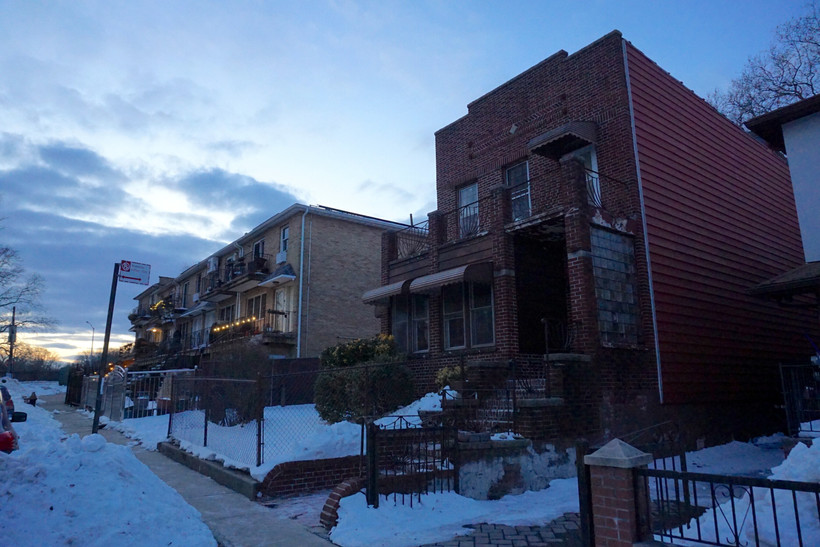
A subsidiary arm of Emigrant, Retained Realty, specializes in reselling homes that the bank was able to purchase for $100. In the Batra case, Retained Realty’s attempted $2.1 million resale of the Windsor Terrace property is on hold as Batra seeks to void the auction sale through an appeal filed in state appellate court.

Some of the largest bidding price increases have involved Terenzi & Confusione, one of the two law firms routinely representing Emigrant in foreclosure cases. In Nassau County, this firm’s use of the disputed accounting method increased the minimum bid for one home by $93,000; no one put in an offer, and it was sold to Emigrant for $100. Last year, Retained Realty resold the home for $1.79 million.

In Suffolk County, the same law firm’s method increased the interest on another home by about $62,000. No one bid, Emigrant bought it for $100, and Retained Realty sold it for $390,000.

Last spring, a Brooklyn attorney who specializes in foreclosure prevention learned about five proposed federal class action lawsuits against lenders and law firms that use “judgment amount” to calculate interest.

The attorney, Alice Nicholson, sent Emigrant’s attorney a letter last April stating that one of her clients was being overcharged by $255,000 because of the bank’s calculation method.

This Emigrant attorney, Jason Sackoor of the law firm Borchert & LaSpina, came back with a revised statement agreeing that the debt was $255,000 less, allowing the homeowner to privately sell the property and walk away with some cash.

Nicholson also challenged Emigrant on behalf of another Brooklyn homeowner. Again, without comment, Sackoor sent back a statement reducing the debt by $198,000, which allowed the homeowner to pay off the remaining balance on their mortgage.

Even so, damage had been done, according to Nicholson. Before the sudden reductions in debt, Nicholson said, both homeowners had been forced to file for bankruptcy to delay foreclosure auctions.

Emigrant spokesperson James Haggerty told New York Focus that after learning of federal lawsuits filed against other banks last year, Emigrant opted to switch to the principal balance method to take a “more proactive, conservative approach going forward.”

Haggerty defended the bank’s former method of calculating interest, which he called the “industry standard.” He pointed to a template for drafting foreclosure orders, issued by Brooklyn’s court system, which the bank interprets as sanctioning the method. And in the case involving Batra’s client, Emigrant’s attorney used this template to draft the foreclosure order. The judge signed at the bottom, without changing the interest calculation language — a fairly common scenario in New York foreclosure cases.

Of the 44 Emigrant loans that resulted in auctions, all but one was issued before 2011, according to Haggerty. Since June 2011, fewer than half a percent of the bank’s residential loans have gone into foreclosure, he said — demonstrating that Emigrant’s profits “are made on successful mortgage loans that are paid back — not on foreclosures.”

Haggerty said Emigrant Bank must often absorb significant costs and delays before reselling the properties it obtains after no-bid auctions, and it “often recovers less than the amount due per judgment.” The bank “stands by its commitment to ensure the availability of lending to communities that are underserved by other banks,” he said, and “always operates according to the law.”

The home acquired by Emigrant Bank on the edge of Green-Wood Cemetery in Windsor Terrace, Brooklyn. | Colin Kinniburgh/New York Focus

Batra’s case in Brooklyn began in 2009, and the matter is now dragging toward its second decade. By the time the auction occurred in 2024, the interest and fees owed by Batra’s client had come to dwarf the unpaid mortgage amount.

In the fall of 2024, Emigrant’s attorney, Sackoor, issued a final tally detailing how he’d come to the $1.73 million minimum bidding price. 

In this report — as well as 10 others we reviewed where Sackoor’s law firm Borchert & LaSpina represented Emigrant — the firm said it was calculating interest based on the home’s “principal balance.” But it’s clear from the calculation itself that the firm was actually using the higher figure that benefits the bank — the judgment amount.

Borchert & LaSpina doesn’t always operate this way. In a 2023 report, records show the firm did use “principal balance” for an interest calculation; in that case, however, it was representing a different bank.

Sackoor declined to answer questions from New York Focus. The Emigrant spokesperson called the error in the Brooklyn case a “typo,” and noted Emigrant’s other main law firm in foreclosure cases does not use this incorrect language. 

Batra submitted a marked-up version of Sackoor’s report to Brooklyn Supreme Court Judge Lawrence Knipel. Batra hand-wrote corrected calculations — using principal balance as the basis — then added, “Soaked in Fraud that Math Exposes.”

Batra also submitted a motion seeking to void the sale, as well as an auction transcript. All these documents stated that Emigrant had bought the home for $100.

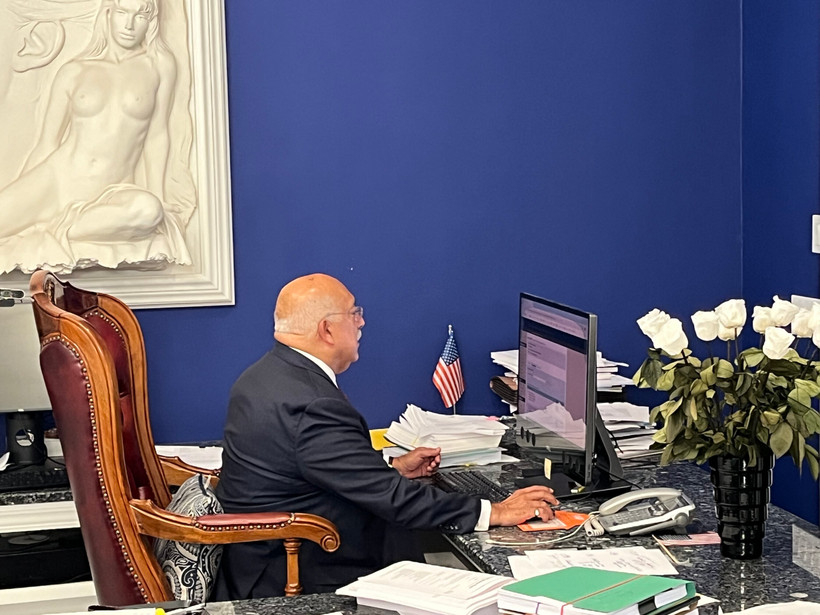
Ravi Batra works at his home office in Westchester County. | Chris Bragg/New York Focus

Nonetheless, Knipel’s subsequent written ruling — which rejected Batra’s motion — was premised on the false idea that the property had sold for $1.7 million. In his ruling, Knipel wrote that even if the minimum bidding price had been inflated, Batra’s client was “not harmed, only benefitted” because the minimum bidding price had been “met.”

In reality, the minimum bidding price had not been met, and as a result, Batra’s client had been left with a debt to the bank of over $1.7 million. (Emigrant has not taken steps to pursue the debt, however.)

Batra said he called a member of the state Office of Court Administration’s leadership team to complain about Knipel’s “misconduct” and copied the office on an email announcing his intent to sue “state actors” over Knipel’s handling of the case.

Several days later, in early December 2024, news broke that Knipel was leaving his longtime position running Brooklyn’s civil court system as its chief administrative judge. It’s unclear if Batra’s complaint played any role in Knipel’s departure.

While Knipel left his position shortly after an annual review meeting with the state’s top administrative judge, he told New York Focus that he wasn’t pushed out. 

“No one begged me to stay on. But no one said I had to go, either,” Knipel said in an interview late last year. “Certainly, nothing was mentioned about job performance or foreclosures.” 

Knipel had already been Brooklyn’s chief administrative judge for a dozen years, and, after the meeting, remained in charge of handling foreclosure cases in Brooklyn for most of the next year before retiring altogether. Knipel said he was unaware that Batra had ever lodged a complaint against him. 

New York Focus asked Knipel about the factual inaccuracy that his ruling in the Emigrant case rested on. In a lengthy text exchange, Knipel denied making any error, but ultimately acknowledged that he did “appear to have been under the impression that the upset price was met.”  

The OCA declined to tell New York Focus why Knipel was moved.

The federal lawsuits now pending may determine whether the method Emigrant formerly used to calculate interest was illegal, and could prompt additional claims.

In the meantime, Emigrant’s about-face on calculating interest will benefit borrowers going forward. It will not help the nearly 30 former customers whose homes were auctioned between 2013 and the April 2025 shift.

At New York Focus, our central mission is to help readers better understand how New York really works. If you think this article succeeded, please consider supporting our mission and making more stories like this one possible.

New York is an incongruous state. We’re home to fabulous wealth — if the state were a country, it would have the tenth largest economy in the world — but also the highest rate of wealth inequality. We’re among the most diverse – but also the most segregated. We passed the nation’s most ambitious climate law — but haven’t been meeting its deadlines and continue to subsidize industries hastening the climate crisis.

As New York’s only statewide nonprofit news publication, our journalism exists to help you make sense of these contradictions. Our work scrutinizes how power works in the state, unpacks who’s really calling the shots, and reveals how obscure decisions shape ordinary New Yorkers’ lives.

In the last two decades, the number of local news outlets in New York has been nearly slashed in half, allowing elected officials and powerful individuals to increasingly operate in the dark — with the average New Yorker none the wiser.

We’re on a mission to change that. Our work has already shown what can happen when those with power know that someone is watching, with stories that have prompted policy changes and spurred legislation. We have ambitious plans for the rest of the year and beyond, including tackling new beats and more hard-hitting stories — but we need your help to make them a reality.

If you’re able, please consider supporting our journalism with a one-time gift or a monthly gift. We can't do this work without you.

Thank you,

Akash Mehta
Editor-in-Chief
A photo of Akash Mehta.
A photo of Chris Bragg.
Chris Bragg is the Albany bureau chief at New York Focus. He has done investigative reporting on New York government and politics since 2009, most recently at The Buffalo News and Albany Times Union.
Also filed in New York State

Millions in outside spending was a boon to Gov. Kathy Hochul’s 2022 opponent, Lee Zeldin, and influenced down-ballot races.

The legislation would make it easier for currently and formerly incarcerated people and child victims to sue the state over allegations of past abuse.

State leaders are expected to pass a bill that avoids resolving how much Resorts World New York City needs to pay.

Also filed in New York City

Resorts World is floating legislation to avert more than $500 million in payments to the horseracing industry.

Some of the city’s new aid will be canceled out by pension boosts.

The Department of Justice has terminated more than 100 immigration judges since last year as it has pressured courts to order more deportations.

Also filed in Housing

A law designed to protect the environment will be partially rolled back to pave the way for much-needed homes.

After a New York Focus investigation, a Bronx charity distributed nearly $400,000 to survivors of a deadly 2022 fire.

Senate Majority Leader Andrea Stewart-Cousins says she sees “no reason” to remove Senator Luis Sepúlveda as judiciary chair.