A Real Estate Battle Tests the State’s New Superfund Powers

New York environmental regulators have deemed a developer liable for an $18 million Westchester cleanup — but they haven’t yet made the company pay.

David McKay Wilson   ·   February 10, 2026
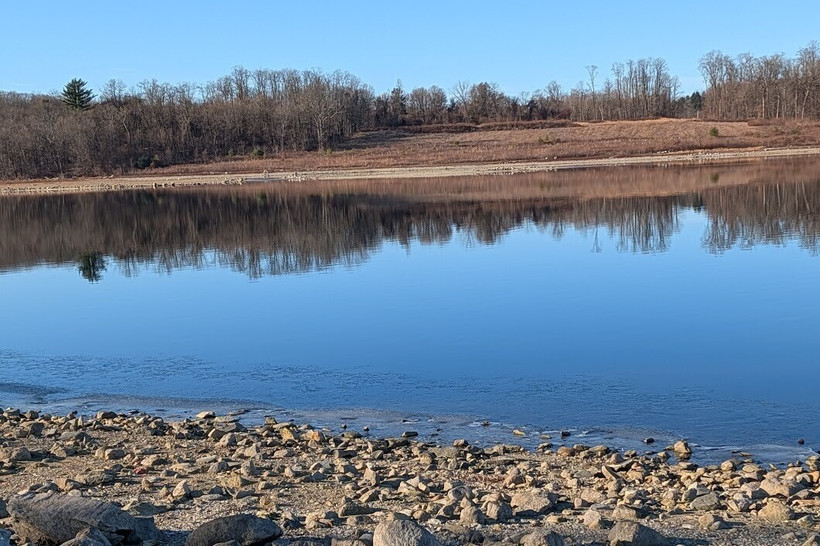
Photo of the bank of the Amawalk Reservoir
A Superfund cleanup on the western side of the Amawalk Reservoir was completed in 2024, but the state has yet to recoup the cost. | David McKay Wilson

Sign up for Staying Focused, our newsletter keeping readers up to speed on New York politics.
The Amawalk Reservoir, which provides drinking water to three northern Westchester County towns and New York City, looks like a tranquil spot, covered in a blanket of snow in midwinter with Canada geese flying in formation overhead. But the Amawalk has become the center of a battle over who pays for environmental cleanups in the state.

Will New York taxpayers be on the hook, or will it be a development company the state has deemed responsible for paying the bill?

The developer, Suelain Realty, hopes to build 23 single-family homes on a parcel bordering the reservoir that was recently cleaned up through the state Superfund program, which identifies contamination and conducts remediation.

Critics of the project fear that runoff from the Granite Pointe subdivision in the town of Somers will worsen the water quality of the Westchester reservoir, which is already contaminated by PFAS “forever chemicals.”

That’s not their only concern. They also want the developer to pay for the cleanup of the site. If the company is required to do so, some hope, the project will become cost-prohibitive, blocking it from happening.

A 2025 reauthorization of the state Superfund law makes it easier to recoup money from property owners or polluters. The state has identified Suelain as the party responsible for the $18 million cleanup, but it has yet to seek payment from the company.

“There have been no concrete decisions made regarding cost recovery at this site,” said a spokesman for the state Department of Environmental Conservation, or DEC.

Sarah Wilson, of Yorktown, who is among the 95,000 Westchester residents whose public water comes from the Amawalk, recently spoke at a meeting of the Yorktown Town Board, asking officials to get involved.

“The owners need to pay,” Wilson said. “It’s not that complicated.”

Walter Hang, president of the Environmental Health Research Group and a longtime statewide advocate for toxic waste cleanup, agreed. “What are they waiting for?” he asked. “This is a classic example of how they just don’t rigorously enforce the law, even when the stakes could not be higher.”

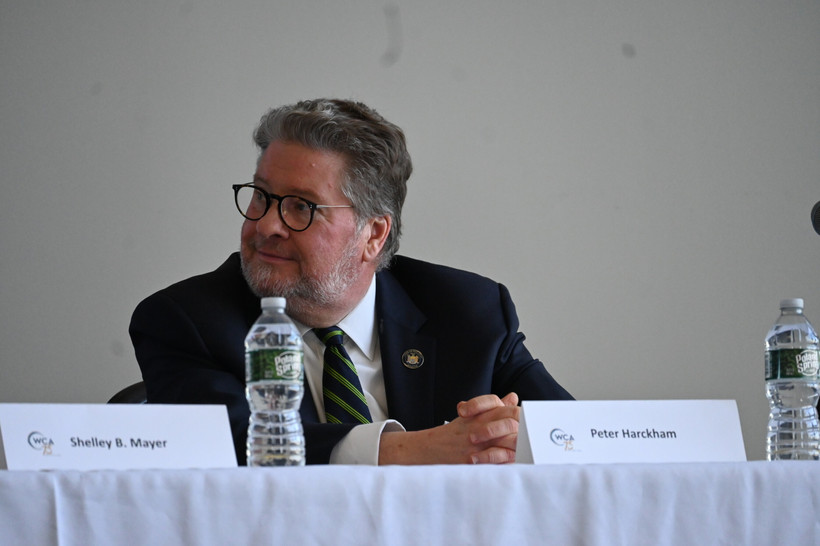
State Senator Pete Harckham, a Democrat whose district includes the proposed Granite Pointe project, said it’s time for the state to use its new powers. Harckham and Assemblymember Matt Slater, a Republican whose district also includes the site, have both expressed eagerness to see the state recoup funding for the first time since last year’s Superfund reauthorization.

“I know this will be an effective tool in protecting the environment and ensuring that taxpayers are not required to cover the costs for damage that has been created,” Harckham, who chairs the Senate Committee on Environmental Conservation, said in a statement.

State Sen. Peter Harckham at a table
State Sen. Peter Harckham called on the state Department of Environmental Conservation to use its powers to recoup $18 million spent on the cleanup. | David McKay Wilson


Suelain owner John Harkins said his company should not be held responsible because he was unaware that the site was contaminated when his company took title to the property in 1991. His attorney, Kristen Wilson, wants the state to take that into consideration as it decides whether to seek $18 million from the developer.

“Though we are in the line of title, we weren’t the polluter,” she said in December. “There’s some hope on our end that there needs to be some kind of economic benefit to my client at the end of the day.”

“Not having anything to show for it would be patently unjust.”

Suelain Realty has sought land use approvals at Granite Pointe, a promontory surrounded on three sides by the reservoir, for 35 years. The company’s plans were put on hold for two decades after citizen activists pressed for soil tests upon learning that a recreational gun range had operated at the site from 1938 to 1968.

The tests found extensive contamination from the range’s lead bullets. The discovery led to a tangled 20-year process that resulted in the Superfund cleanup, which was completed in 2024.

Though remediation is complete, the state has yet to file its final report, and the developer still has to satisfy conditions laid out by the Somers Planning Board. That includes approval from the New York City Department of Environmental Protection for the project’s system to control stormwater runoff into the drinking water supply. The city granted such approval in the 1990s, but revoked it after discovering the lead contamination, said city DEP spokesperson John Milgrim.

“The owners need to pay. It’s not that complicated.”

—Sarah Wilson, resident, Yorktown

The new Superfund amendments allow the state attorney general to file an environmental lien on the property to secure payment. Such a lien would have to be satisfied if the land were to be sold.

Local residents have had little luck convincing the Somers Planning Board to reject the project, which has granted Suelain Realty 34 three-month extensions for its application over the past decade.

Residents hired a lawyer to sue the town in 2015 to challenge the subdivision’s environmental review, arguing that the town planning board had failed to address the proposed development’s impact on the reservoir. But a state court judge ruled that the citizens lacked standing to sue the town.

The Amawalk’s levels of PFAS — a class of forever chemicals that have contaminated water supplies across New York and the nation — exceed the federal drinking water standard but are still under the acceptable limit for the state of New York.

Northern Westchester’s water agency reported in its 2024 water quality report that the Amawalk water had 4.6 parts per trillion of PFOA, a common PFAS chemical. The federal limit for PFAS in drinking water is four parts per trillion. The state limit is 10 parts per trillion.

Salinity levels in the Amawalk are also of concern, according to a recent study from the New York City DEP. Westchester Joint Water Works officials are troubled that the Amawalk may be too salty for drinking water by 2050, according to minutes of its July 2025 meeting.

Last year, the northern Westchester water system received a $1.5 million settlement from a lawsuit seeking damages from chemical companies for PFAS contamination in the Amawalk. The agency said the contamination was caused by firefighting foam used by the Lake Mohegan Fire Department and the Katonah Fire Department in the 1970s.

The public water system has until 2029 to either install costly carbon filters on its treatment plant in Somers or find a new source of water. Studies are underway for a six-mile-long pipeline along Route 202 from the New York system’s Delaware Aqueduct, which runs through central Westchester, said Matthew Geho, the water system’s operations director.

Meanwhile, local activists said, the Suelain project threatens to make the water worse with stormwater runoff from the subdivision, with various chemicals from roads and expansive lawns draining into the reservoir.

Somers resident Fred Higham, who became involved in the issue in 2024, said it’s imperative for the town to stop granting extensions on the planning board approval, which is subject to conditions that have yet to be fulfilled. He said the site should remain undeveloped to protect the drinking water supply.

Photo of Fred Higham
Fred Higham of Somers opposes the planned development. | David McKay


He said he has held six meetings with Town Supervisor Robert Scorrano, but has yet to convince Scorrano to take a stand against Granite Pointe.

“The idea of building 23 one-acre luxury homes on 28 acres, surrounded on three sides by the Amawalk Reservoir, has always been an ill-conceived and irresponsible idea,” Higham said.

Scorrano referred questions on Granite Pointe to the town’s director of planning, who declined to respond to questions.

Since 2003, the state has spent $1.9 billion from its Superfund to clean up contaminated sites around the state. The state reauthorized the program in the 2025 state budget, with $1.25 billion pledged over the next decade. The state will borrow the money in the municipal bond market.

If the state moves forward to collect $18 million from Suelain, it would be the state’s most substantial recovery to date.

The state has three recovery cases pending in federal court, said Sophie Hamlin, a spokesperson for the state attorney general’s office. The largest amount in those cases — $5.4 million — is being sought from a former Nassau County dry cleaning company whose solvent contaminated local groundwater.

Under state law, a landowner can be considered a responsible party for cleanup costs, even if they did not create the environmental harm. A DEC spokesperson said Suelain Realty was deemed the responsible party in 2016, after the state ousted the company from the state’s Brownfield Cleanup Program because it failed to meet program deadlines.

“The state should move as quickly as possible to collect this money.”

—George Klein, vice chair, Sierra Club’s Lower Hudson Group

If Suelain had completed that program, it would have been given tax credits that could have paid for 50 percent of the remediation and 14 percent of the cost of building the homes. In 2015, the developer said he planned to build 3,000-square-foot homes that would sell for $1 million each.

The DEC in recent months has provided conflicting statements on whether it plans to recover the $18 million spent on the cleanup. On December 5, in a written statement, the agency said it “will pursue recovery of its costs from responsible parties” at Granite Pointe. At the time, the DEC said it was in discussions with the office of Attorney General Letitia James on commencing an action.

Yet a month later, when contacted again, a DEC spokesperson said it had yet to decide if it would move forward to recover the cost of the cleanup.

George Klein, vice chair of the Sierra Club’s Lower Hudson Group, said it was time for the state to take action.

“The state should move as quickly as possible to collect this money so the state and taxpayers are not left holding the bag for the remediation costs,” he said.

Meanwhile, some environmentalists say the area is more polluted than previously known. Hang’s review of a January 2023 report by the engineering firm Arcadis, which oversaw the Superfund cleanup, found contamination in the soil outside of the cleanup zone. The study said that PFAS levels exceeded the state’s unrestricted use soil standards, and groundwater on the eastern edge of the site — next to the reservoir — contained lead, chromium, and pesticides above state limits.

The DEC said there’s no evidence that the remaining contamination at Granite Pointe is harmful.

DEC has no information to suggest that known contamination is threatening public health or the environment at this point in time,” the spokesperson said.

Hang, however, thinks a new inquiry is needed.

“It doesn’t appear they investigated the reservoir as a whole to understand the full scope of the contamination problem,” he said. “The highest concentrations were near the shore of the reservoir. You can’t leave pollution next to the drinking water.”

I hope this article helped you better answer the question that guides all of our journalism: Who runs New York? Before you click away, please consider supporting our work and making more stories like this one possible.

New York state is standing at a crossroads for climate action. After passing one of the nation’s most ambitious climate laws in 2019, the state is lagging far behind on its targets, struggling to meet deadlines to build renewable energy and clean up its buildings and roads. Other states are closely watching our progress, making decisions about their own climate plans based on New York’s ability to implement this legislation.

As New York’s only statewide nonprofit news publication, we’ve been scrutinizing the state’s climate progress. Our journalism exists to unpack how power works in New York, analyze who’s really calling the shots, and reveal how obscure decisions shape ordinary New Yorkers’ lives.

But we can't do this work without your help. We rely on reader donations to help sustain our outlet, and every gift directly allows us to publish more pieces like this.

Our work has already shown what can happen when those with power know that someone is watching, with my reporting prompting a state investigation and fine for a major corporation. I have more story ideas than I can count, but only limited resources to pursue all the leads that come across my desk.

If you’re able, please consider supporting our journalism with a one-time or monthly gift. Even small donations make a big difference.

Thank you for reading.

Colin Kinniburgh
Climate and Environmental Politics Reporter
A photo of Colin Kinniburgh.
David McKay Wilson, former Tax Watch columnist for The Journal News/​lohud, is founder of the Hudson Valley Digger, which is published on Substack.
Also filed in New York State

A lobbyist who has been romantically linked to Assembly Speaker Carl Heastie led a rally opposing the legislation a week before the speaker declined to bring it to a vote.

In May, state lawmakers passed a $269 billion budget after haggling for months over thousands of line items and policies affecting New Yorkers.

Millions in outside spending was a boon to Gov. Kathy Hochul’s 2022 opponent, Lee Zeldin, and influenced down-ballot races.

Also filed in Health

Despite last-ditch efforts by a coalition of lawmakers, the state failed to avert a health coverage cliff coming this summer.

160,000 injured New Yorkers seek workers’ compensation each year — but in recent years, regulators have tilted the scales towards employers and insurers.

Amid abortion bans and rising digital surveillance, Albany lawmakers are revisiting an effort to stop companies from selling sensitive health information.

Also filed in Climate and Environment

The citizens assembly model, used for public decision-making around the world, is gaining traction in New York.

Governor Kathy Hochul was successful in her bid to upend the Climate Leadership and Community Protection Act after legislators caved to finalize an overall budget deal.

The leader of Reinvent Albany discusses a data center subsidy in Rockland County that flew under the radar for years.

Also filed in Housing

Some of the city’s new aid will be canceled out by pension boosts.

A law designed to protect the environment will be partially rolled back to pave the way for much-needed homes.

After a New York Focus investigation, a Bronx charity distributed nearly $400,000 to survivors of a deadly 2022 fire.