Three Questions for New York’s Climate and Energy Leaders

Lawmakers will be grilling top state energy and environmental officials Wednesday in a marathon budget hearing. Here are some of the questions we’d ask.

Colin Kinniburgh   ·   January 27, 2026
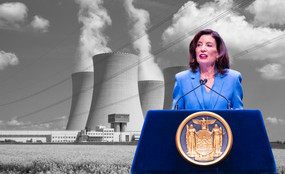
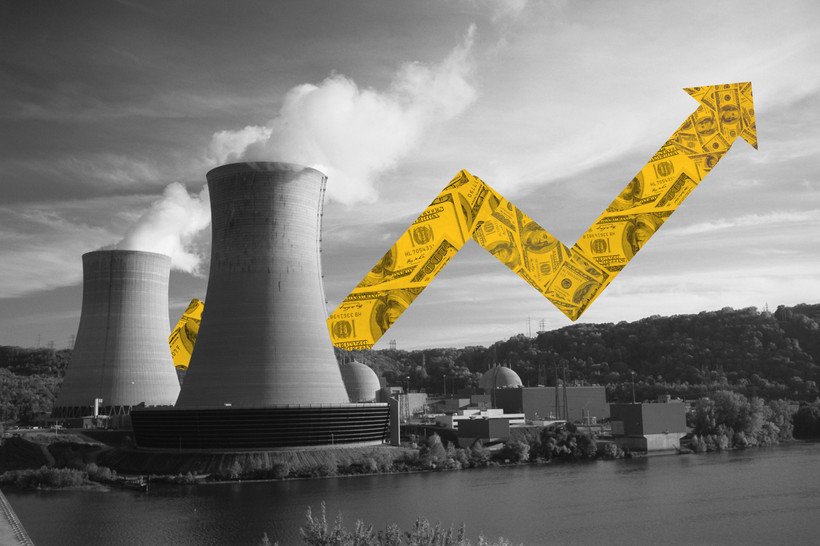
This year's climate hearing could be especially lively as officials are asked to account for a sharp turn in state energy policy. | Power plant photo: Science Photo Gallery/Canva; Money background: Ale-ks/Getty Images | Illustration: Leor Stylar

Sign up for Staying Focused, our newsletter keeping readers up to speed on New York politics.

This week kicks off a monthlong marathon of budget hearings in Albany, as lawmakers begin to unpack Governor Kathy Hochul’s budget proposal and prepare their responses. The hearings are a rare opportunity for lawmakers from both parties to grill state agency heads about Hochul’s proposals and the administration’s efforts more broadly, as well as to get input from business leaders, advocates, and other stakeholders.

The hearing on energy, climate, and the environment is taking place on Wednesday. In recent years, the hearing has stretched 12 hours or more, serving as a wide-ranging forum on the state’s ambitious climate policies. It could be especially lively this year as officials are asked to account for a sharp turn in energy policy: the governor’s sidelining of the state’s climate plan in favor of an “all of the above” strategy.

In the past year, Hochul has championed nuclear power, approved a thrice-rejected gas pipeline, and delayed a ban on gas in new homes, arguing that a diverse and abundant energy supply is the only way to keep New Yorkers’ utility bills from spiraling out of control. On Wednesday, the heads of several agencies, including the Department of Environmental Conservation, the Public Service Commission, and the energy authorities NYSERDA and NYPA, will likely have to explain this shift.

Here are three questions we’d ask state and climate officials on Wednesday.

How does New York’s “all of the above” energy strategy square with its climate law?

New York’s flagship climate law, passed in 2019, requires the state to slash greenhouse gas emissions by 2030 and target a net-zero emissions economy by 2050. That means a rapid shift away from fossil fuels in all parts of the economy — especially buildings and transportation — and a massive buildout of renewable energy. But Hochul says that the pandemic and a hostile federal government have put those targets out of reach, and that she needs to “govern in reality.” The state energy plan published in December includes a continued reliance on gas. 

Climate groups have called the plan a direct violation of the climate law. That was after a judge found the state was breaking another part of the law by failing to issue rules to ratchet down emissions. Hochul has appealed the decision but so far has not made any moves to amend the climate law itself, as she said she might. That means the 2019 law still stands as passed. How does the administration reconcile it with Hochul’s new energy agenda?

How will you ensure that Hochul’s nuclear plans won’t drive up New Yorkers’ bills?

Hochul has made energy affordability a priority, while also laying out an ambitious plan to expand New York’s fleet of nuclear power plants. The last nuclear plant built in the United States, in Georgia, is by some estimates the most expensive power plant ever built. How can New York do more for less? And will residents foot the bill if something goes wrong?

How does New York plan to make data centers “pay their fair share”?

In her State of the State address earlier this month, the governor put the AI industry on notice. “Data centers are vital for an innovative future. But they guzzle up tremendous amounts of energy and leave ratepayers footing the bill,” she said. “So if they want to build in New York, they’ll have to pay their fair share for the power they use and ultimately generate their own power independently.”

The line drew praise from environmentalists who have grown unused to cheering on the governor. Two weeks on, Hochul has yet to reveal any details. She didn’t include the data center proposal in her draft budget last week, which is her major opportunity to introduce legislation for the year. Instead, her office told New York Focus that the policy would be spearheaded by the energy regulators under the Public Service Commission. 

That leaves many wondering what kinds of conditions Hochul is ready to impose on the industry. Will data centers be required to supply their own around-the-clock clean energy, for example? Or might they be allowed to build a gas plant, as many are doing in other states? Some climate and consumer advocates are eyeing a recent Oregon bill, which created a rate class for data centers, as a model. Wednesday’s hearing may give us a clearer indication of whether Hochul’s administration is planning a similar approach.

I hope this article helped you better answer the question that guides all of our journalism: Who runs New York? Before you click away, please consider supporting our work and making more stories like this one possible.

New York state is standing at a crossroads for climate action. After passing one of the nation’s most ambitious climate laws in 2019, the state is lagging far behind on its targets, struggling to meet deadlines to build renewable energy and clean up its buildings and roads. Other states are closely watching our progress, making decisions about their own climate plans based on New York’s ability to implement this legislation.

As New York’s only statewide nonprofit news publication, we’ve been scrutinizing the state’s climate progress. Our journalism exists to unpack how power works in New York, analyze who’s really calling the shots, and reveal how obscure decisions shape ordinary New Yorkers’ lives.

But we can't do this work without your help. We rely on reader donations to help sustain our outlet, and every gift directly allows us to publish more pieces like this.

Our work has already shown what can happen when those with power know that someone is watching, with my reporting prompting a state investigation and fine for a major corporation. I have more story ideas than I can count, but only limited resources to pursue all the leads that come across my desk.

If you’re able, please consider supporting our journalism with a one-time or monthly gift. Even small donations make a big difference.

Thank you for reading.

Colin Kinniburgh
Climate and Environmental Politics Reporter
A photo of Colin Kinniburgh.
Colin Kinniburgh is a reporter at New York Focus, covering the state’s climate and environmental politics. He has worked in media for more than a decade, across print, television, audio, and online news, and participated in fellowship programs at CUNY’s Graduate School of Journalism… more
Also filed in New York State

A lobbyist who has been romantically linked to Assembly Speaker Carl Heastie led a rally opposing the legislation a week before the speaker declined to bring it to a vote.

In May, state lawmakers passed a $269 billion budget after haggling for months over thousands of line items and policies affecting New Yorkers.

Millions in outside spending was a boon to Gov. Kathy Hochul’s 2022 opponent, Lee Zeldin, and influenced down-ballot races.

Also filed in Budget

State leaders are expected to pass a bill that avoids resolving how much Resorts World New York City needs to pay.

Resorts World is floating legislation to avert more than $500 million in payments to the horseracing industry.

Our searchable database breaks down the most consequential decisions Albany politicians made on climate, immigration, housing, schools, taxes, and more.

Also filed in Climate and Environment

The citizens assembly model, used for public decision-making around the world, is gaining traction in New York.

Governor Kathy Hochul was successful in her bid to upend the Climate Leadership and Community Protection Act after legislators caved to finalize an overall budget deal.

The leader of Reinvent Albany discusses a data center subsidy in Rockland County that flew under the radar for years.

Also filed in Affordability

We’ve compiled information for SNAP recipients in New York on the changing work requirements.

Despite last-ditch efforts by a coalition of lawmakers, the state failed to avert a health coverage cliff coming this summer.

The Hochul administration now has a chance to relax New York’s child care staffing ratios — among the country’s strictest — after 26 years. But will it?