Can Zohran Mamdani’s Agenda Survive Albany?

Mamdani’s plans for universal child care, fare-free transit, and affordable housing rely on Albany getting on board.

Sam Mellins, Julia Rock and Colin Kinniburgh   ·   June 26, 2025
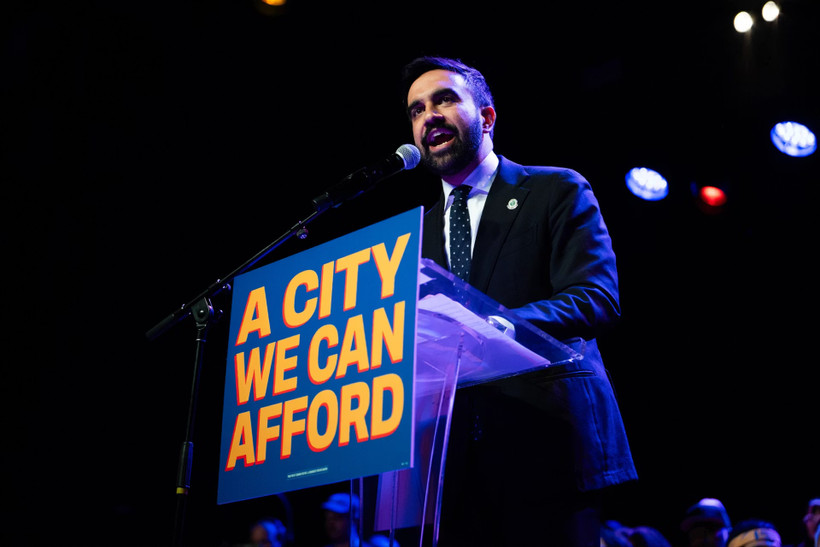
Zohran Mamdani speaking at a podium
Mamdani claims a popular mandate for his signature plans. | Zohran for NYC

Sign up for Staying Focused, our newsletter keeping readers up to speed on New York politics.

It’s been a century since a sitting state legislator was last elected to be mayor of New York City.

In 1925, state Senator Jimmy Walker triumphed over incumbent John Hylan to become New York City’s 97th mayor. In 1932, he was forced out of office by then-New York Governor Franklin Roosevelt after accepting numerous bribes from businessmen seeking city contracts.

One hundred years later, 33-year old state Assemblymember Zohran Mamdani upended New York politics by soundly defeating former Governor Andrew Cuomo in the Democratic primary for mayor. Though he will face several candidates in the general election in November, including incumbent Mayor Eric Adams running as an independent, Mamdani is favored to win and take office as mayor on January 1.

To enact his ambitious agenda to make the city more affordable, he would need to strike a better relationship with his former colleagues in Albany than Walker did.

Two of the three key planks in his platform — making buses free to ride and providing universal free child care — would require action from the governor and state legislature, including raising taxes by billions of dollars. (The third, freezing the rent on rent-stabilized apartments, can be accomplished at the city level.)

His five years in the legislature may serve him well in navigating Albany politics. He’s built alliances with legislators, especially fellow progressives, and seen the state capitol’s byzantine budget process up close.

“The budget process is almost a living, breathing thing,” said Senate Deputy Majority Leader Michael Gianaris, a frequent ally of Mamdani’s. “There’s a long line of mayors who thought they knew how to handle state government who have failed at doing so … I think he knows how to do it better than other mayors who have come before.”

Mamdani, whose campaign spread like wildfire on social media and mobilized tens of thousands of volunteer canvassers, may also be able to rally public support for his proposals — and to claim a popular mandate.

“I’m not trying to win as one man,” he told the New York Editorial Board in February, when he was polling at one percent. “I’m trying to win as someone with a mandate specifically about these three issues … so that when elected and I go to Albany, it’s clear to everyone that I’m fighting for these things and that the votes that they see across New York City are not necessarily die-hard for Zohran specifically as an individual, but are die-hard for freezing the rent, for making buses fast and free, and for bringing universal child care.”

But Mamdani’s democratic socialist politics have also made him a polarizing figure in Albany.

On Wednesday, three Democratic state lawmakers told New York Focus that they have significant doubts about Mamdani’s platform and are not committing to backing him in the general election.

“I haven’t made up my mind about anything about the general election,” said Roxanne Persaud, a state Senator representing parts of southeast Brooklyn and Queens where Cuomo won comfortably.

Michael Benedetto, a Bronx assemblymember, noted that Mamdani has supported primary challengers against him. “That has never sat happy with me,” he said.

And David Weprin, a Queens assemblymember, said that Mamdani would have a difficult time working with him and the growing number of observant Jewish legislators due to his criticisms of Israel, which Cuomo made a central focus of his case against Mamdani.

“It’s going to be a very difficult task for him, just because he was so extreme and so anti-Israel,” he said. Weprin said he is considering supporting Adams in November.

Taxes

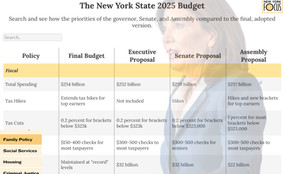
The biggest thing Mamdani needs from Albany is money. His plan rests on the state’s willingness to raise $9 billion in taxes on corporations and high-earners.

Gianaris noted that in recent years, both houses of the legislature have supported raising taxes on the wealthy. “So there’s two out of the three players already on board with the broad strokes of that proposal,” he said.

Governor Kathy Hochul, on the other hand, has firmly opposed tax increases, recently saying, “I don’t want to lose any more people to Palm Beach.”

Not all legislators are on board, either.

“I’m not a fan of any of his tax proposals,” Weprin said. “I think they’re unrealistic and would have a very tough time getting approval in Albany.”

But Mamdani has some precedent to look to. In 2021, he and other lawmakers mounted a successful push to raise corporate and income taxes on ultra-high-earners. His campaign estimates that effort generated $4 billion in new annual revenue — a little under half what he’s calling for now.

And the same campaign strategies that helped him win the primary could help win his agenda, noted Grace Mausser, co-chair of the New York City Democratic Socialist of America.

“We can look district by district and see where Zohran won, and use that as a pressure point — a mandate, if you will — for representatives in those areas to support Zohran’s policies, which demand higher taxes on the wealthiest New Yorkers,” Mausser said.

Housing

Mamdani’s signature pledge to freeze the rent on stabilized apartments wouldn’t require Albany’s sign-off. (The plan might face resistance from Adams’ appointees to the board that votes on rent increases, though, several of whom are set to continue serving into the next mayor’s term.)

But another campaign plank might run into trouble on the state level. Mamdani has proposed that the city borrow $70 billion, on top of about $30 billion it’s already planning to spend, to build 200,000 units of affordable housing over the next decade. (Politico reported that his campaign appears to be underestimating how much the units would cost.) But the amount that all cities and towns are allowed to borrow is capped by state law, and New York City is only allowed to borrow $30 billion over current debt levels.

Mamdani’s platform says he’ll lobby for state lawmakers to lift that “arbitrary cap.” If he’s not successful, it could imperil his ability to deliver the promised affordable housing.

Free buses

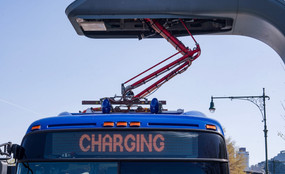
Mamdani will also need Albany’s backing to enact his promise to make buses fast and free. The Metropolitan Transit Authority is controlled by the state, not the city; its yearlong experiment with fare-free buses, approved in the 2023 state budget, was one of Mamdani’s signature legislative victories. But his colleagues declined to renew the program in 2024, and MTA chair Janno Lieber has been critical of the effort since it ended.

“We tried [Mamdani’s] idea of free buses on different lines,” he told radio host Brian Lehrer in April. “Most of the additional ridership [that] was identified cannibalized other lines. You’re taking people who are paying on other lines, and they were just getting a free ride.”

Lieber has also said that the free buses sent the “wrong message” at a time when the MTA has prioritized cracking down on fare evasion. He has said he prefers to reduce fares for low-income people through a more targeted approach.

Universalizing free buses could open up a new set of challenges — and opportunities.

The city’s Independent Budget Office has estimated that eliminating bus fares citywide would cost the MTA just over $650 million. Economist and transit expert Charles Komanoff found that New Yorkers would recoup that amount in time saved through faster bus service, mainly by eliminating the time it takes each rider to pay the fare when they board. But he suggests that the city — not Albany — should cover the cost to the MTA, since all the benefits go to the five boroughs.

Gianaris, the Senate Deputy Majority Leader, worked with Mamdani to pass the pilot program and said he’s a “big supporter” of expanding it citywide.

“Whether we can come up with the money to do that all in one shot, we’ll see,” he said.

On the “fast” side of the equation — which many experts argue is as important to boosting ridership, if not more, than making buses free — Mamdani shouldn’t need Albany’s signoff. Key tools include staffing up the bus unit at the city Department of Transportation, painting more bus lanes, and adding more bus-first signals at intersections, all of which the city can do on its own — and is supposed to be doing already.

Child Care

Mamdani wants to give every New York City kid over six weeks old access to free care. The plan would substantially expand the current system, which aims to provide a free spot to every three- and four-year-old in the city. His campaign estimates it would cost between $5 billion and $7 billion a year.

Many Democrats in Albany say they support getting to universal child care — eventually. In her State of the State speech this year, Hochul said she’d convene a working group to “identify a responsible and sustainable path toward funding universal child care in New York.”

Mamdani’s vision of universal child care without means testing or employer-provided programs may also be more expansive than the governor’s. “If you ask different leaders what universal child care means, they may not have the same answer,” said Dede Hill, policy director at the nonprofit Schuyler Center for Analysis and Advocacy.

Meanwhile, proposed federal spending cuts loom over the city’s child care system.

This year, the city’s landmark child care voucher program — paid for largely through a federal block grant and to a lesser extent state and city funds — faced a nearly $1 billion funding shortfall. City officials warned in February that eligible parents would be cut off from the vouchers absent more state funding.

The final state budget partially closed that gap and Mayor Eric Adams’ administration has agreed to cover the remainder.

”The existing federal funding doesn’t even cover the system we have right now,” said Lauren Melodia, the director of economic and fiscal policy at the New School’s Center for New York City Affairs. “We’re not losing any block grant money from the federal government” under the Republican budget being debated in Washington, “but we’re also not getting more.”

“I’m a huge advocate of having universal child care, but it’s going to take a lot of money,” Melodia said. She added that the campaign’s cost estimate was likely too low, especially given Mamdani’s proposal to pay child care workers as much as public school teachers.

Former mayor Bill de Blasio pushed Albany to fund the city’s landmark universal pre-K program in 2014, but Mamdani’s plan is far more expensive. “It’s almost not possible, is what I’ll say,” said Sherry Cleary, an early-childhood expert who advised de Blasio on implementing universal pre-K.

Even still, Mamdani’s focus on the issue could push the ball forward in Albany.

His likely mayoral victory “is going to be a game changer for the fight for universal child care in New York state,” said state Senator Jabari Brisport, who chairs his chamber’s Committee on Families and Children and sponsors legislation to establish universal child care statewide.

And if Albany isn’t willing to fund universal child care? “We might need a new governor,” Brisport said.

This article was updated to clarify that Jimmy Walker was the last sitting state legislator to be elected to be New York City's mayor. (The last former state legislator to be elected to the position was Mayor Eric Adams.)

At New York Focus, our central mission is to help readers better understand how New York really works. If you think this article succeeded, please consider supporting our mission and making more stories like this one possible.

New York is an incongruous state. We’re home to fabulous wealth — if the state were a country, it would have the tenth largest economy in the world — but also the highest rate of wealth inequality. We’re among the most diverse – but also the most segregated. We passed the nation’s most ambitious climate law — but haven’t been meeting its deadlines and continue to subsidize industries hastening the climate crisis.

As New York’s only statewide nonprofit news publication, our journalism exists to help you make sense of these contradictions. Our work scrutinizes how power works in the state, unpacks who’s really calling the shots, and reveals how obscure decisions shape ordinary New Yorkers’ lives.

In the last two decades, the number of local news outlets in New York has been nearly slashed in half, allowing elected officials and powerful individuals to increasingly operate in the dark — with the average New Yorker none the wiser.

We’re on a mission to change that. Our work has already shown what can happen when those with power know that someone is watching, with stories that have prompted policy changes and spurred legislation. We have ambitious plans for the rest of the year and beyond, including tackling new beats and more hard-hitting stories — but we need your help to make them a reality.

If you’re able, please consider supporting our journalism with a one-time gift or a monthly gift. We can't do this work without you.

Thank you,

Akash Mehta
Editor-in-Chief
A photo of Akash Mehta.
A photo of Sam Mellins.
Sam Mellins is senior reporter at New York Focus, which he has been a part of since launch day. His reporting has also appeared in The San Francisco Chronicle, The Intercept, THE CITY, and The Nation. Reach him on Signal: mellins.613
Julia Rock is a reporter for the Financial Times. She was previously an investigative reporter at New York Focus and The Lever.
A photo of Colin Kinniburgh.
Colin Kinniburgh is a reporter at New York Focus, covering the state’s climate and environmental politics. He has worked in media for more than a decade, across print, television, audio, and online news, and participated in fellowship programs at CUNY’s Graduate School of Journalism… more
Also filed in Elections

The last-minute influx, the biggest ever for a legislative primary, is boosting her opponent, Jessica González-Rojas.

Millions in outside spending was a boon to Gov. Kathy Hochul’s 2022 opponent, Lee Zeldin, and influenced down-ballot races.

Hakeem Jeffries urged Albany to avoid maps that aggressively boosted Democrats, sources told New York Focus.

Also filed in New York State

City budget gaps and an ambitious affordability agenda may require pressing Albany again for taxes and aid.

A bill awaiting the governor’s signature would relax restrictions on who can qualify for victim compensation.

We’ve compiled information for the 450,000 New Yorkers who will lose health care coverage on July 1.

Also filed in New York City

A lawsuit accuses federal officials of ignoring evidence that the boy, born in Mexico, held US citizenship through his mother.

The citizens assembly model, used for public decision-making around the world, is gaining traction in New York.

Resorts World is floating legislation to avert more than $500 million in payments to the horseracing industry.