What Is Ballot Proposal 1?

Voters across the state are scratching their chins about a question on their ballots concerning an Adirondacks winter sports facility. Here’s what’s going on.

Sam Mellins   ·   November 3, 2025
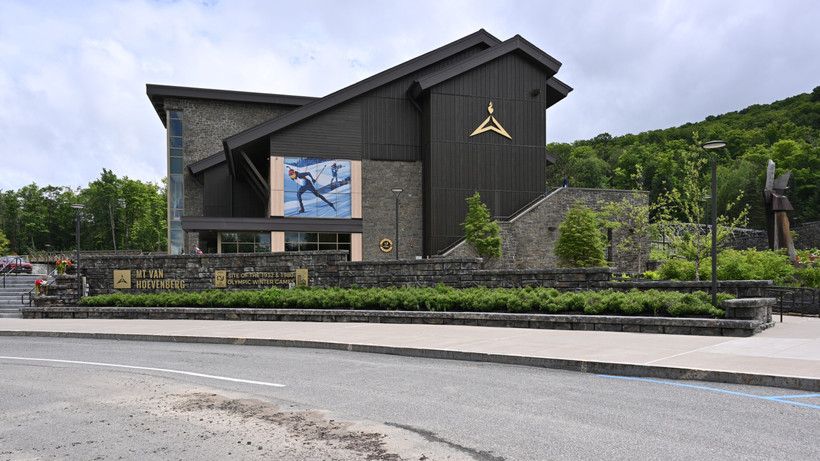
The main building of the Mt Van Hoevenberg Olympic Sports Complex near Lake Placid, NY.
New York voters will see one question on their ballots no matter where they live: a proposed constitutional amendment that will determine the fate of a winter sports facility in the Adirondacks. | G. Edward Johnson

Sign up for Staying Focused, our newsletter keeping readers up to speed on New York politics.

This Tuesday, New Yorkers across the state will be voting for local elected officials in their cities and towns. Voters will also see one question on their ballots no matter where they live: a proposed constitutional amendment that will determine the fate of a winter sports facility in the Adirondacks.

It may not be your biggest concern in the voting booth, but the measure has puzzled many early voters, especially those who live nowhere near the Adirondacks.

Here’s a brief rundown of New York’s one statewide ballot initiative.

What’s at stake?

Should New York retroactively legalize a winter sports facility built on a protected state preserve, and in exchange acquire new land to add to the preserve?

The context:

Since the 1930s, there has been a winter sports facility on Mount Van Hoevenberg, near Lake Placid, in the Adirondack mountains. It has been used in many competitions, including two Winter Olympics in 1932 and 1980.

The facility is located in the Adirondack Forest Preserve, a Connecticut-sized swath of land that is part of the largest protected area in the lower 48 states. The New York constitution prohibits new development in the preserve, though exceptions have been made a few times to permit ski facilities.

Over the years, the Olympic sports complex at Mount Van Hoevenberg has expanded its paths and skiing facility into about 300 acres of the preserve, an area roughly half the size of Brooklyn’s Prospect Park.

This ballot question would retroactively legalize this expansion, and in return, require the state to acquire 2,500 new acres of land for the Preserve.

What will happen if the measure is approved?

Two things:

  1. The expansion of the Mount Van Hoevenberg complex into part of the forest preserve will become legal. This wouldn’t allow development on any additional forest preserve land; it would only legalize the development that has already taken place.

  2. The state will acquire 2,500 acres of land to add to the forest preserve.

What happens if it is rejected?

Again, two things:

  1. The expansions of the Mount Van Hoevenberg complex into the preserve will not be legalized. But that doesn’t mean the parts of the complex built on forest preserve land will be removed. Instead, they will remain in their state of legal limbo.

  2. The state will not acquire an additional 2,500 acres of land for the forest preserve

Why are New Yorkers voting on a development that has existed for decades?

As we said above, the Mount Van Hoevenberg facility currently exists in a state of legal limbo. The environmental group Protect the Adirondacks has threatened to sue the state based on the claim that Mount Van Hoevenberg is violating the provision of the state constitution barring development in the Preserve.

Who supports the change? Who opposes it?

Local environmental groups Protect the Adirondacks and The Adirondack Council, the organization that runs the sports facility, and others support the change.

Protect the Adirondacks says that the ballot measure would “officially authorize” the winter sports activities already happening on state land “while securing thousands of acres of new protected land in return.”

There hasn’t been much organized opposition. One New York City Councilmember has claimed the amendment would allow for “new construction on protected lands,” but this is misleading — it would legalize ski-related construction on the land the complex already sits on, but would not allow construction on protected lands beyond that.

“This doesn’t open the door for the land grab,” said Reinvent Albany Executive Director John Kaehny. “The land grab already happened, and we can’t reverse it. But we can lock in the forever wild land that we get in exchange.”

Why is the whole state voting on this when it’s a local issue?

In a word: the state constitution. Changing the status of forest preserve land requires changing the constitution, and any proposed constitutional change must be passed by the legislature twice, and then approved by a statewide vote. This measure passed the legislature in 2024 and 2025, so it now goes to the people.

I hope this article helped you better answer the question that guides all of our journalism: Who runs New York? Before you click away, please consider supporting our work and making more stories like this one possible.

New York state is standing at a crossroads for climate action. After passing one of the nation’s most ambitious climate laws in 2019, the state is lagging far behind on its targets, struggling to meet deadlines to build renewable energy and clean up its buildings and roads. Other states are closely watching our progress, making decisions about their own climate plans based on New York’s ability to implement this legislation.

As New York’s only statewide nonprofit news publication, we’ve been scrutinizing the state’s climate progress. Our journalism exists to unpack how power works in New York, analyze who’s really calling the shots, and reveal how obscure decisions shape ordinary New Yorkers’ lives.

But we can't do this work without your help. We rely on reader donations to help sustain our outlet, and every gift directly allows us to publish more pieces like this.

Our work has already shown what can happen when those with power know that someone is watching, with my reporting prompting a state investigation and fine for a major corporation. I have more story ideas than I can count, but only limited resources to pursue all the leads that come across my desk.

If you’re able, please consider supporting our journalism with a one-time or monthly gift. Even small donations make a big difference.

Thank you for reading.

Colin Kinniburgh
Climate and Environmental Politics Reporter
A photo of Colin Kinniburgh.
A photo of Sam Mellins.
Sam Mellins is senior reporter at New York Focus, which he has been a part of since launch day. His reporting has also appeared in The San Francisco Chronicle, The Intercept, THE CITY, and The Nation. Reach him on Signal: mellins.613
Also filed in Elections

Millions in outside spending was a boon to Gov. Kathy Hochul’s 2022 opponent, Lee Zeldin, and influenced down-ballot races.

Hakeem Jeffries urged Albany to avoid maps that aggressively boosted Democrats, sources told New York Focus.

Also: Michael Bloomberg gives $1.5 million to a pro-charter school group.

Also filed in New York State

A lobbyist who has been romantically linked to Assembly Speaker Carl Heastie led a rally opposing the legislation a week before the speaker declined to bring it to a vote.

In May, state lawmakers passed a $269 billion budget after haggling for months over thousands of line items and policies affecting New Yorkers.

The legislation would make it easier for currently and formerly incarcerated people and child victims to sue the state over allegations of past abuse.

Also filed in New York City

Resorts World is floating legislation to avert more than $500 million in payments to the horseracing industry.

Some of the city’s new aid will be canceled out by pension boosts.

The Department of Justice has terminated more than 100 immigration judges since last year as it has pressured courts to order more deportations.

Also filed in Climate and Environment

Governor Kathy Hochul was successful in her bid to upend the Climate Leadership and Community Protection Act after legislators caved to finalize an overall budget deal.

The leader of Reinvent Albany discusses a data center subsidy in Rockland County that flew under the radar for years.

No other project in the country has gotten such a large subsidy to create so few jobs, according to watchdogs.

Also filed in Explainers

We’ve compiled information for SNAP recipients in New York on the changing work requirements.

We answer your questions on the state’s notoriously opaque budget process.

Amid abortion bans and rising digital surveillance, Albany lawmakers are revisiting an effort to stop companies from selling sensitive health information.