He Won Asylum Without a Lawyer. Now He Helps West African New Yorkers Fight Deportation.

Cheikh Fall has spent nearly two decades helping New York immigrants from his home region seek asylum in the United States.

Liv Veazey   ·   April 28, 2026
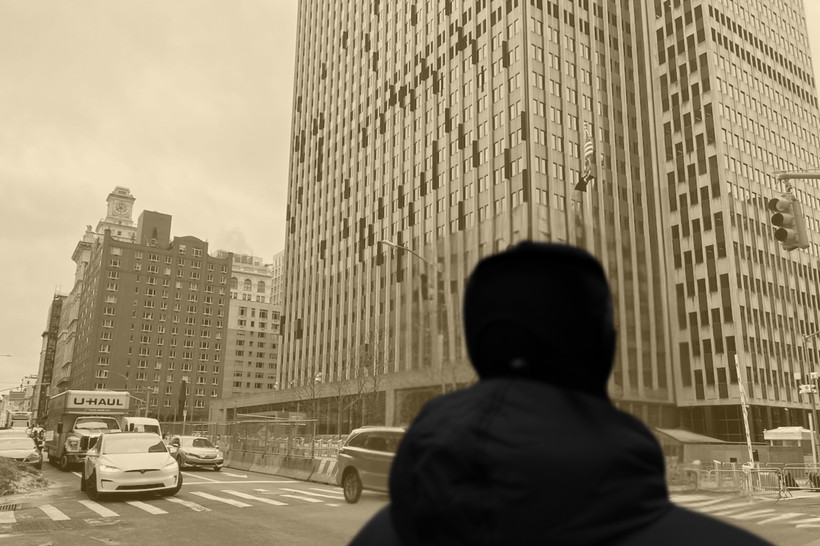
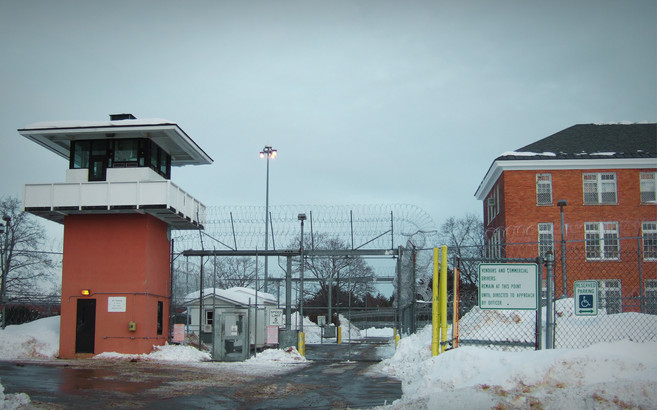
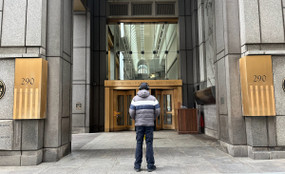
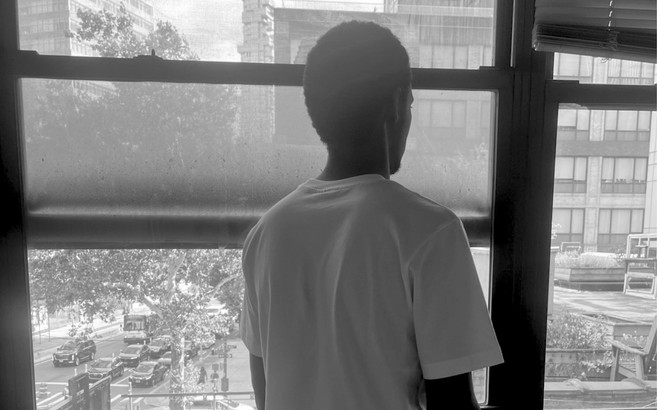
After winning his own asylum case, Cheikh Fall has worked as a translator and liaison between immigration lawyers and their West African clients for nearly two decades. | Photo: Liv Veazey | Illustration: New York Focus

Sign up for Staying Focused, our newsletter keeping readers up to speed on New York politics.

Cheikh Fall explains how to write an asylum application in much the same way that he used to teach his high school students to write English essays. The introduction, he says, is for biographical facts: “I was born on this date, in this place, of this ethnicity.” The second section is for describing the persecution people of your identity face in your home country.

The next section is where you depict the incidents that forced you to flee. Details are important — “if it was dark or light when they took you, what you said to them, where they drove you,” Fall explained, describing a hypothetical government kidnapping. “What were the subjects of the interrogation? If they tortured you, where did it happen?”

Fall worked as a high school English teacher in Mauritania until the late 1990s, when police beat and imprisoned him for his activism, he said. He fled and ended up in New York, where he applied for asylum, winning his case without the help of a lawyer. His writing and language skills came in handy: “I’ve never seen an asylum application as clear as yours,” he remembers an immigration officer telling him.

Since then, Fall has used those skills to help other newcomers chasing after the same outcome. For nearly two decades, he’s worked as a translator and liaison between immigration lawyers and their West African clients. Fixers like Fall help new immigrants find lawyers, while supplying attorneys with a reliable client base. In a system riddled with scams and fraud, they also help honest lawyers establish trust in immigrant communities. They’re an important but often overlooked part of the immigration legal ecosystem, especially for communities whose languages aren’t commonly spoken in the US.

Fall’s services came in higher demand around 2023. That year, tens of thousands of West Africans crossed the southern US border seeking safe haven. Many made their way — or were sent — to New York City, which struggled to house them. Private lawyers, publicly funded clinics, volunteers, and nonprofits stepped in to help the new arrivals manage their asylum cases, but struggled to keep up. Since then, hundreds of people have contacted Fall for help with their claims, he said.

Some of them had already paid someone hundreds of dollars to help write the narrative part of their application. “There were so many errors, these poor guys,” Fall said. The stories lacked the granularity that Fall knows immigration judges base their decisions upon. “You have to trace the details precisely. You have to be specific and exact,” he said. Fall emphasized that his skill is in knowing how to ask his clients for the details that matter to a judge.

Mamadou, an asylum seeker from Senegal, wrote the first draft of his asylum narrative himself, in French, then translated it into English using Google. The volunteers who helped him file his initial application told him that the text he had written wasn’t sufficient, but they couldn’t help him improve it. Mamadou asked around and got connected to Fall through a friend.

“He knew all the terms that I was supposed to use for the judge. They were words I’d never heard before,” said Mamadou, whom New York Focus is identifying with a pseudonym to avoid jeopardizing his immigration case.

“He knew all the terms that I was supposed to use.”

—Mamadou
Quality applications are increasingly important as President Donald Trump’s administration works to dismantle the asylum system, taking measures from implementing surprise fees to ordering judges to dismiss cases before they get off the ground. The administration has fired judges who approve higher numbers of asylum cases and ramped up ICE arrests in courthouses, which has deterred Fall’s clients from attending their hearings, resulting in automatic deportation orders.

Before, Fall said, “people could live normal lives” while they applied for asylum. “With Trump, they can’t even live.”

Fall grew up in the small city of Kaédi, in southern Mauritania, where most of the country’s Black, sub-Saharan ethnic groups are concentrated. He was born into a working class ethnic Fulani family of traditional jewelers and grew up speaking multiple languages: Pulaar, Wolof, Soninke, an Arabic dialect, and French. He studied English in university and wrote a thesis comparing north–south racial divisions in the United States and Mauritania.

In addition to teaching, Fall was a cultural organizer, gathering Mauritania’s orchestras for large concerts. The country was reeling from decades of military rule by a lighter-skinned Arabo-Berber group, and the military regimes pitted Mauritania’s various ethnic groups against one another. As a form of activism, Fall organized concerts that brought together ethnicities and castes that rarely mixed.

He organized the concerts with Malouma Mint El Meidah, one of Mauritania’s most famous singers and a vocal critic of the state. The government eventually banned Malouma, whose work blended musical traditions from different ethnicities, from performing or distributing her music. Around the same time, police raided Fall’s house, beating and imprisoning him, separating him from his pregnant wife. “I should have died,” he said. Authorities released Fall after a few days, and he spent much of the rest of his time in Mauritania in hiding.

In the early 2000s, Fall traveled to New York City on a visa as Malouma’s tour manager. Malouma said that she brought Fall along in part because of his English skills. She remembered walking with Fall in Times Square at the end of a long day of meetings, trying to convince him to return to Mauritania with her. Fall decided to stay. “It’s lucky for the United States that he’s there,” Malouma told New York Focus.

Fall applied for asylum, winning his case in about a year. That gave him the ability to live and work in the US indefinitely, as well as apply for permanent residence.

With his working papers and immigration status secured, Fall became a nightclub manager. He continued organizing concerts, bringing famous West African musicians to the US. He also became the president of the Pulaar Speaking Association, a member-based organization promoting cultural exchange and financially supporting Fulani immigrants.

“That’s how I started helping with people’s stories,” Fall said. “Members would come to me with their immigration applications. They knew that I was an English professor.”

At first, Fall translated and edited the narrative sections of people’s asylum applications for free. He eventually began accompanying people to meetings with lawyers, providing free translation for those whose attorneys didn’t have access to a Pulaar interpreter. As more people came to him for help writing applications, he recommended them to lawyers he had gotten to know. Soon, he said, lawyers were calling him asking for clients.

Fall said that he and other Fulani who came to the US in the early 2000s refer to those early days as a time of “mabbude,” a Pulaar verb that means to catch or attain something you’re hunting. It seemed like all his clients were winning their cases.

“I was so proud to help people. I did petitions to help people get their families here,” he said. “I got to see people find jobs, get married, build families.”

“I was so proud to help people.”

—Cheikh Fall

Then, Fall said, the immigration enforcement landscape began to change. President Barack Obama’s administration deported nearly 3 million people — more than any other — including many who’d crossed the southern border seeking asylum. The first Trump administration then began its ongoing project of mass detentions and dismantling the asylum system. Still, asylum seekers kept arriving. When West Africans started showing up in New York in large numbers in late 2022, Fall’s relatives were among them.

“I had 22 individuals at my house — sons of my brothers and sisters, other relatives, so many that I simply could not host all of them,” Fall said. Some of those relatives, and then their friends, also became his clients.

Practically all new arrivals needed help from translators like Fall. Many approached him for help, while others, desperate and unfamiliar with the US immigration system, fell prey to scams or sub-par services.

Fall said that he’s had to distance himself from former colleagues who perform shoddy work. He hasn’t spoken to one colleague in years, cutting him off after learning that he was allegedly furnishing his clients with false documents supplied from contacts in Mauritania and Senegal. Some conjured stories for asylum applications whole cloth, he said. Another former colleague falsely represented himself as a lawyer to new clients, Fall said.

Fall now makes a living from his asylum work, charging $300–$500 to help asylum seekers prepare and translate their applications, connect them with a lawyer, and provide interpretation for their meetings. His fee is separate from the payments that clients make to their lawyers, which can cost anywhere from $3,000 to $10,000, depending on the attorney and the details of the case. Fall has translated for all of the languages, castes, and ethnicities he’d once brought together for music festivals in Mauritania. He said that almost none of the clients he works with are comfortable writing in English, and many are illiterate.

Work, however, has started to dry up, thanks to policies that have blocked asylum seekers from entering the country. Near the end of President Joe Biden’s term, his administration issued a policy sharply curtailing the number of people allowed to enter the United States, where one has to be present in order to apply for asylum. “I no longer had any new clients,” Fall said. President Donald Trump’s administration has only tightened Biden’s restrictions.

Today, on the cusp of retirement, Fall is seeing his friends and clients get deported. He is still working with dozens of people who are in the final stages of their asylum cases. They’re facing one hurdle after another: In recent months, the Trump administration has been trying to send West African asylum seekers to Uganda, thousands of miles from their home countries, as New York Focus has reported.

Repeated adversity, both at home and in the US, has strengthened solidarity among Fall’s milieu of expatriates, he said. Recently, he said, when a man from Mauritania’s ruling ethnic group died, it was the Fulani members of the Pulaar Speaking Association who raised funds to repatriate his body from the US to Mauritania for burial. “That would have never been possible before,” he said.

Americans’ attitudes toward the West African immigrants of his community have shifted in the opposite direction under Trump’s second administration, Fall said: “The force of Trump has been to make the citizens think all the immigrants are dangerous all the time.” In that environment, Fall said, his work feels all the more important.

At New York Focus, our central mission is to help readers better understand how New York really works. If you think this article succeeded, please consider supporting our mission and making more stories like this one possible.

New York is an incongruous state. We’re home to fabulous wealth — if the state were a country, it would have the tenth largest economy in the world — but also the highest rate of wealth inequality. We’re among the most diverse – but also the most segregated. We passed the nation’s most ambitious climate law — but haven’t been meeting its deadlines and continue to subsidize industries hastening the climate crisis.

As New York’s only statewide nonprofit news publication, our journalism exists to help you make sense of these contradictions. Our work scrutinizes how power works in the state, unpacks who’s really calling the shots, and reveals how obscure decisions shape ordinary New Yorkers’ lives.

In the last two decades, the number of local news outlets in New York has been nearly slashed in half, allowing elected officials and powerful individuals to increasingly operate in the dark — with the average New Yorker none the wiser.

We’re on a mission to change that. Our work has already shown what can happen when those with power know that someone is watching, with stories that have prompted policy changes and spurred legislation. We have ambitious plans for the rest of the year and beyond, including tackling new beats and more hard-hitting stories — but we need your help to make them a reality.

If you’re able, please consider supporting our journalism with a one-time gift or a monthly gift. We can't do this work without you.

Thank you,

Akash Mehta
Editor-in-Chief
Liv covers immigration for New York Focus. She previously reported for Hell Gate, where she wrote about ICE arrests in immigration court, city culture, and the 2025 mayoral election. Before becoming a journalist, she practiced and taught oral history in New York City… more
Also filed in New York State

A sweeping report excoriates the Department of Corrections and Community Supervision for failing to protect prisoners and staff.

New York’s housing aid can’t cover rent anywhere in the state. A new lawsuit says that violates the state’s constitution.

The agency is adding 100 beds to the Buffalo Federal Detention Facility.
Also filed in New York City

New York City has no plans to opt into NY HELPS, which has been extended to 2028 after filling 60,000 government jobs.

New York’s free air conditioner program ran out of funding before summer, even as extreme heat becomes a deadlier threat.

Mayor Mamdani is facing pressure to limit an avenue for large building owners to buy credits instead of cutting emissions.
Also filed in Immigration

Under Trump, a status for young immigrants who have experienced abuse or neglect no longer offers much protection.

A lawsuit accuses federal officials of ignoring evidence that the boy, born in Mexico, held US citizenship through his mother.

We’ve compiled information for the 450,000 New Yorkers who will lose health care coverage on July 1.