‘I Was Just Desperate to Find a Lawyer’: Three Journeys Through New York’s Asylum Maze

It’s almost impossible to win an asylum case without an attorney. Finding one is a tall order.

Liv Veazey   ·   February 26, 2026
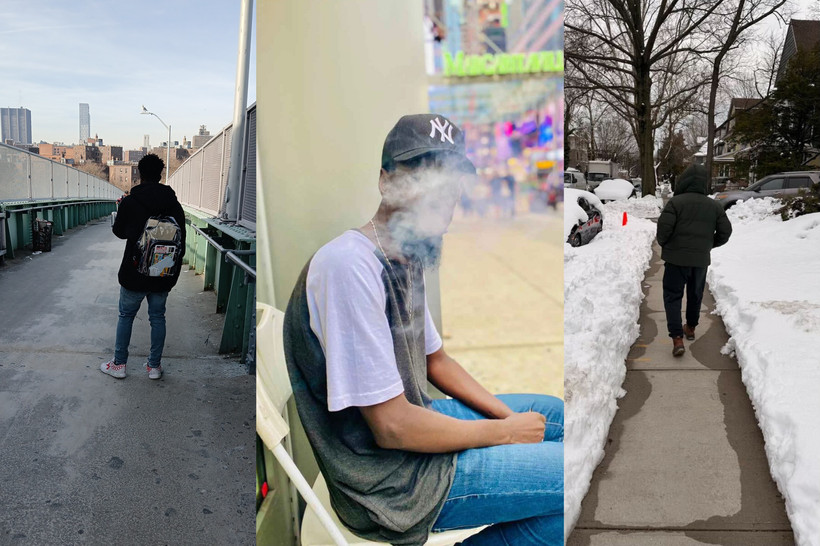
New York Focus spoke to three asylum seekers from West Africa about their experiences trying to secure legal representation. | Photos: Courtesy of interviewees

Sign up for Staying Focused, our newsletter keeping readers up to speed on New York politics.

The first time Moussa learned that he should hire a lawyer was “in the camps,” his term for the Arizona holding center where he said he spent eight days in Customs and Border Protection custody in 2023. At the facility, Moussa, who immigrated from Mali, befriended a young Congolese man who had learned about the United States’ immigration system from his US resident mother.

“He told me we had to go get asylum,” Moussa said. “I asked him, ‘What is asylum?’”

“Asylum is your story,” the man told him, “why you came here.” He told Moussa he had to talk to a lawyer, something Moussa doesn’t remember border officials telling him before they released him and he made his way to New York City. The lawyer would help him stay in the US, the man said.

Two and a half years later, Moussa still hasn’t found a lawyer. He cobbled together enough assistance from pro bono legal services and volunteers to submit his asylum application and receive his work permit, but his next hearing is two months away and he’s scrambling to hire a lawyer to represent him.

The stakes are high. Studies show that those with legal representation tend to fare better in virtually every step of the asylum process. That remains true even as the overhaul of the immigration court system ushered in by President Donald Trump’s administration has caused asylum grant rates across the board to plummet. Now, some immigration lawyers say it’s nearly impossible for those without attorneys to win their cases. In December, only one of the 279 unrepresented asylum seekers whose cases were decided in New York state won — less than 0.4 percent, according to data from the Transactional Records Access Clearinghouse. Those with lawyers fared slightly better: 13 percent won their cases that month.

Yet many struggle to find legal help. Some have little to no experience navigating court systems. When asked if he knew any lawyers growing up, Moussa laughed. And his experience of learning of his legal status after entering the US is common among the hundreds of thousands of asylum seekers who’ve crossed the southern border in recent years.

The threat of scams raises the stakes even further. A rush of asylum seekers into New York beginning in 2022 corresponded with an increase in fraudulent legal service providers. The cost can be devastating: Asylum seekers who wait months to get their work permits and often rely on gig work to scrape together a living can see thousands of dollars disappear in an instant.

For years, advocates have been pushing a bill to enshrine the right to representation in immigration courts across the state. A majority of Democrats in both legislative chambers support the bill, but it’s never been brought to the floor for a vote. The state currently allocates some money in its annual budget for immigration legal services and funds a program to provide free representation to immigrants in detention, helping New York maintain some of the highest rates of representation in the country. But most immigrants are left to find and hire their own lawyers. Many are unsuccessful, and nonprofits and pro bono services are struggling to fill the gaps.

The terrain is treacherous. To get a sense of it, New York Focus spoke to three asylum seekers from West Africa with ongoing cases in New York. In interviews, which have been translated from French, they described the difficulty of finding an affordable lawyer, language barriers that limit access to help, mistrust and fear of being scammed, and confusion about the country’s constantly changing immigration rules. Only one of the three men was able to secure a pro bono lawyer, though he has never met them. New York Focus agreed to change the men’s names to protect them from being targeted by immigration authorities, and corroborated sections of their accounts using documents they shared.

Moussa working bike delivery. | Photo courtesy of Moussa
Moussa

Moussa is in his mid-20s. He grew up in Mali, where, he said, rebel and jihadist groups threatened and killed community members in his village. Many of his friends joined the movements, he explained, to avoid becoming targets themselves. He arrived in New York City in October 2023 and moved into a Hilton hotel near Times Square that was serving as a migrant shelter, he said. He knew he had to earn money. And he knew he had to apply for asylum, but he didn’t know how.

He’d seen other people in the shelter with English copies of the I-589 form, used to apply for asylum; they translated the document’s highly technical language on their phones. He also heard people talking about an address, 26 Federal Plaza, the site of one of three immigration courts in the city. He went in person one day to see if he could find a copy of the form.

At the court building, a security guard directed him to a window, but when he asked the clerk for the form, she didn’t know what he was talking about, he said. A woman standing in line next to him told him he wasn’t in the right place, and that she was a lawyer and could offer him a consultation. He met with her later that week, and she explained the basics of the asylum process through a translator: Moussa had to apply for asylum within one year of arriving in the United States, she said, and only 150 days after that could he apply for his work permit.

The lawyer told him that her services would cost $7,500, he recalled. She asked if he had a job; he lied and said he was doing bike delivery work. He knew he couldn’t gather the money in time to meet his filing deadline. “I was just desperate to find a lawyer,” he said. He took her phone number, but even after he started doing bike delivery work and then cleaning hotels, he never earned enough to call.

Without authorization to work and pay for legal fees, Moussa found help filling out his asylum application at a center that operated out of a Red Cross building in Manhattan. He submitted the form, but after a couple of months, his online account still showed that he hadn’t registered an application, he said.

Moussa went back to 26 Federal Plaza to see what was wrong. A Senegalese woman who spoke some Wolof was working at the court building. “My son, you didn’t file it right,” she told him.

“I cried that day,” he said. “I thought, ‘You’re not getting your papers and nobody else is either.’”

Back at his shelter, Moussa met volunteers who helped him refile correctly just before the one-year deadline. A few months later, he finally received his work permit.

Filing Moussa’s asylum application involved legal advice from other immigrants, both in detention and shelters; a lawyer he met by chance; a legal clinic funded by the city; and multiple volunteers, many of whom had no formal legal training. It’s a patchwork approach common for asylum seekers in New York, where the landscape of legal assistance for immigrants is a diffuse array of private, public, and volunteer sources.

“I don’t want to hide all day, take the metro in secret.”

—Moussa

Moussa has now been before his judge three times. At his last hearing, he said that only one other person showed up, even though a couple dozen people were on the docket that day. “My judge said, ‘For your next hearing, you have to come, even if you don’t have a lawyer,’” he recounted. “She said, ‘Please don’t be afraid.’”

Moussa still has a long legal journey ahead of him. His next hearing is in a few months, during which the government attorney might move to dismiss his case or the judge may set his final hearing. For his best shot at staying in the US, he’ll need to hire a lawyer to help him prepare his statements, gather evidence, and practice arguing his case under cross-examination.

With a group of about 20 other asylum seekers, Moussa contributes $150 every month to a shared pot, which is then given over to a different person in the group every month — a common form of resource-sharing in West Africa.

Soon, Moussa said, it will be his turn to receive the money, which he plans on using to pay for a lawyer. He doesn’t want his legal status to lapse, which would make him deportable.

“I don’t want to hide all day, take the metro in secret,” he said. “I know that I’m not a criminal.”

Mamadou

Mamadou is in his early 30s. He’s from a small village in Senegal. Like Moussa, he said he had never worked with a lawyer before coming to the US and didn’t know what he needed to do to secure legal status. His introduction to the asylum process came from a social media influencer.

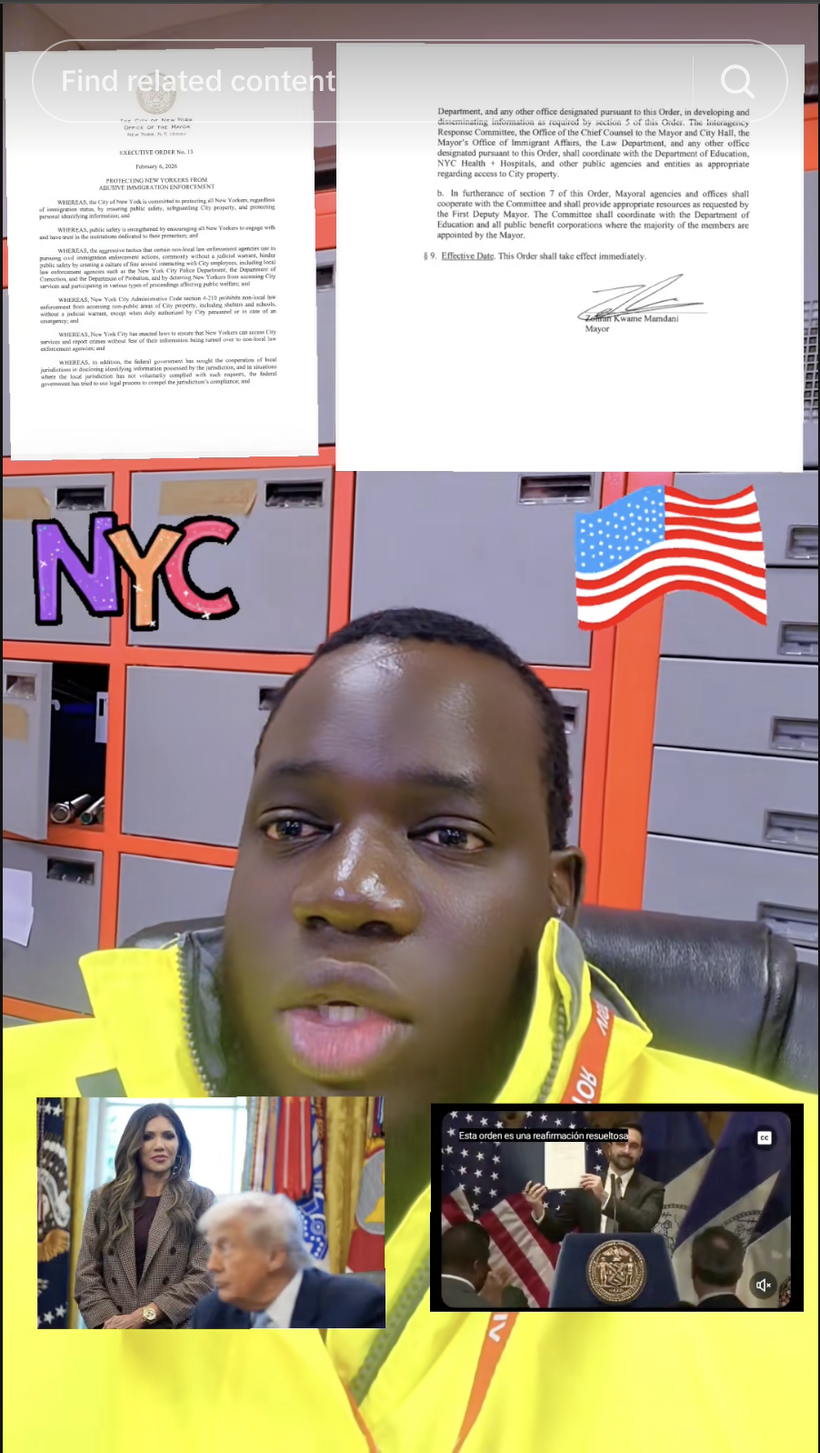
Like countless other recently arrived Senegalese asylum seekers in New York, Moussa got his earliest legal advice from the TikTok page of Massamba Dieng. Dieng has over 200,000 followers and posts multiple times a week in Wolof about national and state-level US immigration politics; one of his latest videos describes a bill Governor Kathy Hochul proposed last month that would limit police collaboration with federal immigration agents. Dieng lives in England and is often wearing a fluorescent yellow visibility jacket and safety earmuffs in his videos.

Screenshot: Massambadieng2/TikTok

Massamba Dieng’s TikTok, where he posts about national and state-level US immigration politics.

Dieng lists his phone number in his TikTok bio. As Mamadou made his way through Mexico — having flown from Senegal to Nicaragua — he contacted Dieng over the messaging service WhatsApp looking for advice on how to enter the US. Dieng told him that he should tell officials that he’s seeking asylum. Border guards in Arizona let him into the country but told him that if he missed even one meeting, he would be arrested, he said. They didn’t specify what kind of meetings. “I was afraid that even if I missed hospital visits and meetings at the shelter, that I might be deported,” he said.

Mamadou made his way to New York, where volunteers helped him submit his asylum application. It took him another eight months to get his work permit, which got lost in the mailroom of his shelter.

The next step was to argue his case. He attended his first asylum hearing alone. “I went only with God before the judge,” he said. The judge told him that he needed to submit evidence and a more detailed version of his asylum application, and that he should try to find a lawyer, he recalled. A Senegalese friend told him that a man named Cheikh could help.

“I went only with God before the judge.”

—Mamadou

Cheikh B., who asked to be identified only by his first name and middle initial to protect his clients from retaliation, came from the same region as Mamadou and spoke the same languages. During his free time between shifts as a bar manager, he works as a translator and legal advisor for asylum seekers from West Africa, serving many of the same functions as a paralegal and connecting lawyers to West African clients for whom he can translate. Since winning his own asylum case over 20 years ago, Cheikh told New York Focus, he has become an expert at filling out the narrative part of the asylum form — the story.

Cheikh told Mamadou that his and his lawyer’s services would cost $4,900 — a $1,500 retainer and then monthly $500 payments. He coached Mamadou through the next steps in the asylum process, including getting testimony from people back in Senegal to support his case. Mamadou never spoke directly to his lawyer, who doesn’t speak any of the three languages Mamadou is fluent in, he said.

Around the time Mamadou signed his contract with Cheikh, Immigration and Customs Enforcement agents began making daily arrests at New York City’s immigration courthouses. Mamadou saw photographs of masked agents crowding the hallways where he’d had his first hearing and knew people who had been arrested attending their own hearings, he said. He’d heard of other people attending their hearings online, so he asked Cheikh to make that happen. Cheikh explained that it was up to the judge’s discretion, but promised that he would ask.

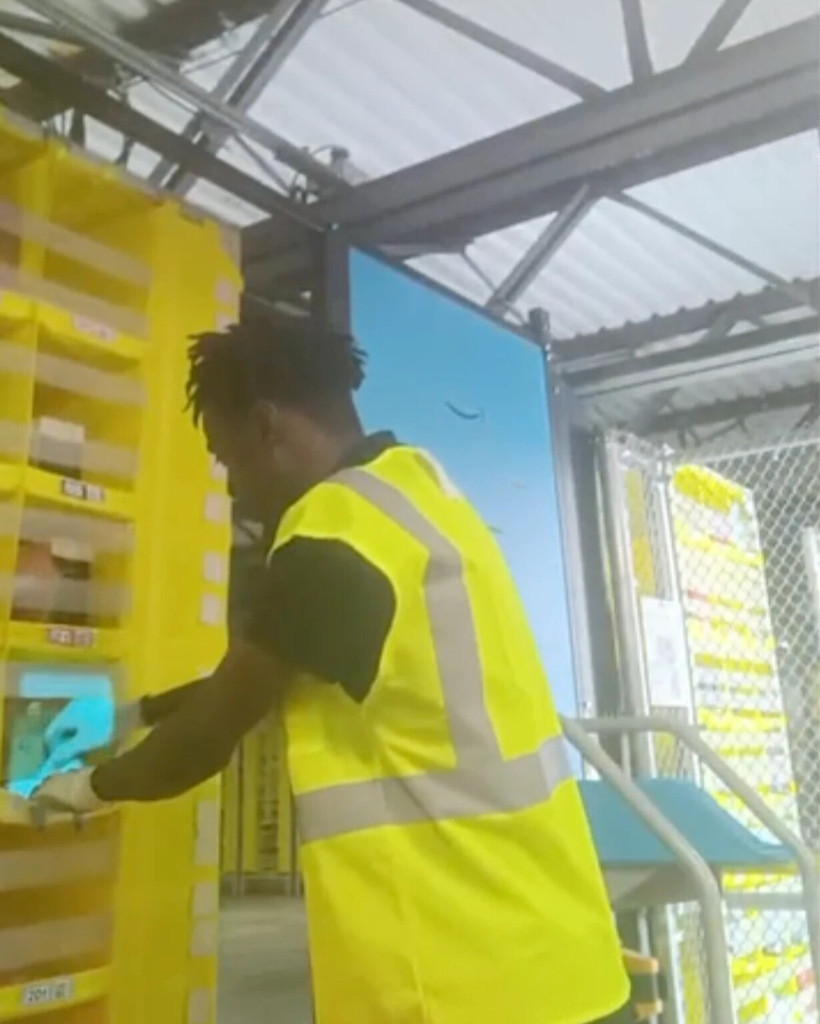
Mamadou working at an Amazon warehouse. | Photo courtesy of Mamadou

Three days before he was supposed to appear before his judge, Mamadou still hadn’t heard anything from Cheikh about holding the hearing online. Desperate, he asked an English-speaking friend to call the lawyer’s office for him. The lawyer said that she had no record of Mamadou asking to have his case held online, Mamadou said. At that point, it was too late to request it.

On the day of his hearing, Mamadou prayed. He arrived at 6 am for his 9 am appointment. When the judge called Mamadou up, his lawyer still hadn’t arrived.

At 9:45, Mamadou saw his lawyer for the first time. She came with all of his documents. “You won’t speak. It will just be me speaking,” she told him. The hearing was over in less than 20 minutes, Mamadou recalled. He didn’t understand much of what was said, but the lawyer seemed confident and professional. Afterwards, she offered to accompany Mamadou to the bus stop.

Mamadou’s asylum case is ongoing. He still isn’t sure how much his lawyer knows about his situation. “I have no idea,” he said. “We haven’t talked at all, so I just can’t say.”

Djibril

Asylum seekers often find their lawyers through word of mouth. Working in an unfamiliar language and court system, they have no reliable way of assessing the quality or honesty of a lawyer before they sign a contract and pay retainer fees. Some lawyers offer free consultations; others charge a few hundred dollars for initial meetings. Often, all an asylum seeker has to go on is their gut.

Djibril is in his mid-40s. He’s from Mauritania. After finishing his master’s degree, he worked for 10 years with humanitarian and human rights nonprofits, one of which helped migrants entering his home country. “I never thought I would be a migrant,” he said.

Djibril arrived in New York about two years ago. In the large warehouse complex-turned-migrant shelter where he first lived in New York, he had a hard time finding legal help. He would try to engage a caseworker in the shelter. “The response every time was, ‘You have to wait and come back later,’” he said.

Eventually, Djibril went to a church in Manhattan where volunteers helped fill out his asylum application, which he submitted on his own. From there, he looked for a lawyer to help him argue his case. Djibril spent nine months emailing dozens of law firms and legal service nonprofits with no response. When he showed up in person, he was turned away. Sometimes the organizations referred him to other clinics for asylum seekers — but when he visited them, he often found only Spanish speakers, and they were only helping with discrete tasks, rather than offering full representation. He thought his years of experience working in refugee camps would help him navigate the aid system in New York, but he was lost.

“Nobody could really help me,” he said. “I was so discouraged.”

After nine months, a criminal attorney finally responded to one of Djibril’s queries and eventually referred him to an immigration lawyer, who agreed to take his case. The lawyer told him that the asylum application the church helped him submit was filled with mistakes and would need to be amended, he said. Djibril signed a contract with the lawyer’s firm, agreeing to pay $6,500 in $500 monthly installments.

Over the next year, Djibril found a food service job and paid his lawyer $5,500. Then, his boss stopped paying him, he said, an issue frequently reported by immigrants, who disproportionately work in the industries with the most wage theft. He filed a complaint with the state Department of Labor claiming his boss owed him $7,000. The case is ongoing.

“It’s like I’m in a giant, open prison.”

—Djibril

With no paycheck, Djibril couldn’t pay his lawyer the rest of his fee. After some back and forth, the lawyer dropped him as a client. Djibril couldn’t understand why the firm would respond in such an extreme way to such a small amount of money owed.

“What was I supposed to do?” he asked.

Eventually, he found an attorney who would take on his case pro bono, “but he has no time for me,” Djibril said. “I’ve never had an appointment with him.” He can’t meet with the lawyer directly and has only ever communicated with him over the phone through a friend who speaks English. Djibril said he feels mistrustful of the free service. He yearns for the end of his legal limbo.

“What I want more than anything is just for the judge to call me up and give me a decision,” he said. “I just hate this nothingness.”

Djibril volunteers, works, and has made friends in New York, but as long as his case is still hanging over him, he said, he won’t feel he’s at home.

“It’s like I’m in a giant, open prison,” he said. “I can walk around, but I’m not really part of the people here. I’m not among them.”

At New York Focus, our central mission is to help readers better understand how New York really works. If you think this article succeeded, please consider supporting our mission and making more stories like this one possible.

New York is an incongruous state. We’re home to fabulous wealth — if the state were a country, it would have the tenth largest economy in the world — but also the highest rate of wealth inequality. We’re among the most diverse – but also the most segregated. We passed the nation’s most ambitious climate law — but haven’t been meeting its deadlines and continue to subsidize industries hastening the climate crisis.

As New York’s only statewide nonprofit news publication, our journalism exists to help you make sense of these contradictions. Our work scrutinizes how power works in the state, unpacks who’s really calling the shots, and reveals how obscure decisions shape ordinary New Yorkers’ lives.

In the last two decades, the number of local news outlets in New York has been nearly slashed in half, allowing elected officials and powerful individuals to increasingly operate in the dark — with the average New Yorker none the wiser.

We’re on a mission to change that. Our work has already shown what can happen when those with power know that someone is watching, with stories that have prompted policy changes and spurred legislation. We have ambitious plans for the rest of the year and beyond, including tackling new beats and more hard-hitting stories — but we need your help to make them a reality.

If you’re able, please consider supporting our journalism with a one-time gift or a monthly gift. We can't do this work without you.

Thank you,

Akash Mehta
Editor-in-Chief
A photo of Akash Mehta.
Liv covers immigration for New York Focus. She previously reported for Hell Gate, where she wrote about ICE arrests in immigration court, city culture, and the 2025 mayoral election. Before becoming a journalist, she practiced and taught oral history in New York City… more
Also filed in New York State

A lobbyist who has been romantically linked to Assembly Speaker Carl Heastie led a rally opposing the legislation a week before the speaker declined to bring it to a vote.

In May, state lawmakers passed a $269 billion budget after haggling for months over thousands of line items and policies affecting New Yorkers.

Millions in outside spending was a boon to Gov. Kathy Hochul’s 2022 opponent, Lee Zeldin, and influenced down-ballot races.

Also filed in New York City

The citizens assembly model, used for public decision-making around the world, is gaining traction in New York.

Resorts World is floating legislation to avert more than $500 million in payments to the horseracing industry.

Some of the city’s new aid will be canceled out by pension boosts.

Also filed in Immigration

The Department of Justice has terminated more than 100 immigration judges since last year as it has pressured courts to order more deportations.

The legislation comes after months of haggling over how best to protect New Yorkers from President Trump’s immigration crackdown.

Footage published by New York Focus sparked a debate over deputies’ practice of calling Border Patrol on Spanish-speaking drivers.