
State Budget Will End Subscription Traps, Making It Easier to Cancel Cable or Streaming Services

The final budget excludes a loophole that would have exempted corporate giants like Spotify and Amazon, after New York Focus reported on the carveout in February.

Sam Mellins   ·   May 7, 2025
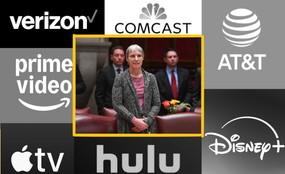
The 2025 state budget includes a new law requiring companies to offer easy cancellation methods for subscriptions ranging from cable TV to Spotify. | Photo: Burst / Pexels | Illustration: Leor Stylar

Sign up for Staying Focused, our newsletter keeping readers up to speed on New York politics.

Have you ever been trapped in a subscription that you wanted to cancel, but couldn’t figure out how?

Maybe the cancellation button on the website was hidden behind endless menus, or you couldn’t get through to a real person on the phone, and just gave up, resigning yourself to the continued monthly fees.

Those days appear to be over for New Yorkers. The 2025 state budget, which the legislature is expected to finalize within days, includes a new law requiring companies to offer easy cancellation methods for
subscriptions ranging from cable TV to Spotify. Critically, the final version of that law, which will take effect in November, removes a sweeping loophole initially proposed by Governor Kathy Hochul that would have exempted some of the country’s largest companies.

In February, New York Focus reported that Hochul’s original proposal to streamline cancellations didn’t cover companies regulated by the Federal Communications Commission — meaning that corporate giants like Amazon, Apple, Comcast, and Verizon would have been off the hook. Consumer advocates warned that this omission would leave New Yorkers no better off when it came to some of the most subscription-hungry companies.

The state Senate’s March budget proposal eliminated that loophole, after New York Focus informed the chamber’s consumer protection committee chair about the exemption and she said she’d look into it. That version won out in negotiations.

“This is a problem that many, many consumers have, but it’s one that can be addressed through meaningful regulation,” said Norman Silber, a consumer law expert at Hofstra University’s law school. “Now, consumers will find that it’s a lot easier to get out from under automatic renewals.”

What the New Law Requires:

1. Companies must give customers a way to cancel their subscriptions that is as simple as the way they signed up.

2. Companies must get consumers’ consent for price hikes or allow them to cancel their subscriptions if they don’t want to pay the higher cost.

3. If companies offer a temporary low price or free trial of a subscription, they must also clearly explain when the price will go up and by how much.

4. Companies must provide a phone or online option to cancel subscriptions, even if the customer signed up in person.

5. Companies are prohibited from obstructing or unreasonably delaying customers’ attempts to cancel their subscriptions.


The new law mirrors a federal policy known as the “click to cancel” rule, which was enacted in the final months of the Biden administration to make it easier for consumers nationwide to cancel unwanted subscriptions. The federal rule is set to take effect later this month, but may be permanently blocked if ongoing legal challenges against it are successful.

Even if click to cancel does take effect, it’s not clear whether the Trump administration will enforce it, so having an additional layer of protection will still be useful to New Yorkers.

Now, if the feds decline to act, the New York attorney general can go after companies that try to create subscription traps, forcing them to pay penalties and change their practices.

“New York is lucky in that you have a really aggressive and effective AG’s office,” said Samuel Levine, who was in charge of the Federal Trade Commission’s consumer protection efforts under former President Joe Biden. “I certainly hope that she looks at the broad range of unlawful subscription traps and takes action.”

At New York Focus, our central mission is to help readers better understand how New York really works. If you think this article succeeded, please consider supporting our mission and making more stories like this one possible.

New York is an incongruous state. We’re home to fabulous wealth — if the state were a country, it would have the tenth largest economy in the world — but also the highest rate of wealth inequality. We’re among the most diverse – but also the most segregated. We passed the nation’s most ambitious climate law — but haven’t been meeting its deadlines and continue to subsidize industries hastening the climate crisis.

As New York’s only statewide nonprofit news publication, our journalism exists to help you make sense of these contradictions. Our work scrutinizes how power works in the state, unpacks who’s really calling the shots, and reveals how obscure decisions shape ordinary New Yorkers’ lives.

In the last two decades, the number of local news outlets in New York has been nearly slashed in half, allowing elected officials and powerful individuals to increasingly operate in the dark — with the average New Yorker none the wiser.

We’re on a mission to change that. Our work has already shown what can happen when those with power know that someone is watching, with stories that have prompted policy changes and spurred legislation. We have ambitious plans for the rest of the year and beyond, including tackling new beats and more hard-hitting stories — but we need your help to make them a reality.

If you’re able, please consider supporting our journalism with a one-time gift or a monthly gift. We can't do this work without you.

Thank you,


A photo of Sam Mellins.
Sam Mellins is senior reporter at New York Focus, which he has been a part of since launch day. His reporting has also appeared in The San Francisco Chronicle, The Intercept, THE CITY, and The Nation. Reach him on Signal: mellins.613
Also filed in New York State

In May, state lawmakers passed a $269 billion budget after haggling for months over thousands of line items and policies affecting New Yorkers.

Millions in outside spending was a boon to Gov. Kathy Hochul’s 2022 opponent, Lee Zeldin, and influenced down-ballot races.

The legislation would make it easier for currently and formerly incarcerated people and child victims to sue the state over allegations of past abuse.

Also filed in Budget

State leaders are expected to pass a bill that avoids resolving how much Resorts World New York City needs to pay.

Resorts World is floating legislation to avert more than $500 million in payments to the horseracing industry.

Our searchable database breaks down the most consequential decisions Albany politicians made on climate, immigration, housing, schools, taxes, and more.

Also filed in Affordability

We’ve compiled information for SNAP recipients in New York on the changing work requirements.

Despite last-ditch efforts by a coalition of lawmakers, the state failed to avert a health coverage cliff coming this summer.

Governor Kathy Hochul was successful in her bid to upend the Climate Leadership and Community Protection Act after legislators caved to finalize an overall budget deal.