Legislators Push for Stronger Safety Net but Stop Short of Restoring Benefits

Senate and Assembly budget proposals would leave New Yorkers at risk of losing their benefits from federal cuts.

Jie Jenny Zou and Chris Bragg   ·   March 11, 2026
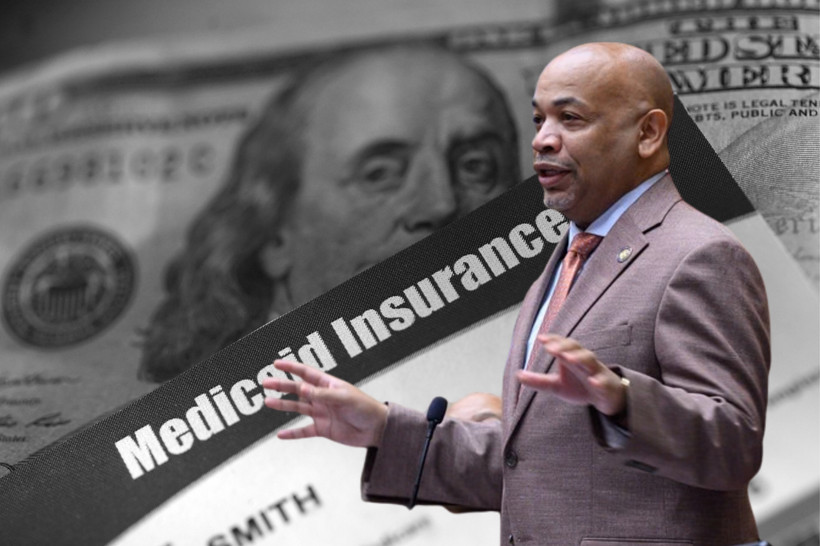
While budget proposals from the Senate and Assembly would beef up the state’s investments in health care and food security, neither would fully avert the fallout. | Photos: New York State Assembly Majority; Kameleon007/Getty Images | Illustration: Leor Stylar

Sign up for Staying Focused, our newsletter keeping readers up to speed on New York politics.
President Donald Trump’s historic cuts to federal benefits put massive holes in New York’s safety net. But while budget proposals from the Senate and Assembly would beef up the state’s investments in health care and food security, neither would fully avert the fallout.

Governor Kathy Hochul, whose agenda this year centers on affordability, has maintained that the state cannot afford to backfill federal cuts to Medicaid and the Supplemental Nutrition Assistance Program. Her January budget reflected that position.

The federal cuts included a chunk of funding for the state’s Essential Plan, which provides health insurance to 1.7 million low- and middle-income New Yorkers. That funding expired earlier this year. The governor’s executive budget did not include a clear path forward for those who will be disenrolled this summer — and neither do the Senate nor Assembly’s proposals.

The Senate proposed a new commission to make a plan by July outlining paths forward for the state’s health care system after cuts. The Assembly proposed a contingency fund to offset costs for a subset of Essential Plan enrollees it is legally required to cover. That fund would not support the large swath of recipients set to lose coverage.

“It’s stunning that the [proposals] do nothing for the 470,000 people set to lose Essential Plan coverage in July,” said Michael Kinnucan, senior health policy adviser at the Fiscal Policy Institute. The left-leaning group has been urging the state to set up a state-funded alternative for those kicked off the Essential Plan and called the omission by lawmakers “negligence.”

Kinnucan also expressed concern about legislators’ proposed Medicaid reimbursement rates, which are higher than those recommended by the governor. In previous years, Kinnucan has advocated for a more targeted approach to reimbursement rates to account for disparities among health care facilities. The health sector has been lobbying for rate increases to keep up with rising costs and account for blowback from federal cuts, which are expected to drive up the number of uninsured patients.

Rising reimbursement rates have long been flagged by the fiscally conservative Empire Center as a major contributor to the growing cost of New York’s Medicaid program. Pressure to rein in these costs could escalate under the Trump administration, which announced earlier this month that it would be launching a probe into the state’s health care spending.

“Going with another round of rate increases is a sign they’re not taking that issue seriously,” Bill Hammond, senior fellow for health policy at Empire, said of all three budget proposals. “I think they’re setting themselves up for real problems for the future.”

Neither legislative proposal specifically addressed upcoming changes to Medicaid eligibility. In October, federal funding for some immigrants enrolled in Medicaid will dry up, and the state will have to start implementing new work requirements for recipients starting in January. The changes are expected to result in an additional hundreds of thousands New Yorkers losing their coverage.

Similar work requirements took effect for SNAP earlier this month. Both the Senate and Assembly proposed a total of $8.5 million — compared to Hochul’s $3.7 million — to maintain the state’s network of SNAP navigators, who help residents across the state enroll and renew their food benefits. Federal funding for SNAP navigators will be cut starting in October.

“This investment will be especially critical as families navigate expanded work reporting requirements and other federal changes that will make SNAP harder to access,” said Krista Hesdorfer, of Hunger Solutions New York, about the legislature’s boosts.

Both chambers are also pushing for increases to the Hunger Prevention and Nutrition Assistance Program and Nourish New York to bring their total allocation to $75 million each. The programs help support the state’s vast network of emergency food providers, which anticipate surging demand amid SNAP cuts. The governor’s budget proposed a modest increase to the former program and kept funding for the latter flat.

At New York Focus, our central mission is to help readers better understand how New York really works. If you think this article succeeded, please consider supporting our mission and making more stories like this one possible.

New York is an incongruous state. We’re home to fabulous wealth — if the state were a country, it would have the tenth largest economy in the world — but also the highest rate of wealth inequality. We’re among the most diverse – but also the most segregated. We passed the nation’s most ambitious climate law — but haven’t been meeting its deadlines and continue to subsidize industries hastening the climate crisis.

As New York’s only statewide nonprofit news publication, our journalism exists to help you make sense of these contradictions. Our work scrutinizes how power works in the state, unpacks who’s really calling the shots, and reveals how obscure decisions shape ordinary New Yorkers’ lives.

In the last two decades, the number of local news outlets in New York has been nearly slashed in half, allowing elected officials and powerful individuals to increasingly operate in the dark — with the average New Yorker none the wiser.

We’re on a mission to change that. Our work has already shown what can happen when those with power know that someone is watching, with stories that have prompted policy changes and spurred legislation. We have ambitious plans for the rest of the year and beyond, including tackling new beats and more hard-hitting stories — but we need your help to make them a reality.

If you’re able, please consider supporting our journalism with a one-time gift or a monthly gift. We can't do this work without you.

Thank you,

Akash Mehta
Editor-in-Chief
A photo of Akash Mehta.
A photo of Jie Jenny Zou.
Jie Jenny Zou covers social services and public benefits for New York Focus. She previously worked as an investigative reporter at the Los Angeles Times and the Center for Public Integrity where she delved into topics ranging from environmental health and worker safety… more
A photo of Chris Bragg.
Chris Bragg is the Albany bureau chief at New York Focus. He has done investigative reporting on New York government and politics since 2009, most recently at The Buffalo News and Albany Times Union.
Also filed in New York State

At a Board of Regents meeting Monday, state officials proposed eliminating credit-based diploma requirements.

The last-minute influx, the biggest ever for a legislative primary, is boosting her opponent, Jessica González-Rojas.

City budget gaps and an ambitious affordability agenda may require pressing Albany again for taxes and aid.

Also filed in Budget

In May, state lawmakers passed a $269 billion budget after haggling for months over thousands of line items and policies affecting New Yorkers.

State leaders are expected to pass a bill that avoids resolving how much Resorts World New York City needs to pay.

Resorts World is floating legislation to avert more than $500 million in payments to the horseracing industry.

Also filed in Social Services

We’ve compiled information for the 450,000 New Yorkers who will lose health care coverage on July 1.

New York state has pumped millions of taxpayer dollars into an online portal that vowed to make life easier for Rochester’s neediest, but critics say it’s fallen short.

We’ve compiled information for SNAP recipients in New York on the changing work requirements.