Hochul on New York’s Fraying Safety Net: State of the State 2026

The governor’s vision for tackling historic cuts to public benefit programs remains blurry.

Jie Jenny Zou   ·   January 14, 2026
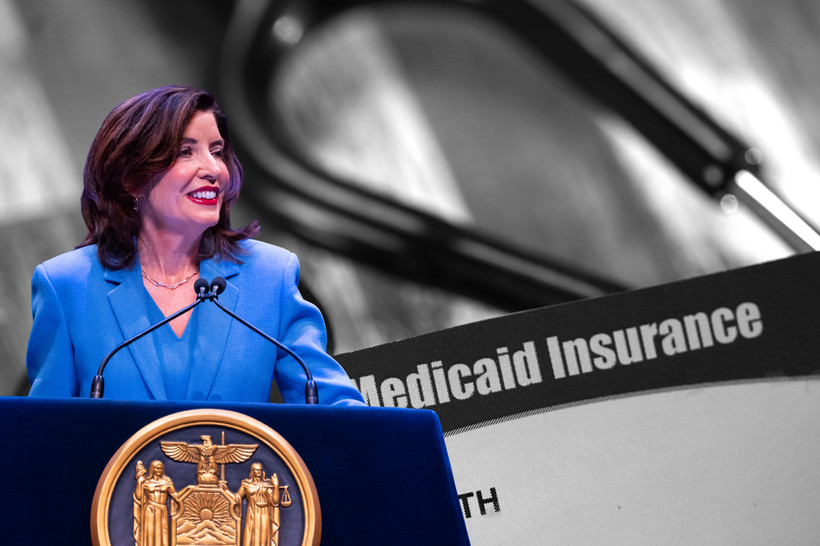
Governor Kathy Hochul had little to say about what’s in store for hundreds of thousands of New Yorkers at risk of losing their public benefits this year. | Photos: Office of Governor Kathy Hochul; Kameleon007/Canva

Sign up for Staying Focused, our newsletter keeping readers up to speed on New York politics.
In her annual State of the State address on Tuesday, Governor Kathy Hochul had little to say about what’s in store for hundreds of thousands of New Yorkers at risk of losing their public benefits this year.

“While Washington takes a machete to our safety net, I’m doubling down on the fight for a more affordable New York,” Hochul said, without elaborating on how she plans to tackle declining federal support for an array of safety net programs.

The words “afford,” “affordable,” and “affordability” appeared a dozen times during her hourlong speech. Medicaid — the single largest component of the state’s budget — was not mentioned by name once.

The left-leaning Fiscal Policy Institute called that a “glaring omission” in light of the seismic changes coming to Medicaid as a result of the “One Big, Beautiful Bill” that President Donald Trump signed last year. The think tank estimates New York’s Medicaid program — which is funded by a combination of federal and local money — could lose $14.3 billion in total federal support by 2030, threatening to undo the state’s hard-fought progress on near-universal health care coverage.

Confusion over the omission wasn’t limited to progressives. “It’s weird to make a big deal about how dire the cuts were and have nothing to say about it at this point in the budget cycle,” said Bill Hammond, senior health policy fellow with the right-leaning Empire Center.

One of the federal law’s largest and most immediate Medicaid cuts will be to the state’s Essential Plan, which provides free health care to 1.7 million New Yorkers. Federal funding credits for the program expired on January 1; state health officials have not outlined the future of the program. In September, the state requested federal approval for a maneuver that could retain coverage for 1.3 million users.

The 164-page State of the State book accompanying the governor’s speech said Hochul will direct the state Department of Health to continue negotiations with federal officials, but did not provide much detail about how the state plans to navigate the cuts.

“The finances of that plan are changing dramatically,” Hammond said. “For people enrolled in that system, can they expect their insurance to continue for the rest of the year?”

Some progressives have urged Hochul to leverage the state’s wealthy tax base to counter the Trump administration’s retreat on social services. So far, Hochul has spurned that idea — a position she reasserted during Tuesday’s speech. Throughout 2025, Hochul insisted the state could not afford to backfill federal cuts.

The book did contain some nutrition-related proposals that didn’t make it into the governor’s speech.

Hochul proposed policies to support the state’s network of food banks and pantries, which have been hit hard by federal cuts and have seen increased demand amid worsening food insecurity and funding disruptions to the Supplemental Nutrition Assistance Program (SNAP), also known as food stamps. She called for an increase in funding for the state’s Hunger Prevention and Nutrition Program, as well as the creation of a new program.

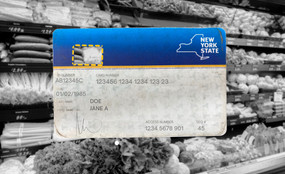
The governor is also backing a transition to chip-enabled benefit cards, an overdue tech upgrade that New York has been slow to adopt. Currently, benefit cards are easy targets for a form of theft called skimming. New York Focus has reported extensively on how skimming has drained recipients’ SNAP benefits, often leaving households unable to recoup their stolen funds.

“That was a really meaningful proposal to see from her,” said Krista Hesdorfer, director of public affairs for Hunger Solutions New York. Over 150,000 New Yorkers have reported having their SNAP benefits stolen.

Empire Justice Center, which implored the state to take up the more secure cards as early as 2022, commended the move and estimated it could prevent tens of millions of dollars in SNAP and cash assistance benefits from being stolen annually.

Hesdorfer called the governor’s proposals a good start that the legislature should build on. She and other anti-hunger advocates are seeking additional funding increases to ensure New Yorkers can continue to access benefits from SNAP and Women, Infants and Children (WIC), which provides nutritional assistance specifically to pregnant or new mothers and their babies.

A coalition of lawmakers are pushing forward a package of bills that would go further than Hochul’s proposals. The provisions include having the state take up data collection on food insecurity trends that the federal government recently abandoned; raising minimum SNAP benefits; and ensuring SNAP benefits for immigrants, refugees, and mixed-status households that have been excluded from the program as a result of recent federal changes.

At New York Focus, our central mission is to help readers better understand how New York really works. If you think this article succeeded, please consider supporting our mission and making more stories like this one possible.

New York is an incongruous state. We’re home to fabulous wealth — if the state were a country, it would have the tenth largest economy in the world — but also the highest rate of wealth inequality. We’re among the most diverse – but also the most segregated. We passed the nation’s most ambitious climate law — but haven’t been meeting its deadlines and continue to subsidize industries hastening the climate crisis.

As New York’s only statewide nonprofit news publication, our journalism exists to help you make sense of these contradictions. Our work scrutinizes how power works in the state, unpacks who’s really calling the shots, and reveals how obscure decisions shape ordinary New Yorkers’ lives.

In the last two decades, the number of local news outlets in New York has been nearly slashed in half, allowing elected officials and powerful individuals to increasingly operate in the dark — with the average New Yorker none the wiser.

We’re on a mission to change that. Our work has already shown what can happen when those with power know that someone is watching, with stories that have prompted policy changes and spurred legislation. We have ambitious plans for the rest of the year and beyond, including tackling new beats and more hard-hitting stories — but we need your help to make them a reality.

If you’re able, please consider supporting our journalism with a one-time gift or a monthly gift. We can't do this work without you.

Thank you,

Akash Mehta
Editor-in-Chief
A photo of Akash Mehta.
A photo of Jie Jenny Zou.
Jie Jenny Zou covers social services and public benefits for New York Focus. She previously worked as an investigative reporter at the Los Angeles Times and the Center for Public Integrity where she delved into topics ranging from environmental health and worker safety… more
Also filed in New York State

At a Board of Regents meeting Monday, state officials proposed eliminating credit-based diploma requirements.

The last-minute influx, the biggest ever for a legislative primary, is boosting her opponent, Jessica González-Rojas.

City budget gaps and an ambitious affordability agenda may require pressing Albany again for taxes and aid.

Also filed in Health

We’ve compiled information for the 450,000 New Yorkers who will lose health care coverage on July 1.

In May, state lawmakers passed a $269 billion budget after haggling for months over thousands of line items and policies affecting New Yorkers.

Despite last-ditch efforts by a coalition of lawmakers, the state failed to avert a health coverage cliff coming this summer.

Also filed in Budget

State leaders are expected to pass a bill that avoids resolving how much Resorts World New York City needs to pay.

Resorts World is floating legislation to avert more than $500 million in payments to the horseracing industry.

Our searchable database breaks down the most consequential decisions Albany politicians made on climate, immigration, housing, schools, taxes, and more.

Also filed in Social Services

New York state has pumped millions of taxpayer dollars into an online portal that vowed to make life easier for Rochester’s neediest, but critics say it’s fallen short.

We’ve compiled information for SNAP recipients in New York on the changing work requirements.

The Hochul administration now has a chance to relax New York’s child care staffing ratios — among the country’s strictest — after 26 years. But will it?

Also filed in Affordability

Governor Kathy Hochul was successful in her bid to upend the Climate Leadership and Community Protection Act after legislators caved to finalize an overall budget deal.

New rules could result in thousands of New Yorkers losing their food benefits this summer.