Immigration Talks Hit Impasse After Hochul’s Latest Proposal

Hochul’s counter would limit informal collusion with ICE only in civil matters.

Liv Veazey and Isabelle Taft   ·   April 29, 2026
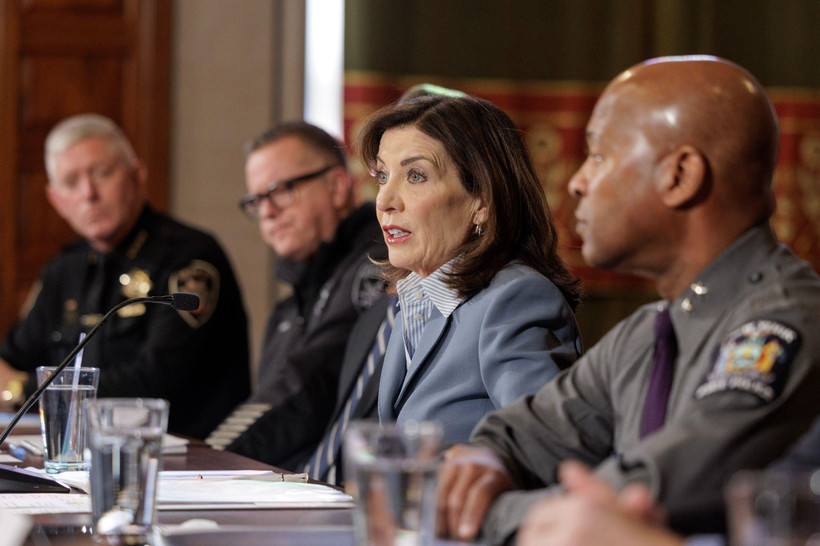
Governor Kathy Hochul speaks about immigration legislation at a roundtable with law enforcement leaders on February 9, 2026. | Mike Groll/Office of Governor Kathy Hochul

Sign up for Staying Focused, our newsletter keeping readers up to speed on New York politics.

In backroom negotiations over immigration legislation, Governor Kathy Hochul proposed a measure that would ban local law enforcement from sharing information with federal immigration agents in civil cases, two legislators and three advocates who were briefed on the discussions told New York Focus — but would leave cops broad discretion to coordinate with immigration authorities when they suspect criminal activity.

Legislators pushing to expand immigration protections have largely rejected the proposal, said the sources, who were granted anonymity to discuss and share notes from private talks.

The only limitation on information-sharing for criminal matters in the governor’s proposal is to restrict police from providing immigration authorities with information about a witness or victim of a crime, the sources said.

The new proposal came at the tail end of four months of tense negotiations over the governor and legislature’s dueling immigration policy proposals. Legislators have pushed to pass the New York for All Act, an expansive piece of sanctuary legislation, while Hochul has proposed only banning formal partnerships between local police and immigration authorities. Much local collusion with immigration enforcement happens informally, without a written agreement.

By Wednesday, Hochul’s latest counterproposal had been struck from the pending legislation altogether, according to two people with knowledge of the negotiations. That could leave the final bill hewing close to Hochul’s original proposal, as the governor pushes to end the negotiations.

“I think that [the governor] is very close to saying pencils down,” one legislator said.

On April 16, the governor proposed a compromise that would require local law enforcement to establish probable cause for a specific suspect before they could share information with federal immigration enforcement. Immigration advocates criticized the proposal, arguing that probable cause was too lenient a threshold.

A few days later, advocates obtained detailed notes of the governor’s newest proposal, which wouldn’t require probable cause. Legislators and advocates worry that the counterproposal is less restrictive than Hochul’s first compromise offer, since it leaves it up to individual officers to decide whether they are investigating a potential crime. Cops may be able to make that determination without establishing probable cause, a concept defined in case law, the advocates said.

“What this means in practice is that anything a police officer does in connection with or in response to a crime — and that could be a misdemeanor — would allow them to actively and affirmatively notify ICE or CBP about the person,” said Yasmine Farhang, executive director of the Immigrant Defense Project. “As long as they can say that they are initiating an investigation of any crime, they can notify ICE and CBP.”

Hochul’s office defended her proposal. “Governor Hochul is committed to keeping New York communities safe, which is why she has proposed a commonsense set of policies to hold ICE accountable while protecting the constitutional rights of every New Yorker,” the office said in a statement. “The Governor remains focused on working with the legislature to keep federal overreach out of New York and any changes to the proposal have come as a direct result of requests from the Legislature.”

Legislators who spoke to New York Focus said they would rather abandon a compromise than sign onto Hochul’s latest proposal. “No one likes it,” one said, expressing dismay at the state of the negotiations. 

“There is no universe in which New York for All, in its current form, is included in the budget. This is as far as she said she’s willing to go.”

Update: April 29, 2026 — This article was updated with a statement from the governor’s office.

BEFORE YOU GO, consider: If not for the article you just read, would the information in it be public?

Or would it remain hidden — buried within the confines of New York’s sprawling criminal-legal apparatus?

I started working at New York Focus in 2022, not long after the outlet launched. Since that time, our reporters and editors have been vigorously scrutinizing every facet of the Empire State’s criminal justice institutions, investigating power players and the impact of policy on state prisons, county jails, and local police and courts — always with an eye toward what it means for people involved in the system.

That system works hard to make those people invisible, and it shields those at the top from scrutiny. And without rigorous, resource-intensive journalism, it would all operate with significantly more impunity.

Only a handful of journalists do this type of work in New York. In the last decades, the number of local news outlets in the state has nearly halved, making our coverage all the more critical. Our criminal justice reporting has been cited in lawsuits, spurred legislation, and led to the rescission of statewide policies. With your help, we can continue to do this work, and go even deeper: We have endless ideas for more ambitious projects and harder hitting investigations. But we need your help.

As a small, nonprofit outlet, we rely on our readers to support our journalism. If you’re able, please consider supporting us with a one-time or monthly gift. We so appreciate your help.

Here’s to a more just, more transparent New York.

Chris Gelardi
Justice Bureau Chief
A photo of Chris Gelardi
Liv covers immigration for New York Focus. She previously reported for Hell Gate, where she wrote about ICE arrests in immigration court, city culture, and the 2025 mayoral election. Before becoming a journalist, she practiced and taught oral history in New York City… more
A photo of Isabelle Taft.
Isabelle Taft covers immigration for New York Focus. She’s also a corps member with Report for America, a national program that places reporters in local newsrooms. She previously covered national news as a fellow at the New York Times, worked on the health… more
Also filed in Criminal Justice

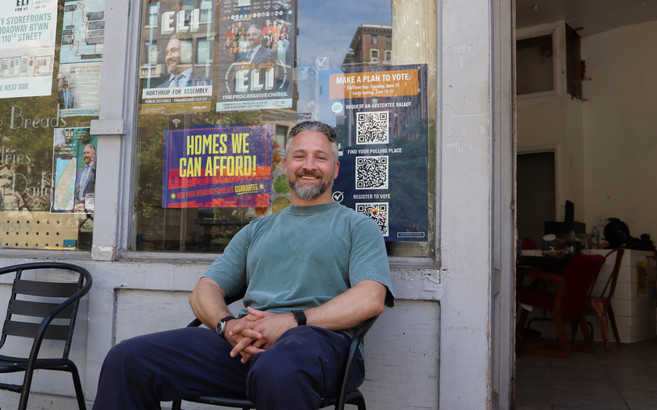
Northrup, a public defender and Democratic nominee for state Assembly, says it’s time to move toward more humane and effective policies.

A sweeping report excoriates the Department of Corrections and Community Supervision for failing to protect prisoners and staff.

A bill awaiting the governor’s signature would relax restrictions on who can qualify for victim compensation.

Also filed in New York State

Paraquat is banned in more than 70 countries. In a small town that one resident calls “Parkinson’s Valley,” farmers and their families are demanding that New York follow suit.

Health care union 1199SEIU helped Public Partnerships LLC take over the state’s home care program, even as it warned some workers could see wage cuts.

Boards of Visitors are supposed to oversee state-run disability and psychiatric programs. Almost none of them have enough members.

Also filed in Budget

Amid growing spending on universal pre-K, school districts failed to spend millions earmarked for the 2024-25 school year.

Fiscal watchdog says independent oversight is needed to avoid waste and fraud.

City budget gaps and an ambitious affordability agenda may require pressing Albany again for taxes and aid.

Also filed in Immigration

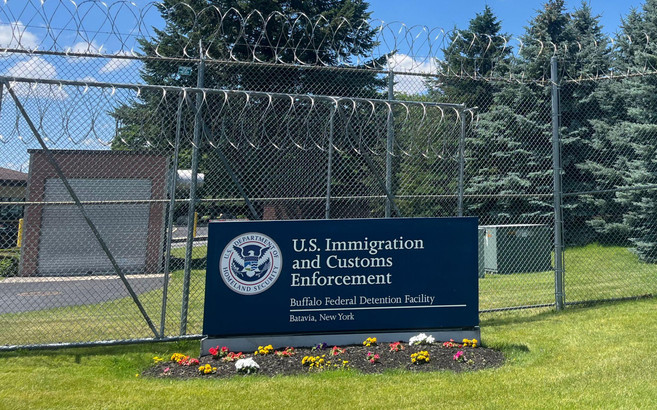
The agency is adding 100 beds to the Buffalo Federal Detention Facility.

Under Trump, a status for young immigrants who have experienced abuse or neglect no longer offers much protection.

A lawsuit accuses federal officials of ignoring evidence that the boy, born in Mexico, held US citizenship through his mother.