Lawmakers, Top Judges Push to Expand Mental Health Courts

Statewide diversion courts could keep thousands out of jail, but they’ll need more investments in treatment to succeed.

Eliza Fawcett   ·   October 17, 2025
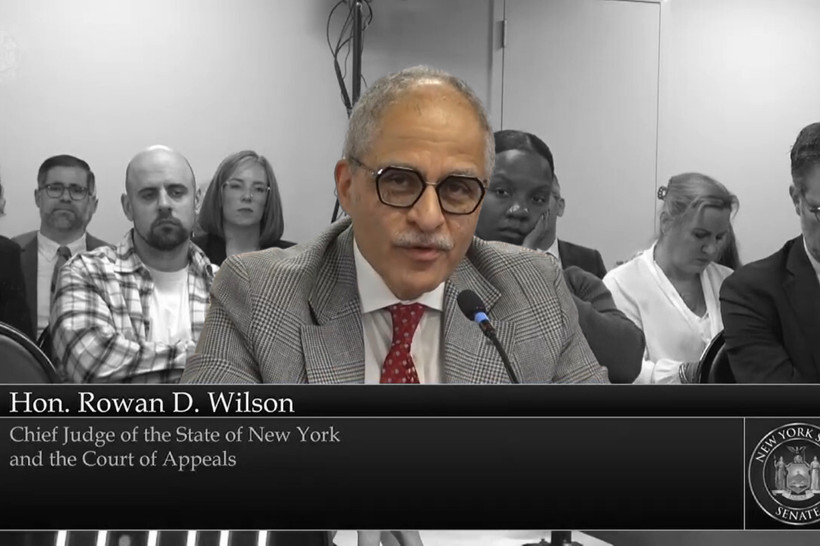
With support from the Court of Appeals Chief Judge Rowan Wilson and a growing number of Democratic state lawmakers, the Treatment Court Expansion Act may have a fighting chance in next year’s legislative session. | Screenshot: New York state Senate

Sign up for Staying Focused, our newsletter keeping readers up to speed on New York politics.

After his mother died in 2022, Selwyn Bernardez spiraled into a grief- and drug-induced psychosis, roaming the New York City subway system with a samurai sword. He struck a panhandler, landing him on Rikers Island for six months he described as “hell on Earth.”

Then something unusual happened. His public defender secured him a spot in the Manhattan Felony Alternative-to-Incarceration Court, a diversion program that allowed him to enter comprehensive treatment and ultimately see his felony assault charge dropped. He spent a year in intensive therapy, attending recovery meetings, and completing regular court check-ins. When he graduated from the program last year, he was working again and had rebuilt family relationships, he testified at a state Senate hearing last week.

Courts around the state have set up similar programs to allow people with mental illnesses and substance use disorders to enter treatment when facing certain criminal charges, typically in exchange for a guilty plea, as an alternative to jail or prison time. But they reach just a fraction of the people who might benefit from them.

“My path is not the norm, but it should be,” Bernardez said at the hearing, testifying in support of a bill called the Treatment Court Expansion Act, which would increase access to diversion programs across the state.

Currently, one in five people in New York City jails has a serious mental illness, according to city data. Very few have gotten support through diversion programs. In 2021, just over 0.3 percent of more than 34,000 people arrested in Kings County entered a mental health court program; in Tompkins County, just over 1 percent did, according to a report from the advocacy group National Alliance on Mental Illness.

At Rikers Island, thousands of people with psychiatric issues often encounter inadequate mental health treatment, and suicides and other deaths persist. County jails across the state are ill-equipped to care for incarcerated people with severe mental illnesses, sometimes transferring them to maximum security prisons while they’re legally innocent.

Unlike drug courts, mental health courts aren’t currently required by state law; individual courts have created them on an ad hoc basis. The proposed legislation would create statutory mental health courts across the state. The measure would make any New Yorker with a “qualifying diagnosis” — including most mental illnesses, developmental disorders, and substance use disorders — eligible for a diversion program. And it would allow people with misdemeanor or nonviolent felony charges to enter treatment immediately, without pleading guilty.

The bill was first introduced in the 2019–2020 session, but has never made it to the Senate or Assembly floor. Its latest version addresses some reservations from the judiciary. With support from the Court of Appeals Chief Judge Rowan Wilson and a growing number of Democratic state lawmakers, it may have a fighting chance in next year’s legislative session.

Proponents point to the significant cost savings achieved by diverting people from jail to drug treatment courts, as well as polling showing crime victims’ support for diversion programs. Studies have found that graduates of mental health court programs tend to show reduced recidivism, though evidence of lasting clinical success for participants is mixed.

“The way to make it a failure is to divert people and not have anywhere to send them.”

—Rowan Wilson, Court of Appeals chief judge

Though the bill has gained broad support, its backers are gearing up for a parallel fight for more state investment on the treatment and provider side.

Expanding treatment courts would require only modest spending on additional judges or court staff, Wilson, the state’s highest-ranking judge, told lawmakers at the hearing. The far greater cost, he said, would be to bolster treatment services, especially in parts of the state without them.

“The way to make it a failure is to divert people and not have anywhere to send them,” Wilson said.

At the hearing, mental health and criminal justice reform advocates voiced strong support for the measure, but some echoed Wilson’s warning that it will require deep investments in mental health services to succeed.

“If you have more people able to access treatment courts, it could present a capacity issue on the behavioral health system,” said Nathan McLaughlin, who runs the New York state branch of the National Alliance on Mental Illness.

Zachary Katznelson, the executive director of the Independent Rikers Commission, backed the proposal but urged lawmakers to build a stronger pipeline for the clinicians, nurses, and social workers who will staff the treatment side of diversion programs.

“We don’t have enough staff to actually fill the vacancies that exist today in the existing services,” he said.

In 2023, Governor Kathy Hochul pledged to invest $1 billion in the state’s mental health care system. Since then, the state has expanded outpatient services, outreach teams, and psychiatric hospital bed capacity, but advocates told New York Focus earlier this year that the expansion has not kept up with demand for the programs. The behavioral health workforce is also stretched thin.

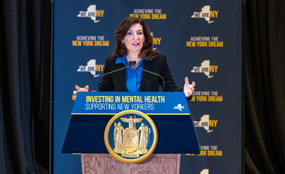
Last year, Hochul allocated $25 million to expand mental health courts. Some of that money has gone toward developing new ones across the state, said Joseph Zayas, chief administrative judge of the New York State Unified Court System.

The bill’s sponsor, Democratic state Senator Jessica Ramos, acknowledged at the hearing that reforming the court system would only be a partial solution.

“We need more programming. We need more services. We need more mental health beds in our hospital system and beyond,” she said.

A spokesperson for Hochul said the governor “will review the legislation if it passes both houses.”

BEFORE YOU GO, consider: If not for the article you just read, would the information in it be public?

Or would it remain hidden — buried within the confines of New York’s sprawling criminal-legal apparatus?

I started working at New York Focus in 2022, not long after the outlet launched. Since that time, our reporters and editors have been vigorously scrutinizing every facet of the Empire State’s criminal justice institutions, investigating power players and the impact of policy on state prisons, county jails, and local police and courts — always with an eye toward what it means for people involved in the system.

That system works hard to make those people invisible, and it shields those at the top from scrutiny. And without rigorous, resource-intensive journalism, it would all operate with significantly more impunity.

Only a handful of journalists do this type of work in New York. In the last decades, the number of local news outlets in the state has nearly halved, making our coverage all the more critical. Our criminal justice reporting has been cited in lawsuits, spurred legislation, and led to the rescission of statewide policies. With your help, we can continue to do this work, and go even deeper: We have endless ideas for more ambitious projects and harder hitting investigations. But we need your help.

As a small, nonprofit outlet, we rely on our readers to support our journalism. If you’re able, please consider supporting us with a one-time or monthly gift. We so appreciate your help.

Here’s to a more just, more transparent New York.

Chris Gelardi
Justice Bureau Chief
A photo of Chris Gelardi
Eliza Fawcett is a journalist focused on public health, mental health and the criminal justice system. She is a reporting fellow for the Investigative Reporting Lab at Yale.
Also filed in Criminal Justice

A bill awaiting the governor’s signature would relax restrictions on who can qualify for victim compensation.

In May, state lawmakers passed a $269 billion budget after haggling for months over thousands of line items and policies affecting New Yorkers.

The legislation would make it easier for currently and formerly incarcerated people and child victims to sue the state over allegations of past abuse.

Also filed in New York State

City budget gaps and an ambitious affordability agenda may require pressing Albany again for taxes and aid.

We’ve compiled information for the 450,000 New Yorkers who will lose health care coverage on July 1.

A lobbyist who has been romantically linked to Assembly Speaker Carl Heastie led a rally opposing the legislation a week before the speaker declined to bring it to a vote.

Also filed in Health

Despite last-ditch efforts by a coalition of lawmakers, the state failed to avert a health coverage cliff coming this summer.

160,000 injured New Yorkers seek workers’ compensation each year — but in recent years, regulators have tilted the scales towards employers and insurers.

Amid abortion bans and rising digital surveillance, Albany lawmakers are revisiting an effort to stop companies from selling sensitive health information.

Also filed in New York City

The citizens assembly model, used for public decision-making around the world, is gaining traction in New York.

Resorts World is floating legislation to avert more than $500 million in payments to the horseracing industry.

Some of the city’s new aid will be canceled out by pension boosts.

Also filed in Social Services

New York state has pumped millions of taxpayer dollars into an online portal that vowed to make life easier for Rochester’s neediest, but critics say it’s fallen short.

We’ve compiled information for SNAP recipients in New York on the changing work requirements.

The Hochul administration now has a chance to relax New York’s child care staffing ratios — among the country’s strictest — after 26 years. But will it?