21 Counties Have Closed Applications for New York’s Biggest Child Care Affordability Program

There are 1,500 families on the program waitlist in New York City alone, new state data shows.

Julia Rock   ·   August 8, 2025
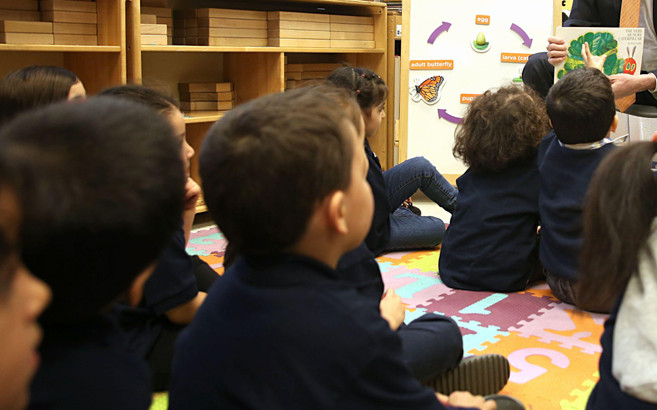
In addition to the 21 counties not accepting new parents, four counties said in early July that they might have to start turning down parents later in the month. | Photos: DAPA images; Aflo images/Canva | Illustration: Leor Stylar

Sign up for Staying Focused, our newsletter keeping readers up to speed on New York politics.

More than a third of New York counties, home to over half of the state’s population, have stopped enrolling eligible parents in the state’s child care voucher program, new data shows.

At least 21 counties were not accepting applicants for the vouchers as of early July due to lack of funding. Thirteen are keeping waitlists; 1,500 families are on New York City’s waitlist alone. (Counties are required to provide the vouchers to parents who are homeless, receiving cash assistance, or involved in the child welfare system, but can turn down other income-eligible parents when funds run low.)

The state Office of Children and Family Services, or OCFS, published data on the program online after New York Focus requested it under the Freedom of Information Law.

The data sheds light on the status of the Child Care Assistance Program, which covers almost the entire cost of private child care for nearly 100,000 low- and middle-income families, after a drawn-out battle over its funding during state budget negotiations earlier this year.

The program has been a priority for Governor Kathy Hochul, who alongside the legislature had quadrupled spending on it to $1.1 billion in recent years and expanded eligibility to middle-income New Yorkers so that, for instance, a family of three earning up to $95,000 qualifies.

But the funding boosts did not keep pace with the growing demand that followed, and the shortfall reached a tipping point this winter.

In February, New York City social services officials, who administer the program locally, warned that if state funding remained flat in this year’s budget, the city would have to start removing thousands of parents from the program each month. Legislators from the city pushed for a $900 million funding boost from the state.

The final state budget, passed in May, included an additional one-year investment of $350 million for New York City and $50 million for the rest of the state, bringing total state spending on the program to $1.5 billion this year.

New York City also increased its spending on the program to $381 million, but the additional funding has not been enough to allow new parents to start enrolling, according to the city Administration for Children’s Services.

In addition to the 21 counties not accepting new parents, four counties said in early July that they might have to start turning down parents later in the month. One of those counties, Schenectady, told New York Focus that applications are still open; the other three did not comment. As of early July, enrollment remained open in 37 counties.

Counties outside of New York City will not be able to access the $50 million in new funding until March of next year, according to an OCFS memo.

“We want the $50 million to go to counties immediately,” said Assemblymember Andrew Hevesi, chair of his chamber’s Committee on Children and Families. “The regulations that have been attached to it [by OCFS] are more strict than they should be.”

To access the $50 million pot, OCFS requires counties to spend their entire existing allocation first.

Many counties see the requirement as impractical, said Pete Nabozny, policy director at Rochester-based advocacy organization The Children’s Agenda. Counties don’t know how much of the $50 million they’d receive, and social service administrators are reluctant to deplete their budget without a guarantee that their share would be sufficient to keep parents enrolled.

“The way the state is structuring it ... it’s just not working,” said Nabozny. “It’s not helping relieve the crunch on funding or helping more families get assistance.”

An OCFS spokesperson told New York Focus that the agency is “working with local governments across the state to use this funding to continue to deliver child care assistance for their constituents.”

Child care costs over $20,000 a year on average in New York, higher than nearly every other state. Hochul, who made affordability a centerpiece of her agenda, has said she wants to create a “pathway to universal child care.” In June, Queens state Assemblymember Zohran Mamdani won the New York City Democratic mayoral nomination on an affordability platform that promised universal free child care.

Mamdani wants to expand the city’s existing universal pre-K programs, which provide free care for 3- and 4-year-olds, to cover every child between 6 weeks and 5 years old.

He has said the plan will cost between $5 billion and $7 billion a year, and would be funded by higher taxes on wealthy New Yorkers and corporations. Hochul, for her part, has said that higher taxes are a nonstarter.

Meanwhile, advocates say the state Child Care Assistance Program needs a bigger, permanent investment to meet growing demand and expanded eligibility. “We will have another bite at the apple with the state budget next year, but it’s going to be coming in a pretty challenging budget year” because of the impacts of federal cuts, said Nabozny.

At New York Focus, our central mission is to help readers better understand how New York really works. If you think this article succeeded, please consider supporting our mission and making more stories like this one possible.

New York is an incongruous state. We’re home to fabulous wealth — if the state were a country, it would have the tenth largest economy in the world — but also the highest rate of wealth inequality. We’re among the most diverse – but also the most segregated. We passed the nation’s most ambitious climate law — but haven’t been meeting its deadlines and continue to subsidize industries hastening the climate crisis.

As New York’s only statewide nonprofit news publication, our journalism exists to help you make sense of these contradictions. Our work scrutinizes how power works in the state, unpacks who’s really calling the shots, and reveals how obscure decisions shape ordinary New Yorkers’ lives.

In the last two decades, the number of local news outlets in New York has been nearly slashed in half, allowing elected officials and powerful individuals to increasingly operate in the dark — with the average New Yorker none the wiser.

We’re on a mission to change that. Our work has already shown what can happen when those with power know that someone is watching, with stories that have prompted policy changes and spurred legislation. We have ambitious plans for the rest of the year and beyond, including tackling new beats and more hard-hitting stories — but we need your help to make them a reality.

If you’re able, please consider supporting our journalism with a one-time gift or a monthly gift. We can't do this work without you.

Thank you,

Akash Mehta
Editor-in-Chief

A photo of Akash Mehta.
Julia Rock is a reporter for the Financial Times. She was previously an investigative reporter at New York Focus and The Lever.
Also filed in New York State

The legislation would make it easier for currently and formerly incarcerated people and child victims to sue the state over allegations of past abuse.

State leaders are expected to pass a bill that avoids resolving how much Resorts World New York City needs to pay.

New York state has pumped millions of taxpayer dollars into an online portal that vowed to make life easier for Rochester’s neediest, but critics say it’s fallen short.

Also filed in Budget

Resorts World is floating legislation to avert more than $500 million in payments to the horseracing industry.

Our searchable database breaks down the most consequential decisions Albany politicians made on climate, immigration, housing, schools, taxes, and more.

It’s unclear whether the Correctional Association of New York will have to scale back its nascent reform initiatives.

Also filed in New York City

Some of the city’s new aid will be canceled out by pension boosts.

The Department of Justice has terminated more than 100 immigration judges since last year as it has pressured courts to order more deportations.

After a New York Focus investigation, a Bronx charity distributed nearly $400,000 to survivors of a deadly 2022 fire.

Also filed in Social Services

We’ve compiled information for SNAP recipients in New York on the changing work requirements.

Despite last-ditch efforts by a coalition of lawmakers, the state failed to avert a health coverage cliff coming this summer.

The Hochul administration now has a chance to relax New York’s child care staffing ratios — among the country’s strictest — after 26 years. But will it?

Also filed in Affordability

Governor Kathy Hochul was successful in her bid to upend the Climate Leadership and Community Protection Act after legislators caved to finalize an overall budget deal.

New rules could result in thousands of New Yorkers losing their food benefits this summer.